By Staff Reporter
In the shadow of Pakistan’s volatile borderlands, where jihadist insurgencies simmer and occasionally erupt into full-scale warfare, a new chapter in US foreign policy is unfolding—one driven by the relentless global hunt for critical minerals. The allure of Pakistan’s untapped reserves, estimated at a staggering $8 trillion in copper, lithium, cobalt, gold, and other essentials, has drawn the Trump administration into an improbable alliance with Islamabad. Yet this pursuit, fueled by Washington’s urgency to break China’s stranglehold on rare earths and copper supplies, is colliding head-on with a security nightmare: a flood of American-made weapons, abandoned in the chaotic 2021 Afghanistan withdrawal, now empowering militants to deadly effect.
The irony is stark and inescapable. As the United States pours more than $1 billion into financing projects like the Reko Diq mine in Balochistan—home to what Canadian firm Barrick describes as the world’s largest undeveloped copper reserves—it finds itself indirectly arming the very forces that threaten to derail these ambitions. Pakistani military officials, speaking with a mix of resolve and exasperation, describe a “war” in the border regions, where attacks have doubled since the US exit from Kabul, claiming over 1,200 lives in 2025 alone. The weapons—high-tech M-16s, M-4 carbines, sniper rifles, and night-vision gear stamped “Property of U.S. Govt.”—have transformed ragtag insurgents into formidable adversaries, outgunning Pakistani forces equipped with outdated Soviet-era arms.
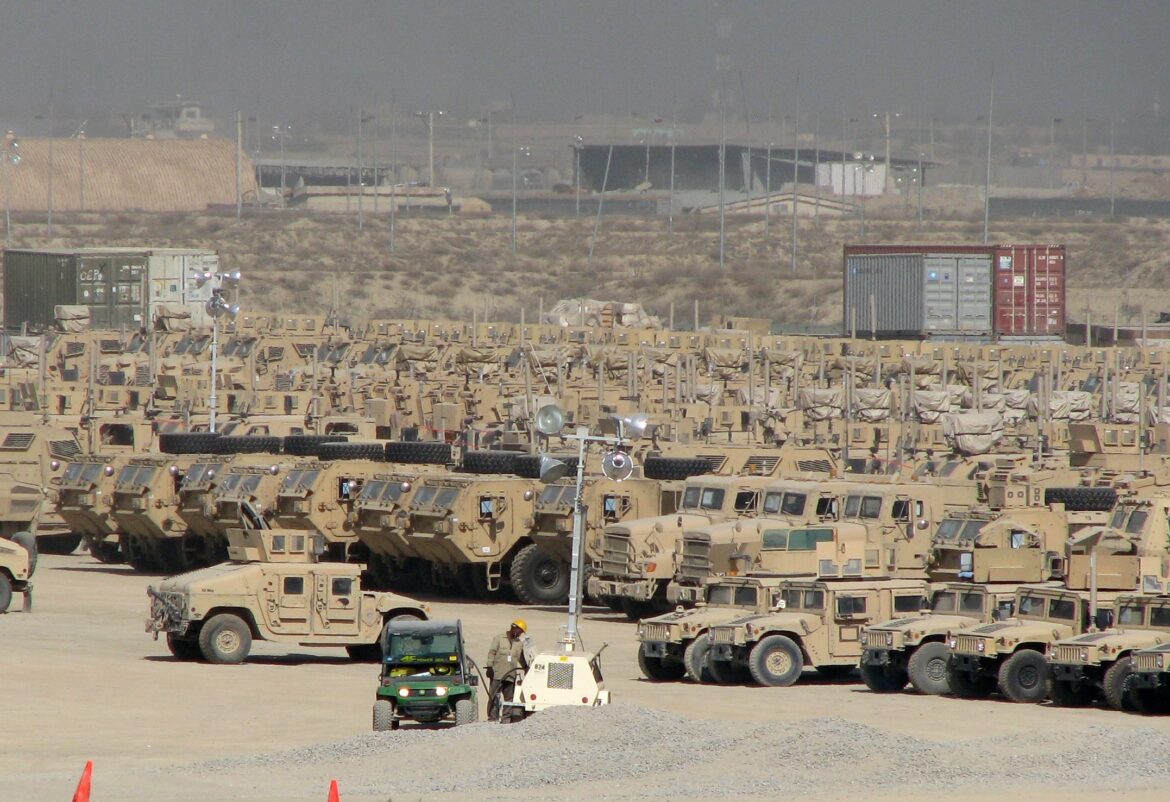
This escalation isn’t mere coincidence; it’s a direct fallout from America’s hasty retreat. Retired Air Force Colonel Scott Yeatman, a former top advisor to the Afghan Air Force, captures the miscalculation: The US wasn’t planning for collapse but for sustained operations. Instead, it left behind an arsenal of some 300,000 small arms, plus rocket launchers, mortars, heavy machine guns, and surveillance equipment, as detailed by John Sopko, the longtime special inspector general for Afghanistan reconstruction. Sopko’s blunt assessment—that Afghanistan has become “the world’s largest arms bazaar”—underscores the regional peril, alarming not just Pakistan but neighbours like Iran and China.
For the Trump White House, this predicament tests the limits of a foreign policy centred on resource security. The president’s charm offensive, praising Pakistan’s army chief as “my favorite field marshal” and sealing deals with allies like Australia and Thailand, reflects a broader strategy to counter Beijing’s dominance. China controls over 90% of refined rare earths, a leverage point in trade wars that Trump has vowed to dismantle. Pakistan’s pitch—complete with a symbolic chest of rare earth samples during Prime Minister Shehbaz Sharif’s White House visit—tapped into this imperative, promising supplies that could offset U.S. shortages in everything from electric vehicles to AI semiconductors.
But the ground reality in places like South Waziristan exposes the fragility of this approach. The Muhammad Khel Copper Mine, yielding 22,000 tons last year mostly for export to China, operates in a landscape pockmarked by ambushes and suicide bombings. Pakistani Taliban militants, emboldened by US-sourced firepower, have shifted from daytime IED blasts to nocturnal sniper attacks, as Colonel Bilal Saeed, a military surgeon in Peshawar, observes. Wounded soldiers like 30-year-old Allah Uddin, a convoy guard turned double amputee, recount encounters where militants’ superior weapons—described as “different and better”—overwhelmed defences. Uddin’s quiet fury, echoed by a ward full of similarly maimed comrades, humanises the toll: families shattered, livelihoods lost, and a simmering rage that could fuel further instability.
Compounding the jihadist threat is the Balochistan Liberation Army (BLA), a separatist group waging a decades-long fight for autonomy in the mineral-rich southwest. Recent coordinated attacks, killing 33 according to Pakistani accounts, involved US-origin arms and Afghan nationals, as Balochistan’s chief minister Sarfaraz Bugti said. Michael Kugelman of the Atlantic Council nails the duality: Balochistan is “ground zero for critical mineral opportunities, but it’s also ground zero when it comes to militant threats.” The BLA’s designation as a terror organisation by the US in August, alongside joint counterterrorism dialogues and trainings, signals Washington’s commitment to stabilising the region. Yet these measures feel reactive, patching over the self-inflicted wound of the Afghanistan pullout
.Pakistan’s military, under Field Marshal Asim Munir, insists it will secure these areas, with spokesperson Lt. Gen. Ahmed Sharif Choudhry vowing “world-class” mining infrastructure. “We will resolve it,” he declares. “We have no other option.” For a nation battered by economic crises—24 IMF bailouts since 1958—a mineral bonanza could mean salvation, injecting stability and prosperity. But the path forward demands more than optimism; it requires confronting the arms proliferation that Islamabad blames on Afghan Taliban sanctuaries, a charge Kabul denies while claiming control over the leftover stockpiles.
The broader geopolitical stakes are immense. As global copper demand surges from 30 million to 50 million tons by 2050, per experts like Dr. Gracelin Baskaran of the Center for Strategic and International Studies, shortages imperil US competitiveness in rare earth processing and defence tech. Trump’s demands for the Taliban to return US weapons have gone unanswered, highlighting the administration’s leverage limits. Beijing, wary of US inroads with its longtime ally Pakistan, has secured reassurances that American deals won’t undercut Chinese interests—yet the “copper rush” could reshape alliances in unpredictable ways. Ultimately, this mineral gambit risks entangling the US deeper in South Asia’s quagmire, where resource riches and insurgent violence are inextricably linked. Without a robust plan to stem the weapons flow—perhaps through direct engagement with the Afghan Taliban or enhanced border controls—the promise of Pakistan’s underground wealth may prove illusory, buried under layers of bloodshed and betrayal. For Washington, the lesson is clear: In the race to secure tomorrow’s economy, yesterday’s mistakes can arm today’s enemies.
Copyright © 2021 Independent Pakistan | All rights reserved