By Staff Reporter
ISLAMABAD: The government has signalled willingness to recover around Rs217 billion in super tax arrears through instalments to ease pressure on businesses, as an International Monetary Fund review mission prepares to visit later this month amid assurances of no external financing shortfall, Dawn newspaper reported on Thursday.
Finance Minister Muhammad Aurangzeb told reporters after a Senate Standing Committee on Finance and Revenue meeting that there was no gap in external financing and that rollover discussions with the United Arab Emirates were progressing as expected. The IMF mission is due to arrive for the third review under Pakistan’s current Fund programme, with Aurangzeb emphasising that the visit was already scheduled for the end of February.
The minister dismissed concerns raised by committee members about a reported one-month rollover from the UAE, with the finance secretary clarifying that such claims were inaccurate and the question inappropriate.
On the issuance of Panda bonds in the Chinese market, Aurangzeb said they would be launched in the first quarter of the current year, with discussions ongoing. The government had aimed for a December 2025 issuance but faced delays due to regulatory approvals.
Addressing queries on the National Finance Commission (NFC) Award, which governs revenue distribution between the federal government and provinces, the minister said talks were advancing. He noted that sub-groups were holding sessions, with meetings of three groups scheduled for next week. “A meeting can be summoned after three to four technical committee’s sessions are being held,” Aurangzeb said.
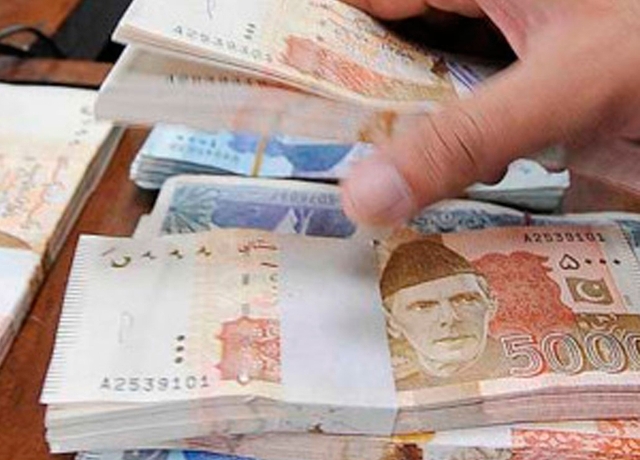
Earlier, the State Bank of Pakistan Governor Jameel Ahmad informed the committee that there was no plan to discontinue the 5,000-rupee note, a move the Federal Board of Revenue (FBR) chairman said would significantly disrupt the market. Ahmad explained that the SBP board had recommended new designs for notes from 10 rupees to 5,000 rupees, incorporating enhanced security features and a fresh colour scheme. These had been forwarded to the federal cabinet, which formed a sub-committee for review. Final approval would come from the cabinet after the sub-committee’s input. The committee called for an in-camera briefing on the new designs to discuss sensitive details.
FBR Chairman Rashid Mahmood Langrial, testifying before the committee, expressed readiness to collect the super tax arrears in instalments, pegging the recoverable amount at Rs217 billion following a Supreme Court ruling last month in the government’s favour—not the speculated Rs300 billion.
Langrial said the government aimed to avoid business closures over tax recoveries and would handle cases individually. He assured that the tax authority would prevent any issues with the apex court. The super tax, first levied in 2015 as a one-year measure, was later hiked and extended, prompting legal challenges that ended with the Supreme Court upholding the government’s taxing powers and mandating recoveries.
Lawmakers raised alarms over the abrupt tax demands, warning they could lead to business shutdowns or relocations abroad. They cited complaints from the business community and chambers of commerce about harassment of long-standing taxpayers, including threats of account freezes and arrests. Senators urged facilitation through phased recoveries over two to three years rather than aggressive enforcement.
Aurangzeb highlighted the FBR’s success in curbing smuggling and revenue leakages, defending the agency’s practice of sending recovery messages to taxpayers as non-intrusive. He revealed receiving such an SMS personally and finding it unproblematic, provided it reached only the intended recipient without breaching privacy.
Langrial elaborated that messages were targeted, such as congratulations on property purchases with reminders to declare them in returns. “We send congratulation message to the taxpayer on purchase of plot and only ask its inclusion in the tax return,” he said, adding that this approach had boosted tax filers by a million and reduced zero-income declarations.
The finance minister reiterated that a robust tax-to-GDP ratio was vital for national progress, unrelated to IMF dictates. He noted Pakistan had not sought international aid after recent floods due to sufficient financial buffers.
Copyright © 2021 Independent Pakistan | All rights reserved