By Staff Reporter
ISLAMABAD: Iranian Foreign Minister Abbas Araqchi announced on Friday that the Strait of Hormuz had been reopened to all commercial vessels, a significant easing of tensions in the Persian Gulf following a fragile US-brokered ceasefire in Lebanon.
In a post on X, Araqchi said the waterway — through which roughly one-fifth of the world’s oil and liquefied natural gas passes — would remain open for the remainder of the 10-day truce between Israel and Lebanon that took effect at midnight Thursday. He added that ships must follow the specific route previously designated by Iran’s Ports and Maritime Organization.
The announcement came hours after the Lebanese ceasefire, which had been widely viewed as a prerequisite for broader talks to end the wider US-Israeli conflict with Iran that began Feb. 28. That fighting has killed thousands, destabilized the Middle East and effectively shut the strait for weeks, threatening what analysts warned could become the most severe oil shock in history.
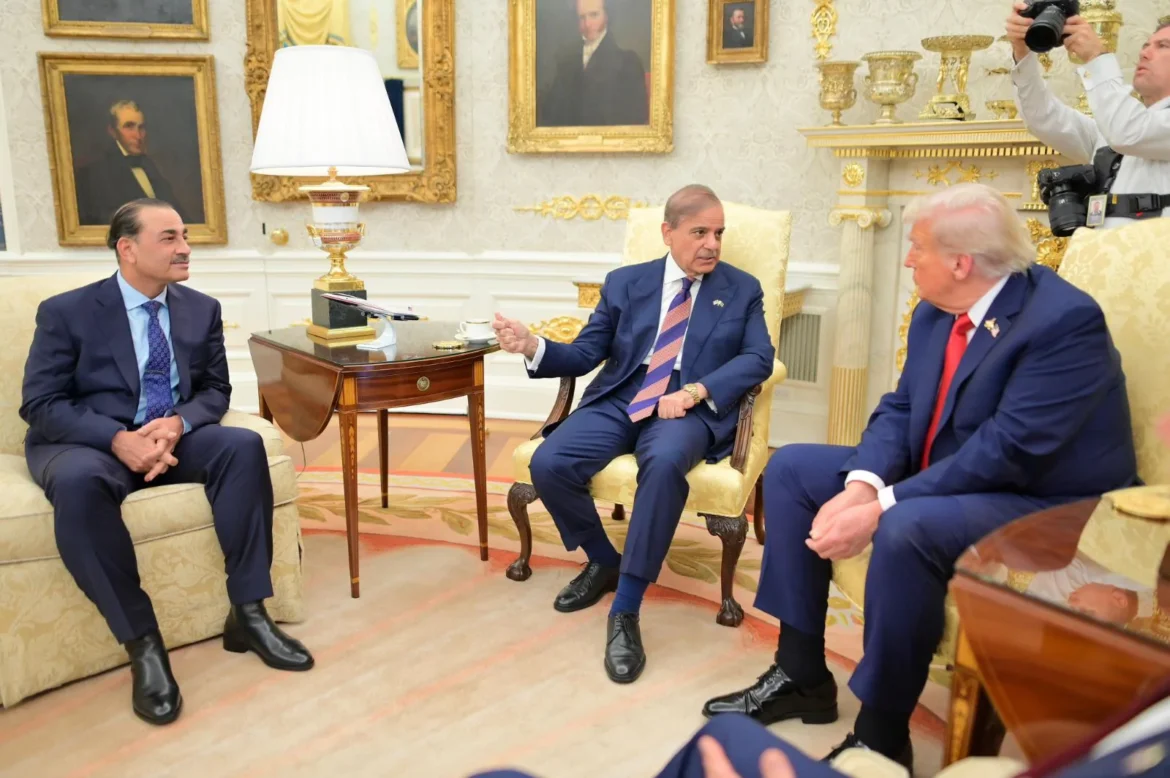
President Donald Trump welcomed the development with characteristic exuberance, firing off a series of posts on Truth Social that mixed gratitude, demands and pointed criticism of allies. “THANK YOU!” he wrote immediately after Araqchi’s statement. In subsequent messages, he thanked Pakistan, its Prime Minister Shehbaz Sharif and Chief of Defence Forces Field Marshal Asim Munir, calling them “two fantastic people.” He also expressed appreciation to Saudi Arabia, the United Arab Emirates and Qatar “for your great bravery and help.”
Trump went further, claiming Iran had agreed never to close the strait again. “It will no longer be used as a weapon against the World!” he wrote. He added that Iran, with U.S. assistance, was removing or had removed all sea mines from the waterway. Yet even as he celebrated the reopening, Trump made clear that a US naval blockade targeting ships bound for Iranian ports — imposed after last weekend’s inconclusive talks in Islamabad — would remain fully in effect. “The Strait of Hormuz is completely open and ready for business and full passage,” he wrote in all capital letters, “but the naval blockade will remain in full force and effect as it pertains to Iran, only, until such time as our transaction with Iran is 100 per cent complete.”
In a flurry of interviews conducted on Friday, Trump projected confidence that a comprehensive agreement to end the war was imminent. Speaking to Axios, he said American and Iranian negotiators would probably meet this weekend in Islamabad and that he expected a final deal “in the next day or two.” “The Iranians want to meet. They want to make a deal,” he said. To Bloomberg, he reported that Iran had agreed to suspend its nuclear program indefinitely and would receive no frozen funds from Washington. “A deal to end the war is mostly complete,” he added.
In a separate conversation with Agence France-Presse, Trump declared there were “no sticking points” left. “We’re very close to having a deal,” he said. Asked whether any issues remained unresolved, he replied simply, “No sticking points.” Trump told Reuters that Washington would work directly with Tehran to recover enriched uranium from bombed nuclear sites. “We’re going to get it together,” he said. “We’re going to go in with Iran, at a nice leisurely pace, and go down and start excavating with big machinery … We’ll bring it back to the United States.” He referred repeatedly to “nuclear dust” — his term for residual material left after US and Israeli strikes on Iranian nuclear installations last June — and said retrieval would begin “very soon.” He stressed that no money would change hands in any form.
The president also used the moment to reiterate that he had prohibited Israel from conducting further strikes in Lebanon. “Israel will not be bombing Lebanon any longer,” he wrote on Truth Social. “They are PROHIBITED from doing so by the USA Enough is enough!!!” Trump reserved particular scorn for NATO, which he said had contacted the White House after the strait reopened to ask if assistance was needed. “I told them to stay away unless they just want to load up their ships with oil,” he wrote. “They were useless when needed, a paper tiger.”
The developments capped a week of intense back-channel diplomacy mediated by Pakistan. A Pakistani source familiar with the negotiations, speaking on the condition of anonymity, told Reuters there had been measurable progress and that an upcoming meeting could produce a memorandum of understanding, to be followed by a comprehensive agreement within 60 days. “Both sides are agreeing in principle,” the source said. “And technical bits come later.”
One of the central unresolved issues has been the future of Iran’s nuclear program. At last weekend’s talks in Islamabad, the United States proposed a 20-year suspension of all Iranian nuclear activity; Tehran countered with a three-to-five-year halt. Iranian officials indicated signs of a possible compromise on the country’s stockpile of highly enriched uranium, with Tehran considering shipping at least part of it out of the country.
Trump told reporters outside the White House on Thursday that Iran had agreed to return “nuclear dust.” Iran’s state-run Mizan news agency pushed back on Friday, saying no negotiations had ever taken place on transferring highly enriched uranium to the United States and that “naturally there is no agreement on this matter either.” Inside Iran, senior clerics struck a more defiant note during Friday prayers. In Tehran, Ahmad Khatami told worshipers, “Our people do not negotiate while being humiliated.” In Isfahan, the imam declared, “We did not accept the terms proposed by the other party.”
Despite the optimistic tone from the White House, Iranian officials have continued to describe the talks as difficult. Araqchi’s announcement of the reopened strait appeared to reference the 10-day Lebanon truce rather than the separate two-week ceasefire between Iran and the United States that began April 8. It was not immediately clear which agreement he had in mind when he spoke of the “remaining period of ceasefire.”
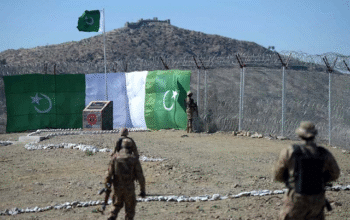
On the ground in Islamabad, where the next round of talks is expected, Pakistani troops were visible along major routes into the capital Friday, though roads remained open and the government had not ordered the business closures that preceded the previous meeting.
The Lebanese ceasefire, also negotiated with US and Pakistani involvement, appeared to be largely holding, though the Lebanese Army reported some Israeli violations. The fighting in Lebanon had reignited March 2 when Hezbollah fired rockets into northern Israel in solidarity with Tehran, triggering an Israeli offensive that Lebanese authorities say has killed 2,000 people.
The broader U.S.-Israeli campaign against Iran that began Feb. 28 has exacted a far higher toll, though exact casualty figures remain unclear. The closure of the Strait of Hormuz sent shock waves through global energy markets. Oil prices fell about over 10 percent Friday after Araqchi’s post, extending earlier losses. Earlier this week the International Monetary Fund downgraded its global growth forecasts and warned that a prolonged conflict could tip the world economy into recession. Trump has said he might personally travel to Islamabad if a deal appears within reach, though he told Reuters on Friday that he had not yet made a final decision. “There will probably be more talks this weekend about an Iran deal,” he said.
Copyright © 2021 Independent Pakistan | All rights reserved