By Staff Reporter
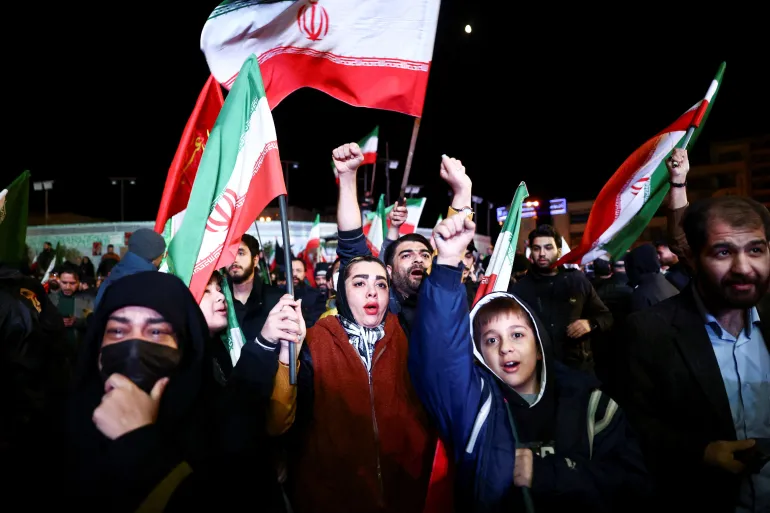
ISLAMABAD: World leaders, European governments and international institutions on Wednesday thanked Pakistan for its central role in brokering a two-week ceasefire between the United States and Iran, a fragile pause in weeks of fighting that had threatened to choke off global energy supplies and destabilize the Middle East.
The truce, which took effect in the early morning hours after a last-minute intervention by Pakistani Prime Minister Shehbaz Sharif, has opened what diplomats described as a narrow window for negotiations. It includes a temporary reopening of the Strait of Hormuz, the vital waterway through which much of the world’s oil passes. Pakistan, long a peripheral player in Gulf diplomacy, has suddenly found itself at the center of high-stakes talks, with both Washington and Tehran agreeing that Islamabad will host the first round of discussions as soon as Friday.
The swift international reaction reflected both relief and cautious optimism. In a joint statement, the leaders of the Netherlands, Germany, France, Italy, Britain, Canada, Denmark and Spain, along with the presidents of the European Union Council and Commission, praised Pakistan and “all partners involved” for facilitating the agreement. “We thank Pakistan and all partners involved for facilitating this important agreement,” the statement said. “The focus now must be on urgent diplomacy to secure a lasting peace, protect civilians, and safeguard regional stability. We urge full implementation by all sides and remain actively engaged to support a negotiated settlement.” The European leaders described the ceasefire as “crucial” to protecting Iranian civilians, ensuring broader security and preventing a global energy crisis.
Saudi Arabia welcomed the deal and specifically credited Pakistan’s “fruitful efforts,” according to a statement from the kingdom’s Foreign Ministry. Oman’s Foreign Ministry called the truce an “initial step toward de-escalation” and emphasized the need to keep maritime passages open in line with international law. In the United Arab Emirates, diplomatic adviser Anwar Gargash struck a more assertive tone, declaring that his country had “triumphed in a war we sincerely sought to avoid” through what he called an “epic national defense” that protected its sovereignty.
Outside the region, praise for Pakistan was even more effusive. Malaysian Prime Minister Anwar Ibrahim posted on X that Pakistan’s willingness to engage both sides “reflects the highest traditions of Muslim solidarity and international responsibility.” The United Nations expressed “sincere appreciation” for Pakistan’s efforts and called on all parties to use the pause to pursue a comprehensive settlement. In Islamabad, British High Commissioner Jane Marriott thanked Pakistan for its “quiet, effective” role, while Australia’s envoy, Timothy Kane, offered similar congratulations. Even India, Pakistan’s longtime rival, welcomed the ceasefire and reiterated the importance of de-escalation, dialogue and uninterrupted commerce through the Strait of Hormuz.
Analysts described the development as one of Islamabad’s most significant diplomatic accomplishments in years. Michael Kugelman of the Atlantic Council called it “one of its biggest diplomatic wins in years,” noting that Pakistan had helped avert what could have become a far broader catastrophe.
The ceasefire followed a dramatic escalation. On Tuesday, President Donald Trump warned that failure to reach a deal would mean “a whole civilisation will die” and issued an ultimatum to Iran. Barely an hour before the deadline expired, both sides agreed to the two-week halt in hostilities. The breakthrough came after Sharif personally urged Trump to extend the deadline to give diplomacy a chance — a request the U.S. president accepted.
Pakistan’s emergence as intermediary was not accidental. It leveraged long-standing relationships with both adversaries: warm ties with Iran, deep institutional links to Washington forged in part by what several analysts described as Trump’s personal rapport with Pakistan’s military leadership, and close relations with key Gulf states. Pakistani officials stayed publicly neutral while privately engaging all sides, a strategy that Gulf News described as deliberate and effective. Islamabad had even represented Iranian interests in Washington at times, giving it rare access.
Multiple news organizations highlighted the combination of self-interest and strategic calculation that drove Pakistan’s involvement. The Independent noted that Pakistan is heavily dependent on energy imports passing through the Strait of Hormuz and had already suffered fuel shortages and disruptions to remittances from its large expatriate workforce in the Middle East. “Even so,” the paper wrote, “the optics of the ceasefire are significant for Pakistan on the world stage.”
Bloomberg credited Pakistan with having “the guts to stick out its neck and offer its diplomatic services,” attributing much of its success to increasingly close ties with the Trump administration while maintaining relations with Iran and the Gulf. “Pakistan nevertheless deserves a tremendous amount of credit,” the outlet said, adding that the country had repositioned itself “from a peripheral actor to a credible intermediary capable of convening adversaries.”
France 24 observed that neutrality made “economic sense” for Pakistan, which relies on oil and liquefied natural gas shipments through the strait. Continued disruption, the channel reported, would have worsened fuel supplies, driven up prices and forced harsher austerity measures on an already cash-strapped government. A permanent end to the fighting would also bolster Pakistan’s international standing at a time when it is engaged in conflict with neighboring Afghanistan and still recovering from last year’s exchange of strikes with India.
The Diplomat pointed out the striking irony that a role many might have expected India to play — given its own relationships across the region — had instead fallen to Pakistan. The move, it said, has elevated Pakistan’s stature and spared it a potentially agonizing strategic dilemma: had Saudi Arabia invoked its mutual defense understanding with Pakistan after Iran’s strike on the kingdom, Islamabad might have been forced to abandon neutrality or risk its ties with Riyadh.
TRT World described the diplomacy as classic “shuttle diplomacy” conducted largely through encrypted messaging apps rather than public summits. According to the outlet, Pakistan’s top military leadership spearheaded the effort, with Sharif providing political cover and Deputy Prime Minister Ishaq Dar coordinating support from Turkey, Saudi Arabia and Egypt. The analysis concluded that Pakistan’s central role is likely to continue until a final agreement is reached.
CNN’s Stephen Collinson noted that Iran had put forward a 10-point plan demanding coordination over all traffic through the Strait of Hormuz — a demand Trump had derided. “It will be up to Pakistan,” he wrote, “which brokered an agreement for the U.S. and Iran to hold talks starting Friday, to clear this up — if the deal lasts that long.”
The ceasefire has brought immediate relief to global markets and to countries across the region, but diplomats and analysts cautioned that underlying tensions remain unresolved. The fighting had already exacted a heavy human and economic toll. Iranian civilians had borne the brunt of the violence, while the blockade of the strait had rippled through energy markets worldwide.
Copyright © 2021 Independent Pakistan | All rights reserved