By Staff Reporter
ISLAMABAD: The ruling coalition clinched a two-thirds majority in the National Assembly on Wednesday after the Election Commission of Pakistan (ECP) redistributed reserved seats, a move prompted by a Supreme Court verdict that dealt a blow to the opposition Pakistan Tahreek-e-Insaf party.
The move came after the Supreme Court’s Constitutional Bench last week overturned its own July 12, 2024, ruling, which had previously deemed PTI eligible for reserved seats for women and non-Muslims. The latest decision, delivered by a seven-judge majority, superseded the earlier eight-judge majority judgment, effectively dismantling PTI’s standing as a parliamentary party and reallocating seats to rival parties.
The decision bolstered the Pakistan Muslim League-Nawaz (PML-N), Pakistan Peoples Party (PPP), and Jamiat Ulema-i-Islam-Fazl (JUI-F), reshaping the balance of power in both national and provincial legislatures.
The ECP on Wednesday withdrew its July 24 and 29 notifications from last year, which had designated certain candidates in the National Assembly and the Punjab, Sindh, and Khyber Pakhtunkhwa assemblies as PTI members. In a subsequent order, the commission redistributed reserved seats with immediate effect: PML-N gained 13 seats in the National Assembly, PPP secured four, and JUI-F picked up two.
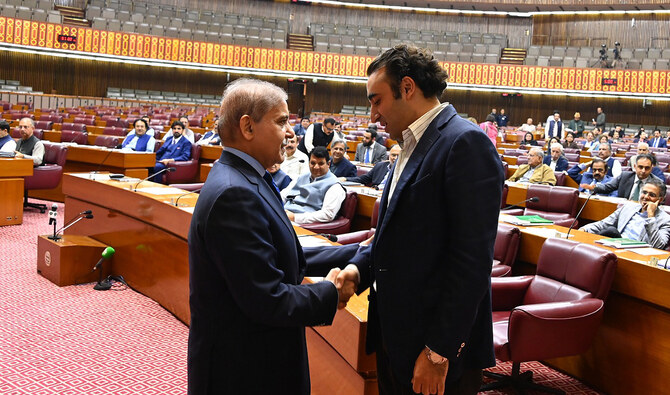
The redistribution hands the coalition, led by the PML-N and PPP, 235 seats in the 336-seat National Assembly, exceeding the 224 needed for a two-thirds majority. The opposition, now spearheaded by PTI, holds just 98 seats.
The National Assembly Secretariat’s Legislation Branch later confirmed the updated composition, reflecting 235 seats for the treasury benches and 98 for the opposition. The total of 333 seats accounts for one suspended member and two vacant reserved seats, underscoring the coalition’s dominance in the lower house.
The ECP redistributed reserved seats across all provincial legislatures. In Khyber Pakhtunkhwa, JUI-F received 10 seats, PML-N took seven, PPP gained six, and one each went to PTI-Parliamentarians and the Awami National Party. In Punjab, PML-N dominated with 23 seats, while PPP secured two, and one each was allocated to the Pakistan Muslim League-Quaid and Istehkam-i-Pakistan Party. The Sindh Assembly saw PPP gain two seats and the Muttahida Qaumi Movement-Pakistan one.
The redistribution stems from a protracted legal struggle that began after the February 8, 2024, general elections. PTI-backed independents, who joined the Sunni Ittehad Council (SIC) post-election, were initially denied reserved seats by a March 25, 2024, Peshawar High Court order.
The Supreme Court’s July 12 ruling briefly reversed that, recognizing PTI’s eligibility for reserved seats and directing 41 independent candidates to submit notarized statements affirming their party affiliation within 15 days. The ECP complied, notifying them as PTI members.
However, review petitions from PML-N, PPP, and the ECP challenged that decision. Initially rejected by Justices Ayesha A. Malik and Aqeel Ahmed Abbasi, the petitions gained traction when taken up by the Constitutional Bench. Justice Jamal Khan Mandokhail partly allowed the reviews, upholding his July 12 dissent that recognized PTI as a parliamentary party with 39 members entitled to reserved seats. Yet, he agreed to revisit the majority judgment concerning 41 additional seats.
Justices Muhammad Ali Mazhar and Syed Hasan Azhar Rizvi, part of the original majority, also shifted their stance, allowing the petitions. They argued that neither the Peshawar High Court nor the Supreme Court had fully resolved the candidates’ affiliations, directing the ECP to re-examine nomination papers and other documents for all 80 returned candidates.
The ECP now faces a 15-day deadline from the receipt of the court’s short order to finalize the allocation of reserved seats, a process that could further alter Pakistan’s political dynamics. The coalition’s newfound two-thirds majority empowers it to push through constitutional amendments, a prospect that has heightened tensions with the opposition, now reduced to a diminished presence led by PTI’s 98 seats.
Copyright © 2021 Independent Pakistan | All rights reserved