By Staff Reporter
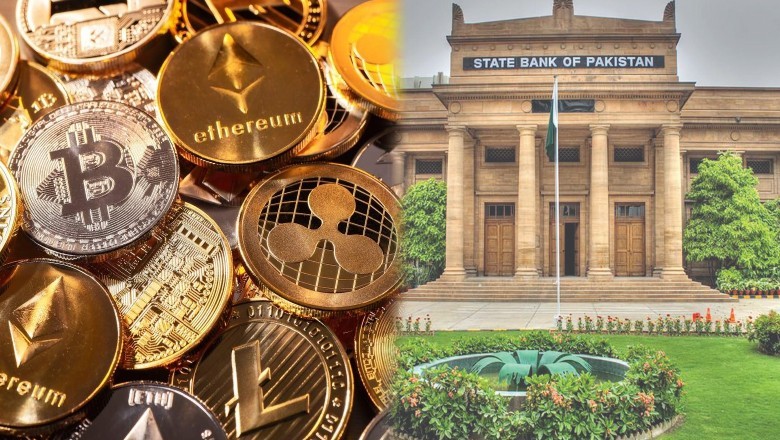
KARACHI: Pakistan’s central bank is preparing to launch a pilot for a digital currency and is finalising legislation to regulate virtual assets, as the government accelerates efforts to modernise the country’s financial system amid a global wave of interest in blockchain-based payments.
Central banks worldwide are increasingly exploring digital currencies, with regulators in China, India, Nigeria, and several Gulf states already testing or issuing their own versions through controlled pilot programs. Pakistan’s initiative reflects this broader shift toward integrating blockchain technology into the financial sector.
Speaking at the Reuters NEXT Asia summit in Singapore on Wednesday, State Bank of Pakistan (SBP) Governor Jameel Ahmad said the institution is “building up our capacity on the central bank digital currency” and aims to roll out a pilot soon.
Ahmad, who shared the stage with Sri Lanka’s central bank governor, P. Nandalal Weerasinghe, to discuss monetary policy challenges in South Asia, underscored the move as part of a broader push to keep pace with global financial innovation.
Ahmad also revealed that the SBP is finalising a new law to “lay down the foundations for the licensing and regulation” of the virtual assets sector. The central bank is collaborating with technology partners to support these efforts, he added.
The announcement builds on work by the Pakistan Crypto Council (PCC), a government-established body launched in March to promote virtual asset adoption. The PCC is exploring bitcoin mining using surplus energy, has tapped Binance founder Changpeng Zhao as a strategic adviser, and is planning a state-run Strategic Bitcoin Reserve. The council has also engaged with US-based crypto firms, including World Liberty Financial, a company linked to US President Donald Trump.
In May, the SBP clarified that virtual assets are not illegal in Pakistan but cautioned financial institutions against engaging with them until a formal licensing framework is established.
Ahmad addressed this balance during the summit. “There are risks associated, and at the same time, there are opportunities in this new emerging field. So we have to evaluate and manage the risk very carefully, and at the same time not allow to let go of the opportunity.”
On the monetary policy front, Ahmad signaled that the SBP would maintain a tight stance to keep inflation within its 5–7% medium-term target. Pakistan has made significant strides in curbing inflation, which dropped from 38% in May 2023 to 3.2% in June, averaging 4.5% in the 2025 fiscal year just ended, the lowest in nine years. This progress has enabled the central bank to slash its benchmark interest rate from 22% to 11% over the past year.
“We are now seeing the results of this tight monetary policy transfer, both on our inflation as well as on the external account,” Ahmad said. He noted that Pakistan’s foreign reserves have climbed to $14.5 billion, up from less than $3 billion two years ago, bolstering the country’s external position.
Ahmad downplayed concerns about exposure to a weakening US dollar, pointing out that Pakistan’s foreign debt is predominantly dollar-denominated, with only 13% tied to Eurobonds or commercial loans. “We don’t see any major impact,” he added.
Pakistan’s economic stabilization efforts are supported by a three-year, $7 billion International Monetary Fund (IMF) program, set to run through September 2027. Ahmad said the program remains on track, driving reforms in fiscal policy, energy pricing, and the foreign exchange market. “We are confident that after that [IMF program], maybe we will not require an immediate [follow-up],” he added, hinting at a potential step toward greater financial independence.
Virtual Assets Act Approved
On Wednesday, Pakistan also greenlit the Virtual Assets Act, 2025, with nods from the Federal Cabinet and President Asif Ali Zardari. The law creates the Pakistan Virtual Asset Regulatory Authority (PVARA), an independent body to license and oversee virtual asset players.
The PVARA is empowered to ensure transparency, compliance, financial integrity, and the prevention of illicit activities, aligning with international standards set by the Financial Action Task Force (FATF).
The authority’s board will include key stakeholders such as the SBP governor, secretaries of finance, law and justice, and information technology and telecommunications, as well as the chairpersons of the Securities and Exchange Commission of Pakistan (SECP), the Federal Board of Revenue (FBR), and the Digital Pakistan Authority. Two independent directors with expertise in virtual assets, law, finance, or technology will also be appointed by the federal government.
Under the new law, any individual or company seeking to offer virtual asset services in or from Pakistan must obtain a license from the PVARA. “A structured licensing regime will be introduced, with specific requirements for incorporation, operational capacity, compliance frameworks, and reporting obligations,” according to a government statement.
The act also fosters innovation by establishing a regulatory sandbox, allowing emerging technologies and business models to be tested under supervisory oversight. The PVARA may issue no-action relief letters under specific conditions to encourage experimentation while maintaining accountability.
Reflecting Pakistan’s commitment to Islamic finance, the legislation mandates the creation of a Shariah Advisory Committee to advise the authority on ensuring virtual asset products and services comply with Shariah principles. Licensed entities offering Islamic financial products will be required to adhere to the committee’s rulings.
To address disputes, the act establishes a virtual assets appellate tribunal, which will operate with judicial independence and feature a specialized bench of experts in law, finance, and technology.
Copyright © 2021 Independent Pakistan | All rights reserved