By Staff Reporter
ISLAMABAD: The Federal Board of Revenue (FBR) has rolled out a new interactive tax return form tailored for salaried individuals, aiming to simplify a process long criticized for its complexity.
The form, equipped with an auto-fill system that pulls in data on purchases, asset details, and tax deductions, promises to condense filing into a single, streamlined document.
Available now in English, the form will expand to Urdu by month’s end, with Sindhi and Pashto versions following in the initial phase. Plans are in place for Punjabi and Balochi editions later. Under the Income Tax Ordinance, individual taxpayers face a September 30 deadline to file returns.
The form is built around eight digital windows, each with one input field and a clear, step-by-step prompt. Enter an employer’s name in the first window, and tax deduction details populate automatically. Input bank account information, and closing balances appear.
Purchases tied to a filer’s Computerised National Identity Card (CNIC) also load without manual entry, cutting down on errors and time. “All deductions of withholding taxes based on the CNIC numbers will also appear on the form,” the FBR said in a statement, highlighting the system’s reliance on integrated data.
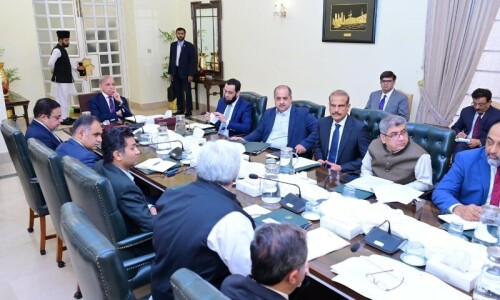
Prime Minister Shehbaz Sharif, a key driver behind the initiative, has framed it as part of a broader effort to ease burdens on taxpayers. At a Monday meeting reviewing FBR progress, he directed the agency to launch digital invoicing in Urdu and fast-track refunds under Rs50,000 for salaried filers, with Rs10 billion slated for release within a month of submission.
“Tax reforms should focus on facilitating citizens,” Sharif said, singling out the salaried class as the primary beneficiaries of the simplified system. He also ordered the FBR to set up a helpline to guide users through the process.
The digital form will be accessible to salaried individuals starting Tuesday, with other taxpayers gaining access by July 30. Sharif praised the shift to a concise, database-linked system, calling the AI-based tax assessment tool a “major success” and urging a public campaign to boost its adoption.
Sharif stressed accountability, pushing for third-party validation of all FBR reforms. He also instructed officials to offer incentives for small and medium-sized businesses to adopt the digital invoicing system, which will mandate receipts via the FBR’s online platform at every sale and purchase.
Some 20,000 businesses are expected to join in the coming months. The meeting provided updates on parallel efforts: the FBR’s Command and Control Unit, set to go live by September, will centralize data and sharpen oversight.
An AI-driven assessment system will let traders file advance goods declarations before ships dock, skipping upfront duties and taxes. Officials project this will lift advance declarations from 3% to over 95%, speeding containers from ports to factories. Cargo tracking is already paying off, 8,000 invoices worth Rs11.6 billion were issued in a single month.
The system offers a taxpayer portal, a monitoring dashboard, and free integration via Pakistan Revenue Automation Limited (PRAL). Once fully rolled out, traders can skip separate sales tax filings, with transactions logged automatically.
Sharif called digitization the government’s “top priority,” arguing it would root out opacity in the tax system. “Digitalising payment systems between the public and the government will enhance transparency and ease of use for citizens,” he said.
He pressed for faster progress toward a cashless economy, with simplified processes for SMEs and full integration of state-owned enterprises into the digital fold. The prime minister set a September deadline for appointing Raast’s board of governors and chairman, insisting on business expertise for the instant payment system’s leadership.
User numbers for mobile apps and digital banking are forecast to climb from 95 million to 120 million, while digital payment volumes could double from Rs7.5 billion to Rs15 billion. A nationwide awareness drive on Raast and digital payments kicks off next month. To match global standards, a Digital Payments Index will debut within a month.
Copyright © 2021 Independent Pakistan | All rights reserved