By Staff Reporter
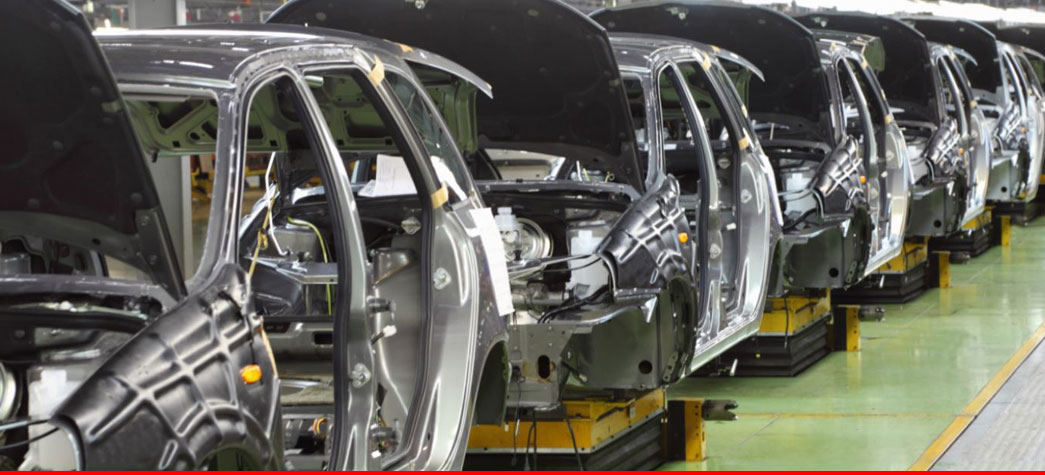
ISLAMABAD: The auto manufacturers, long accused of operating a cartel that has entrenched a monopoly in the market with powerful backing from politicians and lawmakers, have threatened to halt local production and switch to importing and selling used vehicles if the government proceeds with plans to allow such imports at a 40 percent tariff from July 2026 — a policy they claim could lead to the same fate as major auto giants that shut down operations in Australia and New Zealand.
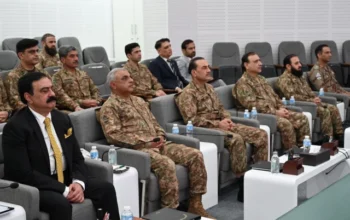
The standoff intensified during a fiery joint session of the Senate Standing Committees on Finance and Revenue and on Industries and Production at Parliament House on Monday, co-chaired by Senators Saleem Mandviwalla and Aon Abbas, where the automobile sector’s grievances took centre stage.
Auto industry representatives decried the prevailing tax burden and emerging policy obstacles as dire threats to their operations. Annual vehicle output in Pakistan remains stagnant at around 150,000 units — the same level as in 2004 — despite progress in localising production, they noted, warning that cuts to regulatory duties on used cars could spell doom for the sector.
Commerce Ministry officials, however, emphasised that easing restrictions on commercial imports of used vehicles aligns with binding IMF commitments. The move has already prompted duty reductions aimed at spurring competition and easing consumer burdens, with plans for further cuts ahead and an extension of the age limit for importable cars from five years to six or seven.
They made clear that the tariff rollback on used imports is non-negotiable under IMF terms, though the government has pushed back the start date from an initial September 2025 to July 2026 to soften the blow.
Auto sector countered with assertions that taxes make up 61 percent of vehicle costs, inflating prices unnecessarily, and insisted that Pakistani-made cars rival Japanese ones in quality, differing merely in specifications.
Auto parts makers pressed the panel to outright ban used car imports, arguing that two million jobs hang in the balance. Toyota Indus Motors executives broke down the tax structure across vehicle categories, revealing that duties on the SUV Fortuner alone reach Rs1.44 crore, pushing its market price to Rs2.44 crore.
While the session saw broad support for the industry, including from Industries panel chairman Aon Abbas, dissent emerged from just two senators, who criticised ongoing “own money” practices and the severely compromised standards of local carmakers.
Own money, or “on money,” in the auto industry refers to an unofficial, extra payment made to dealers for immediate delivery of a car, bypassing long wait times caused by production shortfalls and inefficiencies. This practice stems from limited production capacity and artificial shortages, which consumers have become accustomed to, even though it drives up costs and protects local manufacturers.
Senator Muhammad Abdul Qadir delivered a pointed rebuke to domestic manufacturers, championing the duty reductions as a catalyst for genuine market competition that would ultimately serve consumers’ interests.
After thorough debate, the joint committee urged a rationalisation of regulatory duties on used cars, highlighting potential fallout for the livelihoods of two million households linked to the automobile industry.
In a country where over 90 percent of the population cannot afford the exorbitantly high prices of locally assembled cars, widely criticised for their subpar quality, the manufacturers’ aggressive stance has underscored their history of repeatedly blocking used car imports, which many view as a much-needed blessing for ordinary Pakistanis seeking affordable transportation options.
In separate discussions, Ministry of Industries officials outlined a Voluntary Separation Scheme for Utility Stores Corporation staff, with a proposal already forwarded to the Cabinet’s Economic Coordination Committee requesting Rs15 billion for implementation at its upcoming meeting.
The committees also tackled a recent blaze in Karachi’s Export Processing Zone, triggered by delays in disposing of accumulated wastes, instructing the Federal Board of Revenue to develop a practical system for timely waste clearance to prevent future mishaps. Concerns over escalating taxes in EPZs, despite statutory protections, were also aired, with an FBR inland revenue official assuring that the issue is being addressed in the forthcoming industrial policy.
Copyright © 2021 Independent Pakistan | All rights reserved