By Staff Reporter
ISLAMABAD: Pakistan and China reaffirmed their “iron-clad and all-weather strategic cooperative partnership” on Tuesday, pledging deeper collaboration in trade, infrastructure, and security during a high-level meeting in Beijing, even as both nations grapple with rising militant threats targeting Chinese projects in Pakistan.
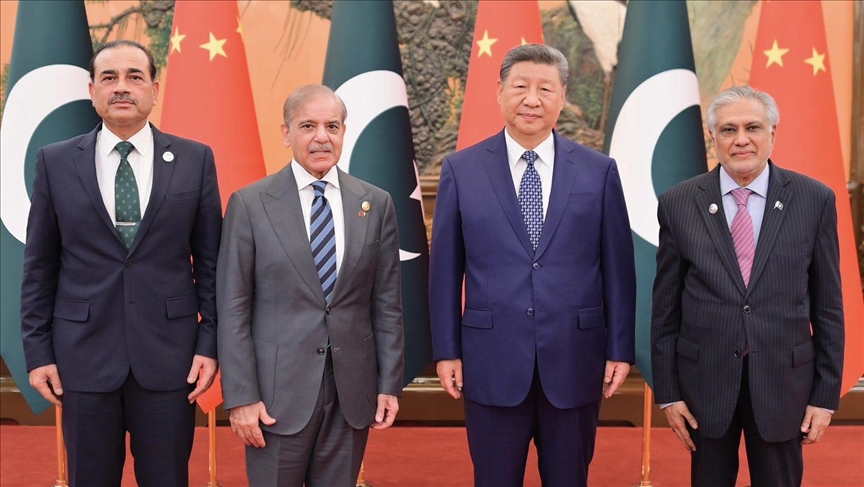
The commitment was reaffirmed during a high-level meeting between Pakistani Prime Minister Shehbaz Sharif and Chinese President Xi Jinping at the Great Hall of the People in Beijing, on the sidelines of the Shanghai Cooperation Organisation (SCO) Council of Heads of State summit, held from August 31 to September 1 in Tianjin. The discussions underscored the unique bond between the two countries, with both leaders emphasising the need for enhanced cooperation to reflect their unparalleled relationship.
“The two leaders agreed that the relationship between their countries was unique and unparalleled, which should be reflected in their enhanced bilateral cooperation,” the state-run Associated Press of Pakistan (APP) reported.
The talks focused heavily on the China-Pakistan Economic Corridor (CPEC), a flagship project of China’s Belt and Road Initiative (BRI), which has driven billions of dollars in infrastructure and energy investments in Pakistan. Prime Minister Sharif reaffirmed Pakistan’s commitment to the next phase of CPEC, which includes five new corridors aimed at boosting Pakistan’s agriculture, industry, and technology sectors. “Pakistan takes great pride in Beijing’s achievements and will always stand ready to work together with China in this great journey,” Sharif said, according to the Pakistani Prime Minister’s Office (PMO).
President Xi, in turn, emphasized China’s continued support for Pakistan’s economic development, particularly as CPEC enters its second phase. “China will continue to assist Pakistan in all fields of economic growth and development, especially as the two countries are now ushering in the second Phase of CPEC, which will focus on Pakistan’s most important economic sectors,” Xi was quoted as saying by the APP.
The meeting, attended by key Pakistani officials including Deputy Prime Minister and Foreign Minister Ishaq Dar and Chief of Army Staff Field Marshal Asim Munir, also addressed pressing security concerns. Xi urged Pakistan to strengthen protections for Chinese nationals and projects, a pointed request reflecting Beijing’s growing unease over a series of deadly militant attacks targeting its citizens in Pakistan. “China hopes Pakistan will take effective measures to ensure the safety of Chinese personnel, projects, and institutions in Pakistan,” Xi said, according to China’s Xinhua News Agency.
The unusually direct appeal reflects Beijing’s unease over recent militant attacks, including a March 2024 suicide bombing near the Dasu Dam that killed five Chinese engineers and a Pakistani driver, claimed by the Pakistani Taliban, and an October 2024 attack near Karachi airport that killed two Chinese nationals, claimed by the Baloch Liberation Army. Separatists in Balochistan have targeted CPEC projects, alleging resource exploitation, a charge both governments reject.
Sharif vowed that Pakistan would “spare no effort” to ensure security while reiterating support for the one-China principle and Xi’s Global Governance Initiative, which promotes multilateralism and a greater role for developing nations in global rules. Sharif described the initiative as vital for “global peace, development, and stability.”
The meeting, attended by Pakistani Deputy Prime Minister Ishaq Dar and Chief of Army Staff Field Marshal Asim Munir, also covered regional and global issues, with both leaders agreeing to maintain close coordination. Sharif praised Xi’s “visionary leadership,” congratulated him on the SCO summit’s success, and marked the 80th anniversary of the World Anti-Fascist War. He extended a “cordial” invitation for Xi to visit Pakistan in 2026 to celebrate 75 years of diplomatic ties.
Sharif’s six-day China visit included SCO summit engagements and meetings with leaders from Russia, Malaysia, and Central Asian republics. On Tuesday, he held talks with Tajik President Emomali Rahmon, agreeing to deepen ties in trade, energy, and cultural exchanges, the PMO said. Sharif is also scheduled to meet Russian President Vladimir Putin during the trip.
The reaffirmed Pakistan-China partnership underscores a shared resolve to navigate economic and security challenges while advancing CPEC and global initiatives. As Pakistan confronts domestic instability and economic pressures, its alliance with China remains a linchpin of its foreign policy, with both nations committed to a “stronger Pakistan-China community with a shared future,” according to the PMO.
Copyright © 2021 Independent Pakistan | All rights reserved