By Staff Reporter
ISLAMABAD: Pakistan’s political dynasties, including the Sharifs, Zardaris, and Jahangir Tareen, have reaped an estimated Rs300 billion in sugar mill profits since exports were permitted in 2024, official records show, wielding policy influence to shield the industry as half the mill owners hold government or parliamentary posts.
Securities and Exchange Commission documents, prepared for a National Assembly sub-committee probing windfall profits, reveal ownership by political families in sugar mills across Punjab and Sindh, exposing how elites exploit Pakistan’s second-largest cash crop, sugarcane, at the expense of farmers and consumers.
The Sharif family, led by Prime Minister Shehbaz Sharif of the Pakistan Muslim League-Nawaz (PML-N), controls nine mills—Abdullah, Brother, Channar, Chaudhry, Haseeb Waqas, Ittefaq, Kashmir, Ramzan, and Yousaf—dominating Punjab’s sugar sector. The documents name Hamza Shahbaz Sharif, a senior PML-N figure and Sharif’s son, his brother Shehbaz Sharif, and Nusrat Shahbaz as shareholders in Ramzan Sugar Mills, with Hamza and Nusrat also holding stakes in Al-Arabia Sugar Mills. PML-N allies own mills in Kamalia and Layyah.
In Sindh, President Asif Ali Zardari, co-chairman of the Pakistan Peoples Party, is linked to the Omni Group, controlling five mills—Ansari, Mirza, Pangrio, Sakrand, and Kiran—plus others. The group’s chairman, Khawaja Anver Majid, sole owner of Tando Allahyar Sugar Mills, received the Hilal-e-Imtiaz from Zardari in 2025, sparking criticism.
Jahangir Tareen, a former minister and ex-ally of former Prime Minister Imran Khan, runs six mills under the JDW Group, Pakistan’s largest sugar outfit with a 16% market share and annual revenues near Rs130 billion.
Other shareholders include Chaudhry Shujaat Hussain, Pakistan Muslim League-Quaid president, and his son Salik Hussain, a federal minister, in Punjab Sugar Mills; Moonis Elahi, a former PML-Q lawmaker, and Makhdoom Umar Shehryar, from south Punjab’s Makhdoom family, in RYK Mills; and Makhdoom Hashim Jawan Bakht, a former Punjab finance minister, with Umar Shehryar in Ittehad Sugar Mills.
Dost Ali Mazari and Tariq Ali Mazari, from Sindh’s Mazari tribe, partly own Baluch Sugar Mills. Chaudhry Sugar Mills lists Abdul Aziz Abbas Sharif, Abdullah Yusuf Sharif, and the Sharif Trust as shareholders. Cheema Sugar Mills names Chaudhry Anwar Ali, Sardar Muhammad Arif Nakai, a former provincial minister, and Muhammad Shafi.
Zaka Ashraf, former Pakistan Cricket Board chairman, holds shares in Ashraf Sugar Mills; Mian Aamir Mehmood, a former Lahore mayor, is linked to Rahim Yar Khan Sugar Industry. Madina Sugar Mills lists Muhammad Rasheed and Muhammad Mujtaba; Fatima Sugar Mills includes Abbas Mukhtar, Faisal Mukhtar, and Fawad Mukhtar.
The disclosures, prompted by parliamentarians, were made after the retail prices hit Rs190 per kg in Karachi, Islamabad, and Rawalpindi, averaging Rs188.44 nationally in early September 2025, per the Federal Bureau of Statistics, driven by exports and alleged cartelisation.
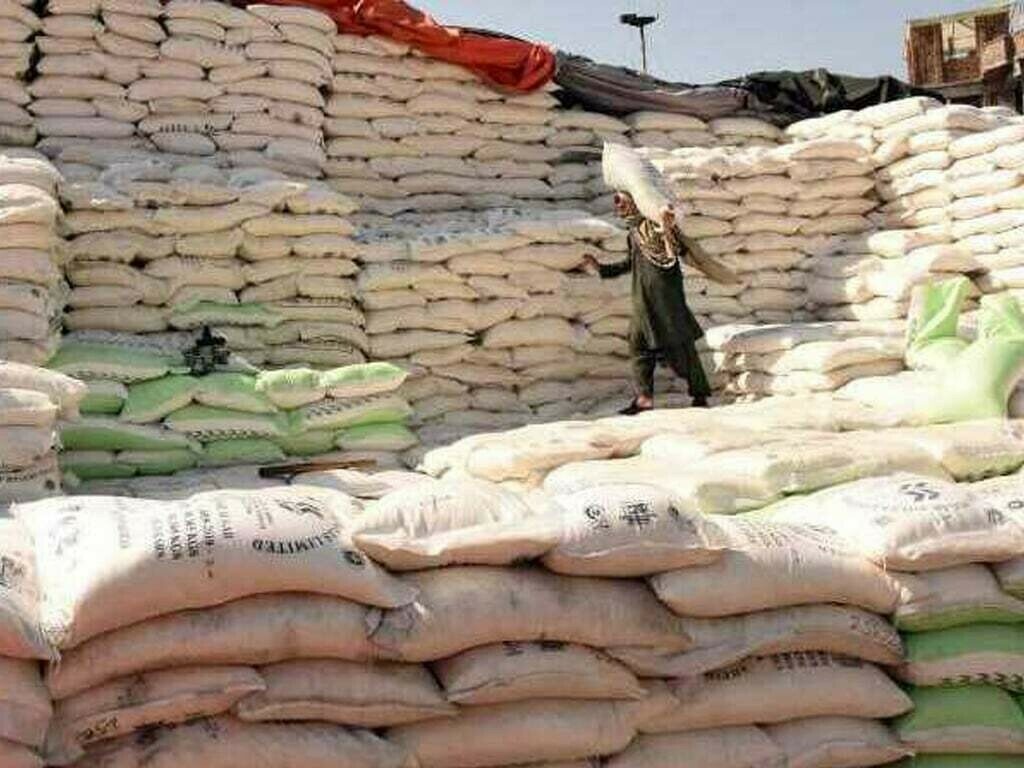
Pakistan, under millers’ pressure, exported 790,000 tonnes of sugar last year, with millers claiming exports would keep domestic prices “stable” at Rs147 per kg. Erratic weather in the 2024-25 season cut production to 5.8 million metric tons, below the projected 7 million tons. Exports halted in January 2025, with stocks at 6.3 million metric tons, including a 0.5-million-ton buffer, insufficient until the new crushing season. The cycle of exporting sugar and then importing it burdens consumers, facing a high cost of living in a low-inflation scenario.
The opposition Pakistan Tehreek-e-Insaf accused Zardari and Sharif of shielding profiteers. Between July 2024 and June 2025, 67 mills exported 746,469 tons worth $400.02 million (Rs111.97 billion). JDW Sugar Mills led with 73,090 metric tons (Rs11.1 billion), followed by Tandlianwala Sugar Mills with 41,412 metric tons (Rs5.98 billion) and Hamza Sugar Mills with 32,486 metric tons (Rs5.03 billion).
Other exporters included Thal Industries Corporation with 29,107 metric tons (Rs4.55 billion), Almoiz Industries with 29,453 metric tons (Rs4.32 billion), JK Sugar Mills with 29,969 metric tons (Rs4.09 billion), Madina Sugar Mills with 18,869 metric tons (Rs2.79 billion), and Fatima Sugar Mills with 17,365 metric tons (Rs2.68 billion).
The government approved 500,000 tonnes of imports to address a 2.1 million-tonne deficit, with Trading Corporation of Pakistan shipments due by late September. The Competition Commission of Pakistan is probing 79 mills for cartelisation, with hearings delayed to late September, following a 2021 fine of Rs44 billion on the Pakistan Sugar Mills Association for anti-competitive practices. A 2020 probe, triggered by prices hitting Rs100 per kg, targeted hoarding at 81 mills, including Tareen’s JDW Group.
With politicians owning half of Pakistan’s mills—including Zardari, Tareen, and the Sharifs—their policy influence stalls reform, experts say. A 2020 inquiry under Imran Khan exposed subsidy fraud, but progress has faltered.
Former Prime Minister Shahid Khaqan Abbasi, convener of the Awaam Pakistan Party, said on Thursday that Rs300-400 billion from public funds had enriched mill owners, accusing governments of favouring their interests. At a news conference, he said sugar prices rose 50% in a year, alleging imports benefited mill owners over consumers. “I don’t level allegations of corruption; let the people decide whether this is incapability or corruption that so much money from people’s pockets went to the mill owners. This trend continues despite some eight committees meant to monitor sugar production, availability, and price,” he said, noting most mills are owned by government figures.
Abbasi said a one-rupee per kg price hike costs the public Rs7 billion and slammed exports amid shortages. “Even today, Rs1 billion is going to sugar mill owners from people’s pockets daily. The government, parliament, and sugar price control committees have failed,” he said.
He called the worsening flour crisis further proof of poor governance. “This is the state of governance in the country. Is there anyone who will answer? At least admit the mistake. A senior minister, Khawaja Asif, said on the assembly floor that corruption had surged, then another minister attacked him, but neither the cabinet nor the parliament took notice,” he said.
Copyright © 2021 Independent Pakistan | All rights reserved