By Staff Reporter
ISLAMABAD: Pakistan has issued a double rebuke to international scrutiny of its conduct, rejecting outright an Amnesty International report into deadly air strikes in Kabul while separately voicing “disappointment” at a European Union assessment that found the country had regressed on several of its human rights and governance commitments.
The two disputes, aired at a single weekly briefing in Islamabad on Thursday, illustrate the mounting friction between Pakistan and international monitors over both its security conduct across the Afghan border and its record on the labour, environmental and rights standards that underpin its preferential trade access to European markets.
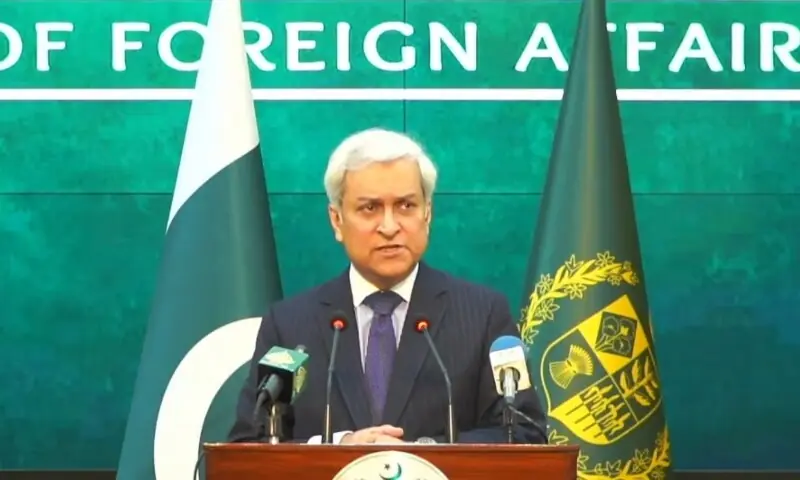
Foreign Office spokesperson Tahir Andrabi used the briefing to “completely” reject findings published by Amnesty International on Monday, which alleged that Pakistani forces struck a rehabilitation facility in Kabul on 16 March, causing significant civilian casualties.
“We completely reject the allegations made by Amnesty International,” Andrabi told reporters, describing it as “unfortunate that such serious allegations have been presented without any credible evidence.”
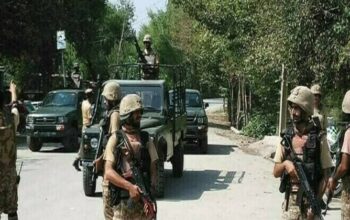
Islamabad has previously said the March strikes targeted an ammunition and drone storage facility, not a rehabilitation centre. Both the Pakistani government and military have maintained that account since the operation was carried out on the night of 16 March.
Andrabi said any military action taken by Pakistan inside Afghanistan was carried out “in exercise of its right to self-defence under principles of necessity and as a measure of last resort”, and was “directed only and exclusively against terrorists and their logistical support bases”.
He said the response had been “proportionate to the level of threat while strictly adhering to the principle of distinction, precaution and proportionality”, adding that its scale reflected “restraint, particularly in light of the severity and frequency of terrorist attacks faced by Pakistan.”
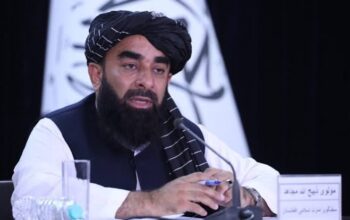
The spokesperson went further, calling on Amnesty and the wider international community to turn their attention instead to what he described as the Afghan Taliban’s “continued patronage of terrorist groups”, arguing the rights group’s report had “conspicuously failed to address” the root causes of cross-border violence.
He accused the Taliban administration in Kabul of sustaining a “permissive environment” for groups including the Pakistani Taliban (TTP) and the Baloch Liberation Army (BLA), saying these organisations retained the freedom to organise, recruit, finance and launch attacks from Afghan territory.
“The freedom to undertake terrorist activities allowed to these listed organisations, their access to bases and sanctuaries on Afghan soil, as well as ability to recruit, finance and execute cross-border attacks, constitutes a serious threat to regional peace and security.”
Andrabi said such attacks had killed and injured thousands of Pakistani civilians and security personnel, and asserted they had been “planned, financed, supported and carried out from Afghan soil all under the watch and patronage and active facilitation by the Taliban regime.”
He called on the international community to hold Kabul accountable under relevant United Nations Security Council resolutions and under commitments made in the 2020 Doha agreement, which committed the Taliban to preventing Afghan territory being used as a base for attacks on other countries. Pakistan, he said, reserved the right to “take all necessary measures in order to safeguard its sovereignty, territorial integrity, and safety and security of its people.”
“No responsible state can remain passive when its civilians and security forces are repeatedly targeted,” he said.
Islamabad has repeatedly pressed the Taliban government to shut down militant sanctuaries on Afghan soil, appeals that officials say have so far gone unanswered.
EU trade report finds Pakistan “regressed” on rights commitments
Separately, Andrabi addressed a European Commission report issued last week as part of a wider review of countries’ compliance under the Generalised Scheme of Preferences Plus, the trade arrangement that grants Pakistan tariff-free access to EU markets in exchange for implementing 27 international conventions on human rights, labour standards, environmental protection and good governance.
The report, covering the 2023-2025 assessment period, concluded that Pakistan had “regressed in a number of areas while positive change was limited.”
While Andrabi welcomed the Commission’s “acknowledgement of Pakistan’s legislative progress” and recognition of its continued compliance with the underlying conventions, he said the overall findings painted an unfair picture.
“Nevertheless, I would be remiss if I do not express disappointment with the assessment, with the report’s overall narrative which does not present sufficiently balanced pictures of Pakistan’s performance.”
He argued the report “understates the breadth of reforms undertaken since Pakistan joined GSP+ in 2014” and “places disproportionate emphasis on the lower-than-desired progress in a few areas.”
Despite the criticism, Andrabi was at pains to stress that Islamabad valued the scheme, describing GSP+ as “central to Pakistan’s economic relationship with the EU, supporting exports, employment, women’s economic participation, poverty reduction and broader economic development,” and calling it “a mutually beneficial arrangement.”
“We will remain constructively engaged with the European Commission and other EU institutions and remain committed to the effective implementation of international conventions underpinning the GSP framework.”
He noted that Pakistan’s relationship with the EU extended well beyond trade, encompassing cooperation on development, migration, counterterrorism, regional stability, climate resilience and connectivity.
Copyright © 2021 Independent Pakistan | All rights reserved