By Staff Reporter
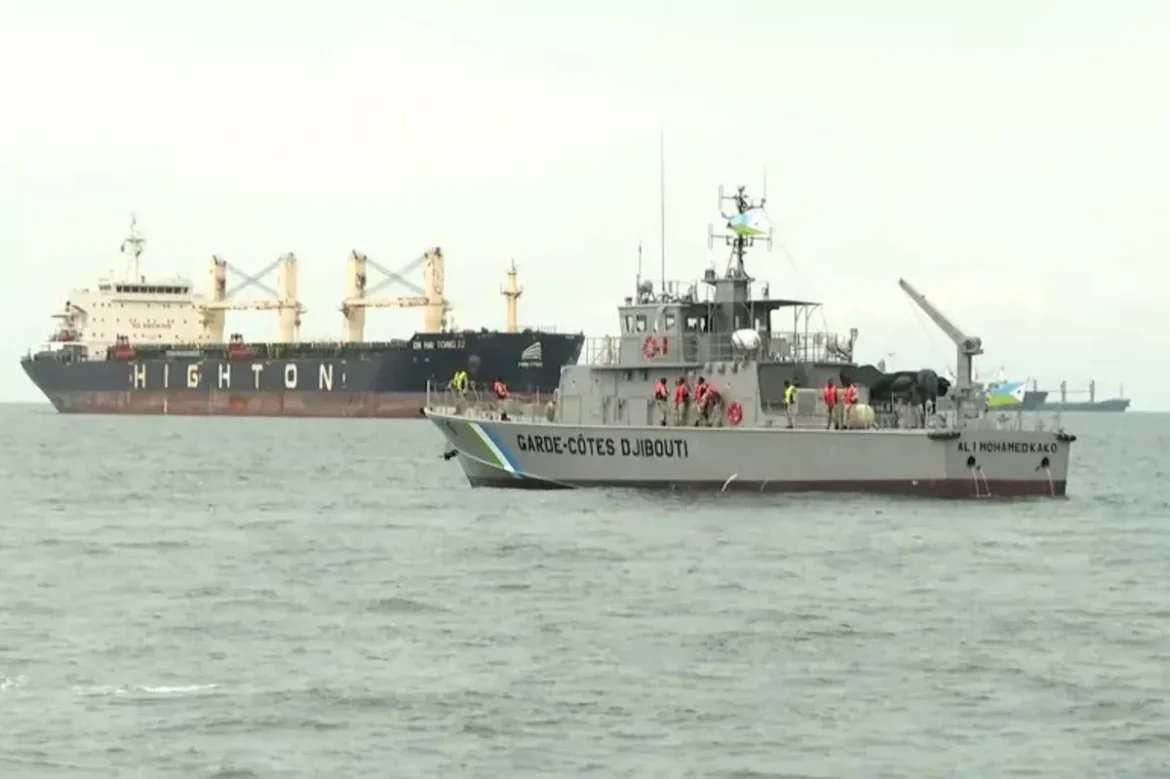
ISLAMABAD: Yemen’s Houthi rebels struck two Saudi Arabian oil tankers with a barrage of missiles and drones on Wednesday evening, the group claimed, in an attack that threatens to open a second maritime front in the Middle East war even as the United States pressed on with its bombing campaign against Iran, now in its twelfth consecutive night.
The Iran-aligned group named the vessels as the Encelia and the Layla, both Saudi-flagged, and said in a statement issued Wednesday that the strikes were retaliation for what it called violations of a naval blockade it had declared against Saudi Arabia earlier in the week. The group said it deployed a combination of ballistic and cruise missiles alongside drones, and claimed separately to have forced around ten other ships to abandon their routes and turn back.
Saudi Arabia’s state news agency, SPA, confirmed on Thursday that the Encelia had been hit, quoting an official at the General Transport Authority who said the strike caused a fire on the vessel’s bow. All crew members were reported safe, and authorities said they had secured the ship and taken steps to protect the surrounding marine environment. The agency did not attribute the attack to any party, but described it as a breach of international law. Riyadh has not commented on the fate of the Layla.
Details of the assault emerged in fragments over several hours. A maritime security source said the Encelia had issued a distress call over VHF radio, reporting it had been struck by a missile while operating near the Saudi port of Jizan. The British risk-management firm Vanguard said the tanker was hit by an unidentified projectile on its starboard side roughly 70 nautical miles southwest of Al Shuqaiq, timing the strike at around 8pm GMT on Wednesday. The UK Maritime Trade Operations agency separately confirmed a report from the same stretch of water, saying a tanker’s master had reported being struck by an unknown projectile that started a fire the crew was still fighting when the report came in. No casualties or environmental damage had been recorded, UKMTO said, though it stopped short of confirming the vessel involved was the Encelia.
The Houthis’ declared blockade, announced on Monday, has already begun reshaping traffic through one of the world’s most important shipping corridors. Ship-tracking data show at least nine vessels reversing course rather than risk the Bab al-Mandeb strait in the days since, among them three tankers that had just taken on crude at Saudi Arabia’s Yanbu terminal. Even so, nearly thirty ships were recorded crossing the strait as recently as Tuesday, suggesting the blockade’s practical reach remains far from total.
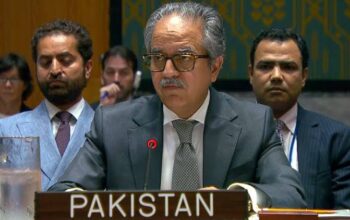
Pakistan became the first non-Arab country to respond forcefully to the threat, warning on Wednesday that it reserved the right to take “all necessary measures” in self-defence should its maritime interests come under attack. The warning reflects how much is riding on the Bab al-Mandeb for Islamabad: a significant share of the country’s oil imports moves through the strait, though no Pakistani vessel has yet been reported targeted.
Washington presses on with nightly strikes
The tanker attacks landed against the backdrop of an American bombing campaign that has now run for twelve uninterrupted nights, ordered by President Donald Trump after a ceasefire brokered in June collapsed. US Central Command said the strikes carried out from Wednesday into Thursday targeted Iranian military assets including maritime capabilities, missile and drone storage sites, coastal surveillance positions and air defences, and said the campaign was intended to erode Iran’s capacity to threaten commercial shipping.
Central Command added that it had, over the course of the month, struck dozens of Iranian military sites on land while simultaneously enforcing a naval blockade, redirecting nine commercial vessels and disabling a tenth to prevent movement in and out of Iranian ports.
Earlier on Wednesday, before the Red Sea attacks became public, Trump had raised the stakes further, warning that any Iranian strike on a vessel in the Strait of Hormuz — whether by missile, rocket, drone or any other weapon — would be met with the destruction of an Iranian bridge or power plant. Iran’s joint military command responded that any such move against its infrastructure would prompt retaliation against regional oil, gas, electricity and economic targets, and vowed to halt oil exports entirely. Iran’s Revolutionary Guards later reported an explosion along what they described as a mined route south of the strait, saying one of three tankers attempting to pass had caught fire while the other two turned back. The Guards maintained that the strait remained under their control and “completely closed,” and said no vessel would be permitted through without their coordination.
Foreign minister Abbas Araghchi reiterated Tehran’s position on social media on Wednesday, describing the country’s defence doctrine as “eye for an eye” and warning that any aggression against Iranian infrastructure would provoke a powerful response. Parliament speaker Mohammad Bagher Qalibaf, who has led Iran’s side of the negotiations, was equally uncompromising, writing that the situation in the strait “will not return to prewar conditions.”
The strikes have continued to fall in new places. Iranian media reported that American forces hit a military target near Bushehr twice on Thursday, close to the country’s only functioning commercial nuclear reactor — the third strike in that area in two days. State television reported that two people were killed and eleven wounded in a separate American missile strike on the Shalamcheh border crossing with Iraq, according to a provincial official in Khuzestan. An Iranian health ministry official has put the wider civilian toll since the conflict reignited at 53 dead and 592 wounded, on top of what officials describe as thousands killed and millions displaced since the war began in late February.
The fighting has spread beyond Iran’s borders. Kuwait’s armed forces said they were intercepting hostile drones early on Thursday following days of Iranian strikes, while Jordan reported shooting down four missiles and four drones. Air raid sirens sounded in Bahrain, where an explosion was heard in the capital, Manama. Iran’s Revolutionary Guards confirmed carrying out strikes against American assets in all three countries, and have also targeted energy infrastructure and desalination plants supplying drinking water to Gulf states — attacks that fall foul of international law except where the infrastructure in question serves a military purpose.
A mounting toll, and no sign of a diplomatic path
The financial and human cost of the conflict has become a source of open conflict in Washington. Defense Secretary Pete Hegseth told a bruising Senate Appropriations Committee hearing on Tuesday that the war had cost $37.5 billion to date, a figure that has climbed steadily from around $29 billion in mid-May, and told lawmakers the Pentagon would need close to double that sum to sustain operations into the autumn. Eighteen American service members have now been killed since the war began, and nearly 100 have been wounded. Trump travelled to Dover Air Force Base on Wednesday for the return of the remains of four service members killed in recent days — three in an Iranian attack on a base in Jordan, and a fourth during a controlled detonation of an unexploded Iranian drone in Iraq.
“For me it’s one of the hardest things to do as a president. But it has to be done,” Trump told reporters before the ceremony. Speaking later the same day in Georgia, his tone shifted markedly: he described the conflict as “a skirmish.”
Trump has dismissed polling showing the war lacks public support, arguing that opposition to high fuel prices does not translate into opposition to the campaign itself. Markets have registered the strain regardless. Brent crude, the international benchmark, briefly broke above $95 a barrel on Wednesday — its highest level in almost six weeks and a sharp climb from below $72 earlier in the month, before the current escalation began.
Diplomatic efforts appear to have stalled. Iran’s interior minister, Eskandar Momeni, travelled to Pakistan, a key mediator, in an attempt to revive talks, though it remains unclear what compromise might be on offer. A ministry spokesman in Tehran insisted this week that “diplomacy isn’t called off” and that messages were still being exchanged, without giving further detail. An Arab diplomat, speaking on condition of anonymity, described growing pessimism among Gulf states about finding any route to de-escalation, despite continued efforts by regional powers including Turkey.
Speaking at an ASEAN summit in Manila on Wednesday, US Secretary of State Marco Rubio warned against the precedent Iran’s actions risked setting. Allowing a state to control an international waterway and threaten vessels that decline to pay a toll would be dangerous, he said, and could invite similar behaviour elsewhere, including in Asia. Rubio maintained that Washington remained open to negotiations, but said Iran did not currently appear to be serious about pursuing them.
Trump has also signalled, in comments made on Tuesday, that the campaign could soon extend to Pickaxe Mountain, a fortified, under-construction facility dug into a mountainside beside Iran’s Natanz enrichment site — itself struck by the US during the twelve-day war with Israel in 2025. Iran continues to insist its nuclear programme is peaceful, even as it has resumed enriching uranium to near weapons-grade levels since Trump withdrew the US from the 2015 nuclear agreement during his first term.
Copyright © 2021 Independent Pakistan | All rights reserved