By Staff Reporter
KARACHI: Surging rivers swollen by heavy monsoon rains and major water releases from India continued to batter the eastern Punjab province on Saturday, pushing flood levels to exceptional highs and triggering warnings of widespread inundation downstream in southern Sindh province, where officials said more than 1.6 million people are at risk.
The Flood Forecasting Division reported a continued surge in river flows on Saturday afternoon, with the Chenab carrying 291,558 cusecs at Chiniot and 449,668 cusecs at Trimmu Headworks near Jhang, both classified as high flood. Further downstream, Panjnad in southern Punjab was flowing at 384,124 cusecs, also rated high.
On the Ravi, flows reached 159,690 cusecs at Balloki Headworks south of Lahore and 97,242 cusecs at Sidhnai in Khanewal, both flagged as very high flood. At Shahdara, near the provincial capital Lahore, 103,160 cusecs were recorded, a high flood level.
The Sutlej remained the most critical, swollen by upstream releases from India. At Ganda Singh Wala near Kasur, 303,828 cusecs were passing through, classified as exceptionally high flood. Downstream levels included 137,232 cusecs at Sulemanki, rated high, and 103,465 cusecs at Islam Headworks, classified as medium flood.
Addressing a news conference, Director General of the Punjab Disaster Management Authority (PDMA) said the surge at Panjnad was expected to peak at around 600,000 cusecs, adding that the flood wave of up to 800,000 cusecs was then projected to move downstream with additional water from the Indus River before reaching the Guddu Barrage in Kashmore district.
The flood water is expected to reach Sindh between Sept. 7 and 8, raising the risk of inundation in low-lying areas.
The eastern Punjab province has been battered by devastating floods since late last month, owing to torrential monsoon rains and major water releases by upstream India into the Ravi, Sutlej and Chenab rivers, killing 50 people and bringing the seasonal death toll in the province to 231 since June.
A report from the Punjab PDMA states that at least 4.2 million people have been affected by flooding in the province’s rivers. It added that 2.3 million people have been rescued and relocated to safer areas, while 4,100 villages were affected by flooding in the Chenab, Ravi and Sutlej.
“In districts affected by severe flooding, 423 relief camps have been set up,” Punjab Relief Commissioner Nabeel Javed said. Another 512 medical camps have been set up in the affected districts, as well as 432 veterinary camps to treat livestock. “We relocated 1.51 million animals to safe places in the affected districts during rescue and relief activities,” Javed was quoted as saying.
The Punjab PDMA warned that dams are nearing their capacity. “Mangla Dam is 87 percent full while Tarbela Dam is 100pc full,” Javed warned in the report. “The Indian Bhakra Dam on the Sutlej River is 90pc full. Pong Dam is 99pc full, while Thein Dam is 97pc full.”
Punjab is also home to half of the country’s 240 million people and accounts for much of its wheat and rice production, creating food security concerns as initial estimates suggest 1.3 million acres of agricultural land have been inundated in the province amid the flooding of the three rivers.
Nationwide, the National Disaster Management Authority (NDMA) has said that 907 people have died and 1,044 have been injured so far due to ongoing rains and floods across the country.
According to the NDMA data, Punjab has recorded 223 fatalities and 654 injuries, while Khyber Pakhtunkhwa has reported 502 deaths and 218 injuries. In Sindh, 58 people have died and 78 were injured. Balochistan has seen 26 deaths and five injuries, Gilgit-Baltistan 41 deaths and 52 injuries, and Azad Kashmir 38 deaths and 31 injuries. In Islamabad, nine people have died and three have been injured. The NDMA further said that 7,848 houses have been damaged and 6,180 livestock animals have perished in the calamity.
In Sindh, which is bracing for the incoming flood wave, a situation report released late Friday by the provincial administration’s flood monitoring cell said 1,651 villages are likely to be affected and more than 1.6 million people are at risk, with 121,769 already displaced. The province has set up 528 relief camps and 155 medical camps, where over 33,000 patients have been treated. More than 360,000 livestock have also been evacuated.
Sindh Information Minister Sharjeel Memon said evacuations were underway in low-lying areas a day earlier, while Chief Minister Murad Ali Shah instructed officials this week to take proactive steps to protect people and livestock, saying no life should be lost in the floods this year.
The water level at the Kotri barrage, one of the three barrages on the Indus River, has slightly dropped as the barrage awaits a super flood in over a week, APP reports. Irrigation officials said that 243,055 cusecs were recorded in the barrage upstream and 222,500 cusecs in the downstream by 3pm. Around 20,000 cusecs of water were being released in the four canals springing from Kotri.
Sindh is also set to experience “heavy to very heavy” rainfall over the next 72 hours, as per a PMD advisory. While in the next 24 hours, “widespread thunderstorm/rain with isolated heavy to very heavy falls is expected over Sukkur, Mirpur Khas, and Shaheed Benazirabad divisions,” the advisory read. PMD cautioned that major cities in the province may experience urban flooding from Sept 7 to 9.
Meanwhile, the United States will send six flights carrying relief aid for flood-affected people in Pakistan, the military said in a statement after the arrival of the first consignment on Saturday, as three major rivers flowing from India continued to surge at multiple points with forecasters warning of fresh torrential rains until Sept. 9.
Earlier in the day, the US embassy announced in a social media post that an American military aircraft had delivered essential supplies for flood relief at the request of the Pakistani military, adding that its Chargé d’Affaires Natalie Baker extended condolences to the people of Pakistan, whose lives have been uprooted by the widespread, catastrophic flooding.
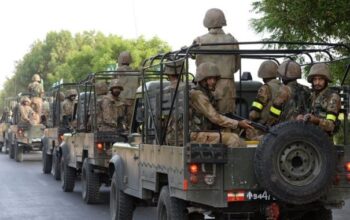
“In response to the ongoing flood situation, the United States of America through Army Central Command (US ARCENT) has extended humanitarian assistance for the flood-affected population of Pakistan,” the military’s media wing, Inter Services Public Relations (ISPR), said in a statement. “A total of six flights carrying relief consignments are scheduled to arrive in Pakistan, comprising essential items including tents, dewatering pumps and generators.” The Pakistani security forces along with other government departments have been doing rescue and relief work in most areas of the province.
Copyright © 2021 Independent Pakistan | All rights reserved