By Staff Reporter
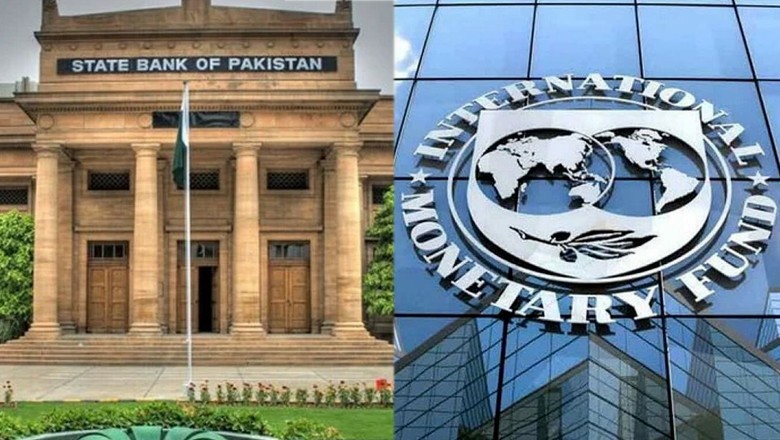
KARACHI: Pakistan is on track to secure a $1.2 billion disbursement from the International Monetary Fund by December, after fulfilling every performance benchmark for the lender’s latest review under its ongoing bailout program.
State Bank of Pakistan Governor Jameel Ahmad disclosed the development during an analyst briefing on Monday following the central bank’s Monetary Policy Committee meeting. “The country has successfully met all performance criteria required for the IMF review, paving the way for the disbursement,” Ahmad said, according to notes from Topline Securities.
The IMF board is slated to convene by December 2025 to greenlight the tranche, a critical infusion as Pakistan grapples with $10 billion in net external repayments due in the fiscal year through June 2026. Of that, $3.1 billion has already been settled, Ahmad told analysts. The announcement caps a string of stabilising moves for an economy long plagued by balance-of-payments crises.
Foreign-exchange reserves, a perennial pain point, are building steadily. The central bank has scooped up more than $20 billion over the past three years through interventions, with purchases persisting even after covering repayments and profit repatriation by foreign investors, per the briefing. SBP nudged up its year-end reserves target to $17.8 billion from a prior $17.5 billion forecast, Insight Research reported, citing Ahmad. “The central bank will continue to honour the external debt obligations in a timely manner,” he emphasized.
The briefing painted a brighter picture for Pakistan’s external accounts. The current-account deficit is projected to stay within 0-1% of GDP, matching earlier guidance. Worker remittances, a lifeline averaging more than 8% of GDP, are seen topping $41 billion in fiscal 2026, up from $38 billion last year. Imports have swelled in volume, but the higher tab has been absorbed without strain. A mismatch in import data between SBP and the Pakistan Bureau of Statistics stems from divergent primary sources and should converge over time. Still, any spike in oil prices could crimp the progress.
Policy rate holds steady amid global risksIn a widely anticipated call, the MPC left the benchmark policy rate unchanged at 11%, citing an improving macroeconomic backdrop tempered by external headwinds. “Despite improvement in macro framework, uncertain global prices, trade tensions and domestic supply chain challenges can impact the macroeconomic outlook,” the committee said in its statement. “Therefore, MPC maintained the policy rate at current level to maintain overall price stability.” The decision aligns with market expectations and underscores SBP’s cautious navigation of inflation, hovering around 6%, and growth projected near 3%.
With the IMF payout in sight, Pakistan gains breathing room to tackle fiscal slippages and power-sector losses that have repeatedly derailed past programs. The $1.2 billion tranche forms part of a $7 billion Extended Fund Facility agreed last year, Pakistan’s 25th IMF bailout since independence. Success here could unlock further financing from bilateral partners and ease pressure on the beleaguered rupee, which has held relatively steady after shedding more than 50% of its value since 2022.
Copyright © 2021 Independent Pakistan | All rights reserved