By Staff Reporter
ISLAMABAD: A fragile bid for peace between Pakistan and Afghanistan teetered on the brink of collapse on Tuesday, with defence minister accusing Afghan negotiators of sabotaging talks under orders from Kabul, and, ultimately, from India.
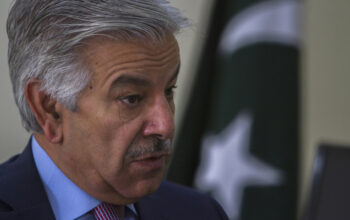
Defence minister Khawaja Asif laid bare the breakdown during an appearance on a local television channel. He described a pattern of last-minute reversals by the Afghan delegation, which he said had backpedaled on a verbal agreement no fewer than five times after consulting superiors in Kabul. “Whenever we got close to an agreement — either in the last four days or last week — when negotiators reported to Kabul, then there was intervention and the verbal agreement was withdrawn,” Asif said. “I believe that the negotiations were sabotaged. We had a written agreement, but then they called Kabul and backpedalled from the deal.”
The second round of talks, hosted in this Turkish city, began on Saturday amid high hopes for resolving a cascade of border clashes and cross-border militancy. They followed an accord reached last week in Doha, Qatar, where, after days of fighting along the Pakistan-Afghanistan frontier and Pakistani airstrikes on camps of the Gul Bahadur group inside Afghanistan, the two sides extended an initial 48-hour truce into a temporary ceasefire.
That deal included a pledge to reconvene in Istanbul to hammer out “mechanisms for lasting peace and stability.” Yet what unfolded over three grueling days in Istanbul exposed deep fissures. Security sources close to the discussions described an exhausting 18-hour session on the third day, during which the Afghan Taliban delegation “repeatedly agreed to Pakistan’s logical and legitimate demand for credible and decisive action against the TTP (Tehreek-i-Taliban Pakistan) and terrorism.” They added that while the Afghan delegation acknowledged the central issue, its position changed due to “instructions received from Kabul,” one well-placed security source said.
The sources pinned the impasse on what they called the “illogical and illegal advice received from Kabul,” which they said was responsible for the “failure of the talks.” Even as a last-ditch effort continued on Tuesday to salvage the process, “despite the Taliban’s stubbornness,” as one official put it, the core dispute remained intractable: a mechanism for verifiable action against terrorist groups operating from Afghan soil, especially the outlawed Tehreek-i-Taliban Pakistan, which Islamabad holds responsible for a surge in attacks inside Pakistan.
Sources familiar with the closed-door sessions recounted an initial mood of optimism. “The atmosphere earlier yesterday had been markedly positive, with participants describing ‘encouraging progress’ and ‘serious engagement’ from both delegations,” one said. Most points had been mutually agreed upon.
Asif praised the Afghan negotiators themselves for their tenacity. “I would compliment their delegation,” he said. “They cooperated and gave us a hard negotiation. It was quite testing.” But he reserved his sharpest barbs for those he saw as pulling the strings back home. “The people in Kabul pulling the strings and staging the puppet show are being controlled by Delhi,” he said, asserting that the Afghan government in Kabul lacked real authority, having been “penetrated” by India. “India is compensating for its defeat on their western border through Kabul,” Asif continued. “The junta there (in Afghanistan) has elements that have visited India and visited their temples. India wants to engage in a low-intensity war with Pakistan. To achieve this, they are using Kabul.”
The accusations echoed a broader Pakistani narrative framing Afghanistan as a proxy battlefield in its rivalry with India. Defence minister Asif was unequivocal in assigning blame for militancy. “There should be no doubt that Kabul is responsible for the terrorism in Pakistan. Kabul is a tool for Delhi. If they want to, God forbid, attack Islamabad, we will give a befitting response. A response 50 times stronger.”
His remarks came in direct response to recent Afghan threats to “attack Islamabad” should hostilities resume. “If Afghanistan even looks at Islamabad, we will gouge their eyes out,” Asif said. “They can employ the use of terrorists and they already are. Over the past four years, they have been using terrorists.”
An Afghan source familiar with the talks described the end as marked by “tense exchanges,” with the Afghan side maintaining that it held no sway over the TTP, whose fighters had mounted assaults on Pakistani troops in recent weeks. The recriminations echoed a broader pattern of distrust that has defined relations since the Taliban seized power in 2021. Pakistan accuses Kabul of shielding TTP leaders in Afghan sanctuaries, from which the group, ideologically akin to but independent of the Afghan Taliban, has orchestrated thousands of attacks over two decades.
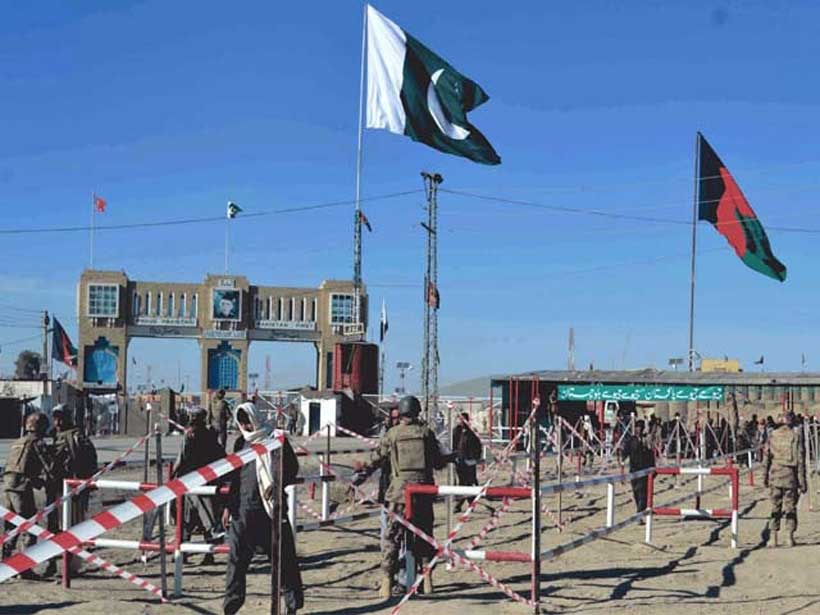
Afghanistan, in turn, demands an end to Pakistani airstrikes on its soil, including recent ones targeting camps of the Gul Bahadur faction, and respect for its sovereignty along the 2,600-kilometer Durand Line frontier, a colonial-era boundary both nations contest. The Istanbul gathering, which began Saturday, followed intense fighting earlier this month that left dozens dead. It was meant to translate the Oct. 19 Doha accord — which extended an initial 48-hour truce into a permanent ceasefire — into mechanisms for enduring stability.
Yet optimism evaporated as the Afghan side resisted committing to paper on verifiable enforcement against the TTP, including joint monitoring or the handover of leaders. “We kept hoping that we would be able to sign a mutual document with Afghanistan soon, followed by a joint statement, but it still remains out of our reach,” one participant said. “The hosts understand Pakistan’s concerns,” a Pakistani official added, “but people in Kabul and Kandahar are not willing to commit.”
Afghanistan’s state broadcaster, Radio Television Afghanistan, struck a sharply different tone. It reported Monday that “most issues have been resolved,” with only minor points outstanding. A subsequent bulletin accused “certain circles within the Pakistani military establishment” of obstructing progress and insisted that Kabul “cannot prevent attacks inside Pakistan nor represent the TTP,” framing the violence as “an internal issue rooted in Pakistan’s own past.” The Islamic Emirate, it said, had reaffirmed that “Afghanistan’s territory will not be used against any other country.”
Even as diplomats labored in Istanbul, violence persisted along the border. Pakistani forces reported killing 25 TTP militants and losing five soldiers in weekend clashes, despite the Doha truce.
Copyright © 2021 Independent Pakistan | All rights reserved