By Staff Reporter
ISLAMABAD: Pakistan has emerged from its brief but intense military clash with India in May as a far more consequential player on the world stage, Information Minister Attaullah Tarar said on Monday, crediting an aggressive diplomatic campaign, battlefield success and unexpected online creativity by the country’s youth for the shift.
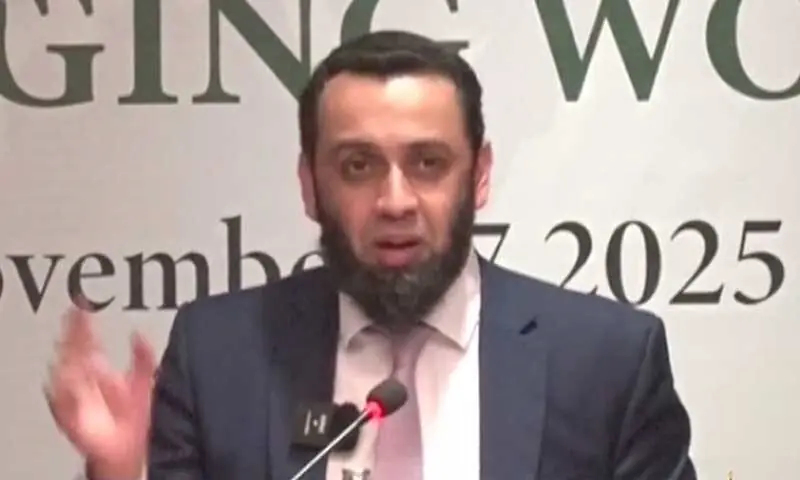
Speaking at a public event, Tarar described the four-day conflict, triggered by an April attack on tourists in occupied Kashmir that New Delhi blamed on Pakistan, as a turning point that forced the international community to recalibrate its view of Islamabad. “In a very short span of time, we have become extremely relevant in our foreign policy,” he said. “We have seen in the past two years, and especially after the May war, I think that has redefined who we are.”
The minister singled out Prime Minister Shehbaz Sharif’s immediate offer of an impartial investigation into the Pahalgam attack as the decisive early move. “We were often blamed for terror acts that were not our fault, and in fact, being the biggest victims of terrorism, there was a propaganda against Pakistan, blaming us for terrorism,” Tarar said. “You can’t be a victim and an aggressor at the same time, it’s an oxymoron, an inherent contradiction, it’s just not possible.” Pakistan, he noted, has lost 90,000 lives and billions of dollars in the fight against extremism. “We are also a shield and a wall between the terrorists and the rest of the world.”
When India launched airstrikes on targets in Punjab and Azad Kashmir on May 7, Pakistan responded in kind, and the two nuclear-armed neighbors traded blows on each other’s air bases. Officials and foreign media say Pakistani forces downed seven Indian aircraft, a claim New Delhi has not publicly confirmed — and forced India to seek a ceasefire within hours. US President Donald Trump’s mediation on May 10 ended the fighting.
Tarar said the government, working in close coordination with the military’s media wing, mounted an intensive information campaign abroad. “We had the strength of the truth, so when we told the story and told it right, the world heard it, and it had an impact,” he said. “The right kind of aggressive diplomacy with the right kind of marketing campaign with the right kind of information to counter misinformation and disinformation — so we were everywhere all across.”
The minister also praised what he called remarkable national unity. Political rivalries were set aside, he said, and Pakistanis rallied behind the armed forces. Even the country’s Gen Z surprised India by waging what he described as an effective “meme war” on social media. “War is a very serious matter, and they were making memes and they were ridiculing the enemy in their own particular way,” Tarar said. “The enemy was wondering what is going on.”
He called the younger generation “digital natives” who instinctively understood the new battlefield and “took it upon themselves to fight for Pakistan on that platform.” The minister argued that the diplomatic dividends are now visible across multiple fronts. Pakistan was invited to join the Arab-Islamic contact group that helped negotiate the recent Gaza ceasefire, a role the minister described as evidence that “the things that we have to say, the advice that we have to give is extremely relevant and very very important.”
Tarar pointed to a surge in high-level visits, including the Shanghai Cooperation Organization council of heads of government meeting hosted by Islamabad, the first such gathering in Pakistan in 14 years, and the announcement that the country will host the SCO Heads of State summit in 2027. He highlighted deepening defence ties with Saudi Arabia, including a new Strategic Mutual Defence Agreement and an Economic Cooperation Framework, as well as warming relations with Malaysia and a reset with Washington.
He noted that President Trump has repeatedly praised both Prime Minister Sharif and Pakistan’s army chief, Field Marshal Asim Munir, while publicly referencing the downed Indian aircraft. The minister attributed much of the foreign-policy success to the “ideal working relationship” between Sharif and Field Marshal Munir. “It’s the stability at home which has enabled us to advocate our case very, very effectively abroad.”
Copyright © 2021 Independent Pakistan | All rights reserved