By Staff Reporter
ISLAMABAD: Pakistan’s government is ramping up efforts to regulate its burgeoning cryptocurrency market, holding high-level talks this week with executives from Binance Holdings Ltd., the world’s largest digital-asset exchange by trading volume.
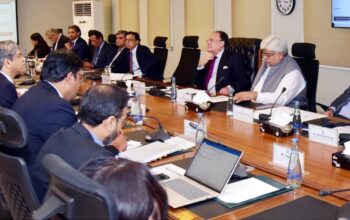
A delegation led by Binance Chief Executive Officer Richard Teng met with Prime Minister Shehbaz Sharif, Finance Minister Muhammad Aurangzeb and Chief of Army Staff Field Marshal Syed Asim Munir in Islamabad, according to a statement from the Prime Minister’s Office on Saturday. Bilal bin Saqib, chairman of the Pakistan Virtual Assets Regulatory Authority, also attended and briefed the Binance team on his organization.
“Binance senior leadership visits Pakistan as government signals strong commitment to digital asset regulation,” the Prime Minister’s Office said. The meetings show Pakistan’s drive to bring virtual asset service providers under a formal licensing regime, aiming to curb illicit transactions, bolster oversight and foster innovation in blockchain-based financial services. Officials estimate the push could draw as much as $25 billion in virtual assets into the country’s tax net.
The Binance visit followed a consultative session on Friday at the Finance Division, co-chaired by Aurangzeb and Saqib, to advance work on Pakistan’s National Digital Asset Framework. Participants included the governor of the State Bank of Pakistan, presidents and executives from leading commercial banks, and senior Binance leaders including Teng. “The session reviewed Pakistan’s next steps toward building a secure, well-regulated, and innovation-driven digital asset ecosystem, with a particular emphasis on responsible operationalisation of on- and off-ramp infrastructure, enhanced compliance standards, improved market transparency, and stronger integration of regulated financial institutions,” the Finance Division said in a statement.
Aurangzeb highlighted the momentum behind digital assets in Pakistan, calling adoption an “irreversible global trend” and pointing to the “economic opportunity to bring citizen-held virtual assets within formal monitoring structures.” “Such integration would strengthen financial visibility, support creditworthiness assessments, and enhance national asset reporting without conferring legal tender status on digital assets,” the Finance Division said.
The discussions also covered the rollout of a structured licensing regime for virtual asset service providers to boost transparency, align with global anti-money laundering and counter-terrorism financing standards, draw in institutional players and shield Pakistani users from risks tied to unregulated offshore platforms.
Pakistan opened applications in September for international crypto exchanges and other virtual asset providers to seek licenses, marking a key step to formalise the fast-expanding sector. The developments come amid a leadership shift in the regulatory space. Saqib resigned last week as special assistant to the prime minister on blockchain and cryptocurrency, a role he took on as minister of state in May. He will continue as chairman of the Pakistan Virtual Assets Regulatory Authority, the autonomous body overseeing the sector.
Pakistan’s crypto market has surged in recent years, fueled by retail investors seeking alternatives amid economic volatility and high inflation. The government’s regulatory moves aim to harness that growth while mitigating risks, including potential capital flight and exposure to volatile assets. Binance, which has faced scrutiny from regulators worldwide over compliance issues, has been expanding in emerging markets.
Copyright © 2021 Independent Pakistan | All rights reserved