By Staff Reporter
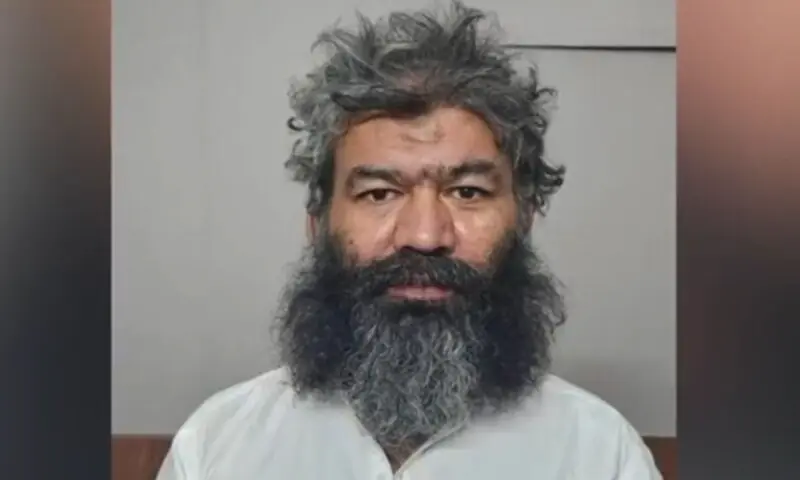
ISLAMABAD: Pakistani authorities arrested Sultan Aziz Azzam, the longtime spokesperson for the Islamic State’s Khorasan branch, (IS-K), earlier this year, according to a recent United Nations report that highlighted both progress against the group and continuing terrorist activity across Afghanistan.
The arrest of Azzam, described in the report as a central figure in the group’s media operations, came amid a series of counterterrorism operations by Pakistan that the United Nations said had degraded the capabilities of IS-K, an affiliate of the Islamic State active primarily in Afghanistan and Pakistan.
The 16th report of the Analytical Support and Sanctions Monitoring Team, submitted to the Security Council, noted that “overall, the capability of [IS-K] has been degraded as a result of counter-terrorism operations.” “Key [IS-K] commanders and ideologues have been neutralised, and the numbers of [IS-K] fighters have likely been reduced. Several plotted attacks have been disrupted.”
The report singled out high-profile arrests by Pakistan, including that of Azzam from a border region in May. Pakistani state media reported at the time that intelligence agencies had detained him during an operation near the Pakistan-Afghanistan border, dealing a significant setback to IS-K propaganda outlets like the Al-Azaim Foundation.
Azzam, born in Afghanistan’s Nangarhar province, has served as IS-K’s spokesperson since the group established itself in Afghanistan in 2015, according to the United Nations sanctions list. Building on prior experience as a journalist, he ran the group’s media branch and played a key role in disseminating its ideology. “As [IS-K’s] spokesperson, Azam has played an instrumental role in spreading ISIL’s violent … ideology, glorifying and justifying terrorist acts,” the sanctions narrative states. It notes that his efforts “increased [IS-K’s] visibility and influence among its followers.”
Analysts have credited Azzam with recruiting members for attacks in Afghanistan. Shan A Zain, writing in the Jamestown Foundation’s Militant Leadership Monitor, described how Azzam authored books and poetry, including “Travelers of the Maze,” which recounted stories of fighters in the Spin Ghar mountains to inspire recruits. “Sultan Aziz Azzam has been credited with recruiting IS members to carry out high-profile attacks in Afghanistan,” Zain wrote.
Azzam publicly claimed responsibility for major assaults, including the suicide bombing near Hamid Karzai International Airport in Kabul on Aug. 26, 2021; messages following the killing of three female journalists on March 2, 2021; and a prison attack in Jalalabad on Aug. 3, 2020. Despite the setbacks to IS-K, the United Nations report cast doubt on Taliban assertions that no terrorist groups operate in or from Afghanistan. “The Taliban contend that no terrorist groups operate in or from Afghanistan,” the report read. “Member state reporting, however, indicates that a range of terrorist groups still operate in the country, with varying degrees of autonomy and oversight from Taliban authorities.”
It further reported that in northern Afghanistan and areas near the Pakistani border, IS-K had indoctrinated children in madrasas and established suicide training for minors around age 14.
The findings underscore strained relations between Pakistan and the Taliban-led government in Kabul, with Islamabad accusing Afghanistan of harboring militants responsible for attacks inside Pakistan. In a letter dated Dec. 8, Pakistan’s permanent representative to the United Nations, Asim Iftikhar Ahmed, requested that the monitoring team’s report be circulated to Security Council members.
Pakistan has conducted multiple operations against IS-K this year. In June, Gen. Michael Kurilla, then commander of United States Central Command, described Pakistan as a “phenomenal partner in the world of counter-terrorism.” “Through a relationship we have with them and providing intelligence, they have captured at least five ISIS Khorasan high-value individuals.”
General Kurilla noted the extradition of an operative linked to the 2021 Kabul airport bombing. In November, Pakistani police killed a key IS-K commander, Nisar Hakim, during a raid in Khyber Pakhtunkhwa province. The IS-K emerged as a regional branch focused on South and Central Asia, according to assessments by groups like the Center for Strategic and International Studies. It has positioned itself as a rival to the Taliban, carrying out attacks against both Taliban forces and minority communities.
Copyright © 2021 Independent Pakistan | All rights reserved