By Staff Reporter
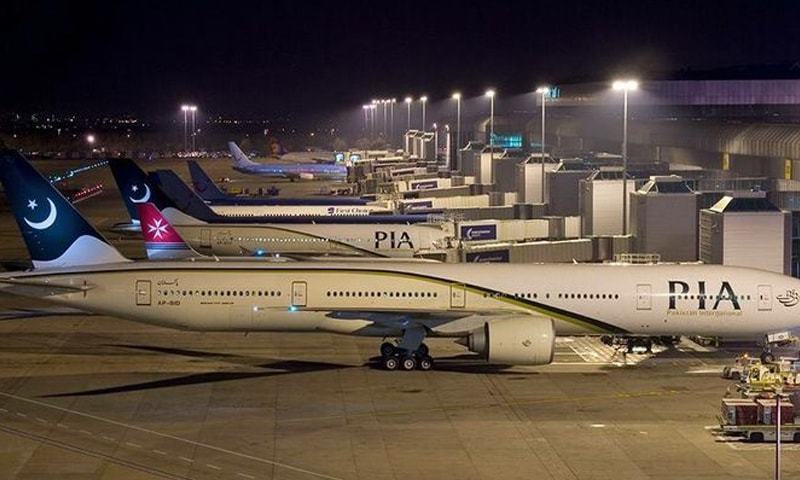
ISLAMABAD: Pakistan’s government expects a new owner to take the helm of its flag carrier by April, injecting fresh capital into the beleaguered airline after a local consortium clinched a controlling stake with a Rs135 billion bid that topped expectations.
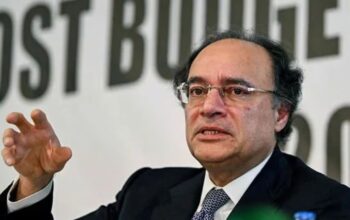
The deal marks a milestone in efforts to privatise loss-making state enterprises, a key demand under Pakistan’s $7 billion bailout from the International Monetary Fund, Muhammad Ali, adviser to the prime minister on privatisation, said.
Approvals from the Privatisation Commission board and cabinet are due within days, setting the stage for a contract signing in two weeks and financial close after a 90-day stretch for regulatory and legal steps, Ali said.
The Arif Habib Corp.-led group, which includes Fatima Fertilizer Co., Lake City Holdings Pvt., AKD Group Holdings Pvt. and City Schools Pvt., emerged victorious in Tuesday’s televised auction for a 75% stake, surpassing the Rs100 billion reserve price and a Rs115 billion starting bid. The consortium confirmed its top-ranked status in a Pakistan Stock Exchange filing on Wednesday, noting the stepwise acquisition remains subject to final government clearances.
Under the terms, the state will collect Rs10.125 billion upfront via PIA’s holding company, with the balance—Rs124.875 billion —funneled as new equity through a rights issue: Rs83.25 billion immediately and Rs41.625 billion within a year of closing. Retaining a 25% stake valued at Rs45 billion lifts the total economic value to the government to Rs55 billion, Ali said.
“We did not want a situation where the government sells the airline, takes its money and the company still collapses,” Ali said, underscoring the emphasis on revitalisation over a mere handover. No long-term debt transfers with the sale, though Rs180 billion in liabilities shift, and PIA’s properties stay off the table.
The airline, saddled with Rs500 billion in losses from 2015 to 2024 amid a 15-year performance slide, runs 19 of its 33 planes—16 A-320s, 12 Boeing 777s and five ATRs—across 30 destinations, claiming nearly 30% of the domestic market. Its prime assets include landing rights in 78 countries and air service agreements with 97, Ali said. “PIA’s biggest asset is its landing rights.”
Buyer obligations include retaining all staff for 12 months on existing terms, after prior headcount trims. Protections let the government hold earnest money and a signing payment, shifting to the runner-up bidder if the deal unravels, Ali added. The consortium may onboard up to two more partners—like Fauji Fertilizer Co., the military-linked firm that skipped bidding but could join, or a foreign carrier—if they qualify, boosting capital and expertise.
Ali dismissed detractors alleging a Rs10 billion fire sale: “They clearly know that the government is getting Rs55 billion value.” Some are “deliberately distorting the narrative,” he said. Perks for the buyer encompass GST exemptions and a bar on new taxes, levies or surcharges for operations. The sector chips in just 1.6% to gross domestic product and 0.3% to jobs, signaling growth potential, Ali noted.
Debt-free with a “positive balance sheet,” PIA can reclaim its mantle as a full-service network carrier. “PIA will go back to its glory days,” he said, as private investment ushers in new planes and better service. “The goal of privatisation is that the private sector is best suited to run these businesses; it is not the government’s job,” Ali said.
The sale tests reform resolve with the IMF; botching divestitures of drainers could reignite fiscal woes, but sealing this paves the way for more, he warned. Ali lauded Prime Minister Shehbaz Sharif, Chief of Army Staff Field Marshal Asim Munir and officials. “The Field Marshal played an important role in this process,” he said.
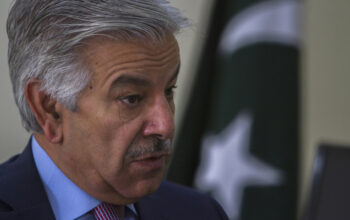
Defence Minister Khawaja Asif echoed the optimism, calling the transaction symbolically potent as the privatisation drive’s biggest yet. “This is the first biggest transaction of our privatisation process,” he said on a private television channel, contrasting it with the minor First Women Bank sale. “This transaction has a great symbolic value because of the history of this transaction.”
Asif pinned PIA’s near-collapse on a 2020 furor when an ex-minister claimed fake licenses for over 262 of 860 pilots, prompting European and UK bans on lucrative routes and sidelining Pakistani aviators abroad. A Karachi crash that year, killing about 100, exacerbated the hit. Restructuring followed, with the state swallowing most debt, leaving scant liabilities. “We went through a painstaking process,” Asif said, commending civil aviation officials.
PIA has restarted Manchester runs and won nods for Birmingham, London, New York and 14-15 European points, though plane shortages stall some. Reinvesting 92.5% enhances the asset’s worth, Asif argued, rejecting handout claims. “We did not give a handout to anyone.” Decades of post-nationalisation losses—50-55 years—stem from bureaucratic and political failings, he charged. “This is an orgy of loot and plunder of the public sector that has been going on in our country for the past 55 years.”
Copyright © 2021 Independent Pakistan | All rights reserved