By Staff Reporter
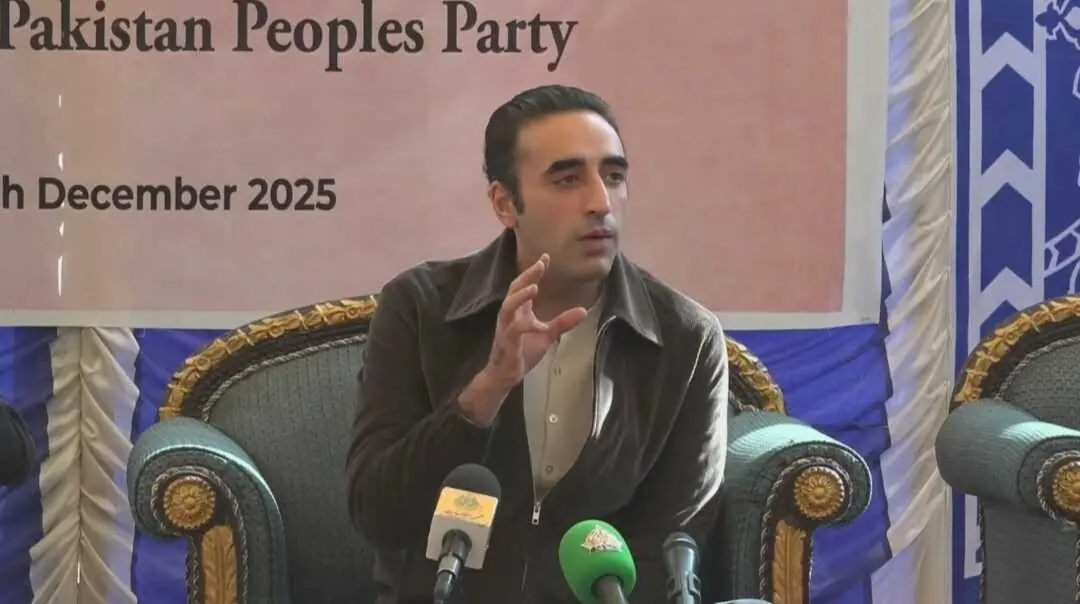
LARKANA: Bilawal Bhutto-Zardari, the chairman of the Pakistan Peoples Party and a key ally in the governing coalition, called on Sunday for a return to the politics of reconciliation in the country, urging the opposition Pakistan Tehreek-e-Insaf to abandon what he described as extremism and warning that attacks on state institutions would invite legal consequences.
Speaking to reporters at the inauguration of the Sindh Institute of Child Health and Neonatology in Larkana, a stronghold of his family’s political dynasty, Bhutto-Zardari invoked the legacy of his mother, former Prime Minister Benazir Bhutto, who championed “truth and reconciliation” as a guiding principle for the nation’s fractious politics. Linking reconciliation to Pakistan’s broader progress and economic prosperity, he said the ruling coalition, led by the Pakistan Muslim League-Nawaz, must play its part, while the opposition bears a responsibility to act constructively.
“If stringent measures are taken in response to the politics of extremism, then there should be no complaints,” Bhutto-Zardari said, citing the English idiom: “If you can’t stand the heat, get out of the kitchen.” He directed pointed criticism at the PTI, founded by the imprisoned former Prime Minister Imran Khan, accusing it of overreacting to legal actions against its leaders.
“If you attack a national institution just because of a small NAB case against your leader and because of a small arrest, then don’t complain,” he said. “Action will be taken against you in accordance with the law and Constitution.”
Bhutto-Zardari, who previously served as foreign minister, suggested that his party would have faced harsher repercussions in similar circumstances. He advised the PTI to “do away with political extremism and return to the democratic fold,” arguing that such a shift would benefit the party, its workers and the country’s political landscape. Emphasising the role of his father, President Asif Ali Zardari, in fostering unity, Bhutto-Zardari described him as having the track record and public confidence to lead reconciliation efforts. “From the first day after the election till yesterday in my speech, and even within the party, my stance has been that President Zardari will have to play his role,” he said.
But he acknowledged the complexities of the current moment, including tensions along the borders with India and Afghanistan, and a rise in domestic terrorism. In this context, he said, the opposition’s approach is critical. “If they have to operate like an extremist party, then the state’s response would be in accordance with that. But if they adopt a political attitude, other parties may get some political space to play a role in reducing the political division and polarisation in the country.” Without such an environment, he warned, the people and the nation would suffer.
Responding to demands from Maulana Fazlur Rehman, leader of the Jamiat Ulema-i-Islam, for fresh nationwide elections, Bhutto-Zardari stressed the need for all parties to ensure polls are free and fair whenever they occur. He called for legal changes to bolster trust in the Election Commission, noting recent complaints about by-elections. “There is no point in holding elections if allegations of rigging are to be made again,” he said. “So, now that there is time and the writing on the wall is that elections will not be held early, serious political parties should try to bring electoral reforms aimed at increasing the trust of people, as well as the political parties in the election commission.”
On economic matters, Bhutto-Zardari questioned the government’s claims of improvement, highlighting a “crisis of affordability” for ordinary Pakistanis. He advocated public-private partnerships as a model for privatization and urged political solutions to enduring challenges.“Long-term solutions to our issues, economic difficulties and questions of national security lie in genuine political stability and in the lasting innings of one political party,” he said. “And all political forces and our senior politicians should think about what measures need to be taken to establish genuine political stability.”
The remarks come amid heightened political tensions, where the PTI has faced crackdowns following Khan’s arrest and accusations of inciting unrest. Bhutto-Zardari has consistently opposed banning the party, favoring dialogue instead. In a speech the previous day, he had similarly argued that ending polarization would help resolve the country’s intertwined political and economic crises, with President Zardari positioned as a unifying figure.
Copyright © 2021 Independent Pakistan | All rights reserved