By Staff Reporter
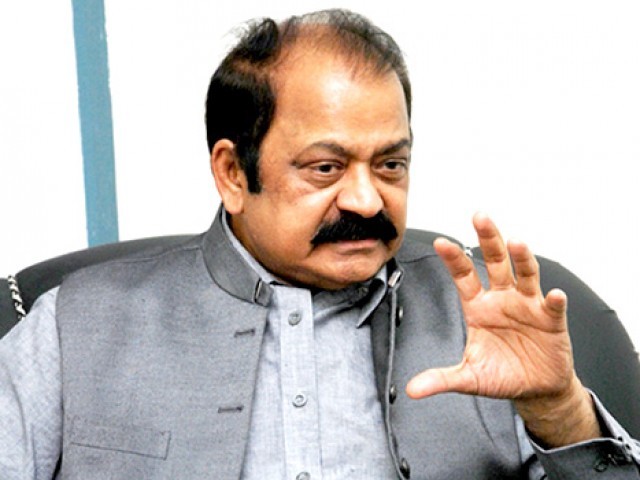
ISLAMABAD: A top adviser to Prime Minister Shehbaz Sharif pressed for steps to rebuild trust among five most influential figures in Pakistan’s politics on Thursday, saying that without agreement at the highest levels, the nation would remain mired in political deadlock.
Rana Sanaullah, a senator in the governing Pakistan Muslim League-Nawaz who also serves as the prime minister’s adviser on political and public affairs, listed them as Nawaz Sharif, the party’s top leader; the prime minister himself; President Asif Ali Zardari; Imran Khan, the locked-up founder of the opposition Pakistan Tehreek-e-Insaf; and a fifth whose name he withheld, though he added that “everyone knows who the fifth person is” — a reference widely taken to mean the army chief, Field Marshal Asim Munir.
Speaking on a private television channel, Sanaullah said informal discussions at lower levels, including his own contacts with opposition figures, were insufficient to resolve the crisis. “Unless steps were taken to restore trust among them, the country would remain trapped in political deadlock,” he said, adding that engagement was required at the top leadership level to move the situation in a positive direction.
The exchange came against a backdrop of sharp divisions between the government and the PTI, with party officials charging that they endured steady political pressure through 2025. Malik Amir Dogar, the PTI’s chief whip in the National Assembly and a guest on the television channal, expressed hope that 2026 would mark an end to such actions, noting that Pakistan had achieved a measure of political and economic stability in 2025.
Dogar urged the government to allow opposition leaders — including Allama Raja Nasir Abbas, the opposition leader in the Senate, and Mahmood Khan Achakzai, his counterpart in the National Assembly — to meet with Khan in prison. Such a meeting, he said, would enable discussions on ground realities and potential solutions, potentially opening avenues for resolving disputes and ending ongoing conflicts.
In response, Sanaullah linked the possibility of facilitating those meetings to the cessation of what he called anti-institution campaigns on social media. He insisted that accounts running hate campaigns against state institutions, particularly the army and its leadership, should be shut down. Rejecting the PTI’s claims of no control or connection to these accounts, he said the party “can’t evade responsibility” and must publicly disassociate itself from them to ensure their closure. “If the intent was merely propaganda, it should be directed against rival political parties and politicians rather than state institutions,” Sanaullah said.
Dogar backed the idea of a meeting among the “top five” figures, acknowledging that a breakthrough might not occur immediately but stressing the importance of keeping political doors open to cooperation. “If these five leaders meet the conflict can be resolved,” he said. The PTI, though, has turned down talks with the federal side, on orders from Mr. Khan, as party information secretary Sheikh Waqas Akram stated this week.
Sanaullah knocked the PTI’s Feb. 8 call for protests, including a full national stoppage, saying it would fall flat and draw tough measures if pushed. “Continued confrontation would worsen the situation rather than improve it,” he said, urging the party to drop it and spare more setbacks.
The talk of outreach fits with other recent voices. In December, Prime Minister Sharif repeated his invitation to the opposition for discussions, but only on “legitimate matters.” At a national conference organized by the opposition Tehreek-e-Tahaffuz Ayeen-e-Pakistan alliance, participants agreed that in a democracy, the door for dialogue must never be closed. Political leaders, including PML-N stalwarts, have increasingly called for restraint to foster stability, arguing that confrontation has fueled instability and violence. The issue of negotiations between the government and the opposition, particularly the PTI, has dominated headlines since last year, as Pakistan grapples with economic challenges and institutional strains.
Copyright © 2021 Independent Pakistan | All rights reserved