By Staff Reporter
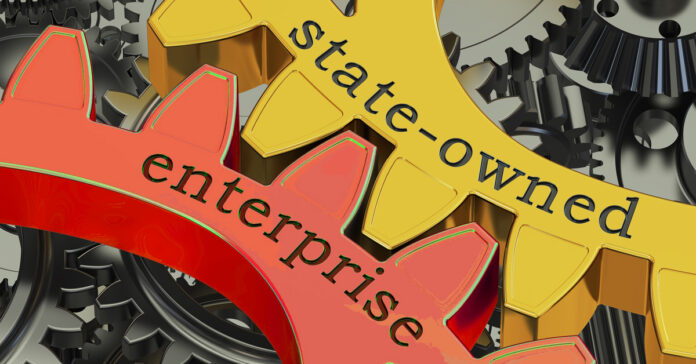
ISLAMABAD: Pakistan’s state-owned enterprises racked up a net loss of Rs122.9 billion in the fiscal year through June 2025, more than tripling the previous year’s deficit, as plunging oil prices hammered revenues and power distributors bled cash, according to the Ministry of Finance.
The grim tally shows the challenges facing Prime Minister Shehbaz Sharif’s government as it grapples with entrenched inefficiencies in public companies, even as it touts broader economic reforms under an International Monetary Fund bailout. Losses at loss-making entities eased slightly to Rs832.8 billion, a 2% drop, but that was swamped by a 13% slide in profits at moneymaking firms to Rs709.9 billion from Rs820.7 billion a year earlier, the ministry said in a statement.
“During 2024-25, aggregate revenues of SOEs stood at approximately Rs12.4 trillion, reflecting a decline largely attributable to reduced profitability in the oil sector following lower international oil prices,” the Ministry of Finance said. “Despite this improvement, the net result was an overall net loss of Rs122.9bn for the SOE sector, compared to a net loss of Rs30.6bn in the previous year.”
The figures, compiled by the ministry’s Central Monitoring Unit, were presented on Friday to the Cabinet Committee on State-Owned Enterprises, chaired by Finance Minister Muhammad Aurangzeb. The panel reviewed the Annual Consolidated Performance Report for commercial and non-commercial SOEs, which detailed financial results, government support, debt levels, governance lapses and reform proposals under the SOEs Act of 2023.
Losses remain concentrated in a handful of sectors, with the National Highway Authority and power distribution companies emerging as the biggest drags. These entities are hobbled by structural flaws, steep depreciation charges, high borrowing costs and mandates to provide subsidised services that aren’t commercially sustainable, the ministry said. Government aid to SOEs ballooned to Rs2.078 trillion, fueled by equity injections to tackle circular debt in the power industry, though subsidies dipped modestly. Inflows back to the treasury rose to Rs2.119 trillion, buoyed by dividends, taxes and interest on state loans.
Debt across the SOE portfolio climbed to Rs9.57 trillion, encompassing development loans, foreign relending, bank debt and accrued interest. Unfunded pension obligations were pegged at about Rs2 trillion, flagged as a “major legacy risk requiring policy attention,” while guarantees and off-balance-sheet items totalled Rs2.16 trillion. The committee categorised SOEs into green, amber and red tiers based on financial health to guide reforms.
Director General Majid Soofi of the Central Monitoring Unit delivered the briefing. Aurangzeb praised the unit’s efforts to boost transparency, including consolidating finances on an IFRS-aligned basis and building a digital database for data-driven decisions. “The presentation reflected meaningful progress in oversight, disclosure and risk identification, particularly in areas of fiscal flows, debt mapping and unfunded pension liabilities,” he said. The report serves as “a credible foundation for informed policy action and sustained reforms,” Aurangzeb added.
The meeting emphasised enforcing audits under the SOEs Act, accelerating the switch to full IFRS reporting by February 2026, and imposing realistic business plans, sector dialogues, loss-curbing measures and strict budget limits on perennial underperformers. The SOEs have long been a fiscal black hole, draining resources amid chronic mismanagement and political interference. The Sharif administration, which secured a $7 billion IMF loan in 2024, has pledged to privatise or restructure key assets to stem the bleeding and meet bailout terms. Still, progress has been uneven, with power sector arrears persisting despite repeated crackdowns on theft and bill evasion.
Copyright © 2021 Independent Pakistan | All rights reserved