By Staff Reporter
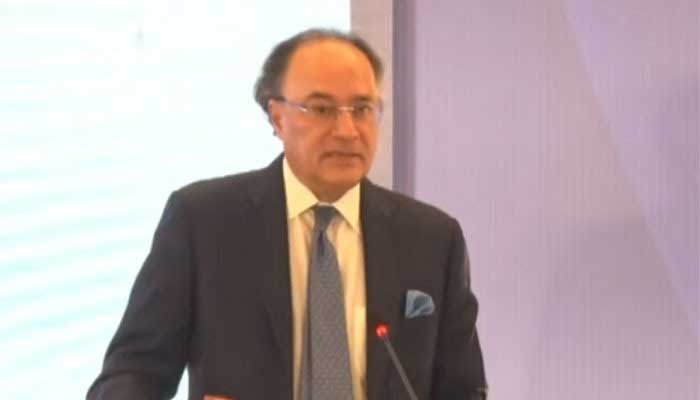
ISLAMABAD: Finance Minister Muhammad Aurangzeb acknowledged that high taxes and energy costs have driven some multinational companies to exit the country, but urged those firms to update their outdated business models to align with the modern economy.
“There are firms that are leaving Pakistan, which is true, and we must acknowledge if the taxation is high, energy cost is high, or financing cost, those have been real issues,” Aurangzeb said Wednesday at the Pakistan Policy Dialogue in Islamabad, hosted by the Policy Research & Advisory Council. “But it takes two to tango,” he added. “If you are wedged into your business models from the last 50 years, it is not going to work in the modern world.”
The comments come amid a wave of departures by foreign investors from Pakistan’s struggling economy, where soaring energy prices, fiscal pressures and security concerns have compounded challenges for businesses. Over the past few years, companies including Procter & Gamble Co., Eli Lilly & Co., Shell Plc, Microsoft Corp., Uber Technologies Inc., Telenor ASA and Yamaha Corp. have scaled back or shut down operations in the South Asian nation.
Aurangzeb pointed to Nestle SA and Unilever Plc as examples of multinationals that have thrived by adapting. “If Nestle and Unilever can do local sourcing, which keeps their margins high, they are now able to export, which is why they continue operating here,” he said. Despite the outflows, there are signs of renewed interest, and at least 20 new foreign investors have entered Pakistan in the last 18 months, the minister said.
The exodus has been stark in recent months. In October 2025, Procter & Gamble announced it was winding down manufacturing and commercial activities in Pakistan, opting instead to rely on third-party distributors to serve customers. A month earlier, in September, Yamaha Motor Pakistan Ltd. said it would discontinue motorcycle assembly operations as part of a broader business strategy shift. That same year, Careem, the ride-hailing service owned by Uber, suspended operations in Pakistan after nearly a decade.
Analysts attribute the pullbacks to a mix of factors, from company-specific restructuring and intensifying competition from local players to broader issues like security conditions.
Aurangzeb’s address also touched on the government’s push to privatise state-owned enterprises, which he described as a drain on public finances. He said 24 such entities have been handed over to the Privatisation Commission, aiming to plug what he called a “huge gap” in losses. The finance minister recalled recent decisions to shutter the Utility Stores Corporation and Pakistan Agricultural Storage and Services Corporation, not primarily due to employment impacts — affecting 1,000 to 5,000 people — but because of the subsidies involved. “More importantly, it was the corruption built into those subsidies that was the real cost to the exchequer,” he said.
Turning to trade reforms, the minister announced a five-year phase-out of regulatory duties, customs duties and additional customs duties on intermediaries and raw materials. “This is to bring our intermediary and raw material costs down so we can take it towards an export-led discussion,” he said, calling it a potential “East Asia moment” for Pakistan — the first such comprehensive overhaul in the country’s history.
He blamed longstanding industry protections for stifling competition. “If we are to take this forward and move toward export orientation, we have to start from somewhere,” Aurangzeb said. Debt servicing remains the nation’s biggest fiscal burden, he noted, labelling it the “single largest expense item.” To address this, the government is modernising its debt management office with dedicated front, middle and back offices for better investor relations and professional handling. “Past year, we saved roughly Rs850bn in terms of debt servicing,” Aurangzeb said, adding that similar savings are targeted this year.
He also flagged plans to issue Panda bonds — yuan-denominated debt sold in China — “in the next couple of weeks if all goes well.” The minister also reaffirmed commitments to regulate cryptocurrencies, citing billions of dollars in trading volumes. “We have billions of dollars in discussion of trading volumes — activity which is happening at this volume has to be brought into a regulatory environment.”
Copyright © 2021 Independent Pakistan | All rights reserved