By Staff Reporter
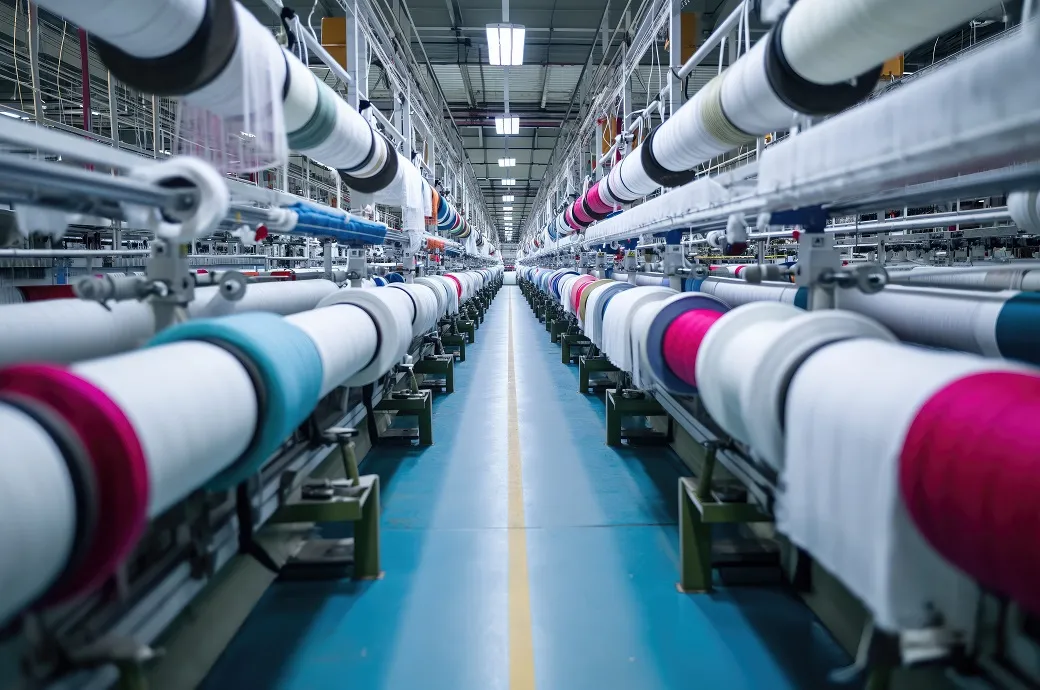
ISLAMABAD: Pakistan’s textile exporters face mounting pressure from a newly finalised free trade agreement between India and the European Union, industry leaders and analysts warned on Wednesday, as the government pledged to review cost-of-doing-business challenges to bolster competitiveness.
The deal, sealed on Tuesday after nearly two decades of negotiations, will eliminate or reduce tariffs on Indian textile and garment products in the 27-nation bloc, eroding Pakistan’s preferential access under its GSP+ status, according to brokerage JS Global. “We believe the EU-India FTA is likely to hurt Pakistan’s exports, 24% of which are targeted to the EU, mainly textile exports,” JS Global said in a note.
Pakistan Textile Council Chairman Fawad Anwar expressed serious concern over the agreement’s repercussions for the country’s export-oriented textile and apparel sector, warning that its already fragile competitiveness in the EU market now faces an existential threat. Pakistan currently exports approximately $9 billion worth of goods to the EU, of which nearly 65% consists of value-added textile and apparel products. “Even before the India–EU FTA, Pakistan’s competitive edge over India in the EU market was extremely thin and largely preference-driven. That narrow margin is now at serious risk,” he said.
Recent trade data showed Pakistan’s total textile and apparel exports to the EU stood at $6.2 billion in 2024, only marginally higher than India’s $5.6 billion. “This gap was never structural,” Anwar noted. “It existed primarily because Pakistan enjoyed preferential access under GSP Plus, while India faced tariffs of up to 12% on apparel.” With the FTA granting zero-duty access to Indian garments across all tariff lines, that advantage has effectively disappeared, he added.
The EU remains a key destination for Pakistan’s textile exports after the United States. Among listed players, Gul Ahmed Textile Mills has 58% exposure to the EU, Interloop 45%, and Nishat Mills 25%, JS Global said. Indian textile and garment exports are currently subject to an 8-12% tariff under the GSP regime, which was suspended last week, while Pakistan enjoys zero tariffs under its GSP+ status. “With the FTA now in place, Pakistan is likely to lose its comparative advantage, which was already thin, as India benefits from higher value addition and vertical integration,” JS Global said.
The warnings came as Finance Minister Muhammad Aurangzeb met a delegation from the All Pakistan Textile Mills Association in Islamabad to discuss the sector’s challenges. “Government is actively reviewing various issues affecting the cost of doing business for export-oriented industries,” Aurangzeb was quoted as saying in a statement from the Finance Division. Federal Minister for Petroleum Ali Pervaiz Malik was also present at the meeting.
The ministers emphasised that the textile industry remained “a cornerstone of Pakistan’s economy due to its significant contribution to exports, employment and industrial activity”. They further affirmed the government’s commitment to maintaining a “fair and predictable policy environment for businesses, highlighting the importance of equity, transparency and broad-based participation across the economy”. It said efforts were underway to address genuine concerns of compliant sectors, while advancing structural reforms through consultation and institutional processes.
The finance minister noted that energy affordability and reliability remained important priorities and that relevant options were being examined in consultation with concerned ministries and stakeholders to improve efficiency and competitiveness, while ensuring fiscal responsibility and system sustainability. “Senator Muhammad Aurangzeb underlined that reforms in the energy sector are being pursued in a balanced manner to support industrial productivity and protect the long-term interests of the national economy,” the Finance Division said. “He noted that immediate issues requiring attention are being reviewed on priority, while broader policy matters would be taken forward through established budgetary and reform mechanisms.”
Issues related to operational constraints and supply-side challenges in certain industrial areas were also discussed, with the ministers assuring the delegation that coordination with relevant authorities would continue to ensure smooth industrial operations. The importance of maintaining constructive engagement between the government and industry was emphasised, particularly at a time of evolving domestic and international economic conditions, the statement said.
Earlier, the APTMA delegation briefed the ministers on the prevailing situation of the textile sector and highlighted the pressures being faced by exporters in an increasingly competitive global environment. The delegation noted that changing international market dynamics and rising input costs had created challenges for the sector and underscored the need for a supportive and stable operating framework to sustain export growth and employment. The delegation also drew attention to issues related to energy costs, regulatory compliance and taxation, noting that cumulative cost pressures affect competitiveness in export markets.
Separately, Aurangzeb said the government’s tax and broader economic reforms aim to create a fairer and more predictable business environment, as Islamabad seeks to consolidate recent macroeconomic gains following years of turbulence. Pakistan has undergone a difficult period of stabilization, marked by inflation, currency depreciation and financing gaps, though international rating agencies have acknowledged improvements after politically costly reforms implemented under the $7 billion International Monetary Fund loan program.
Aurangzeb shared the outlook during a meeting in Islamabad with German Ambassador Ina Lepel to review bilateral economic cooperation and investor sentiment, the Finance Division said in a statement. “The reforms are designed to promote fairness, reduce distortions, and create a level playing field for all economic actors, while supporting investment and formal economic activity,” the minister said, according to the statement.
He briefed the German envoy on the government’s priorities, including broadening the tax base, improving compliance and moving toward technology-driven revenue systems to support fiscal sustainability and competitiveness-led growth. The ambassador welcomed the reform trajectory and shared feedback from engagements with the business community, noting the need for policy clarity, consistency and effective dialogue between the government and private sector. Both sides reaffirmed their commitment to strengthening economic cooperation, promoting investment and maintaining regular engagement as Pakistan works to support economic recovery and deepen ties with Germany.
Copyright © 2021 Independent Pakistan | All rights reserved