By Staff Reporter
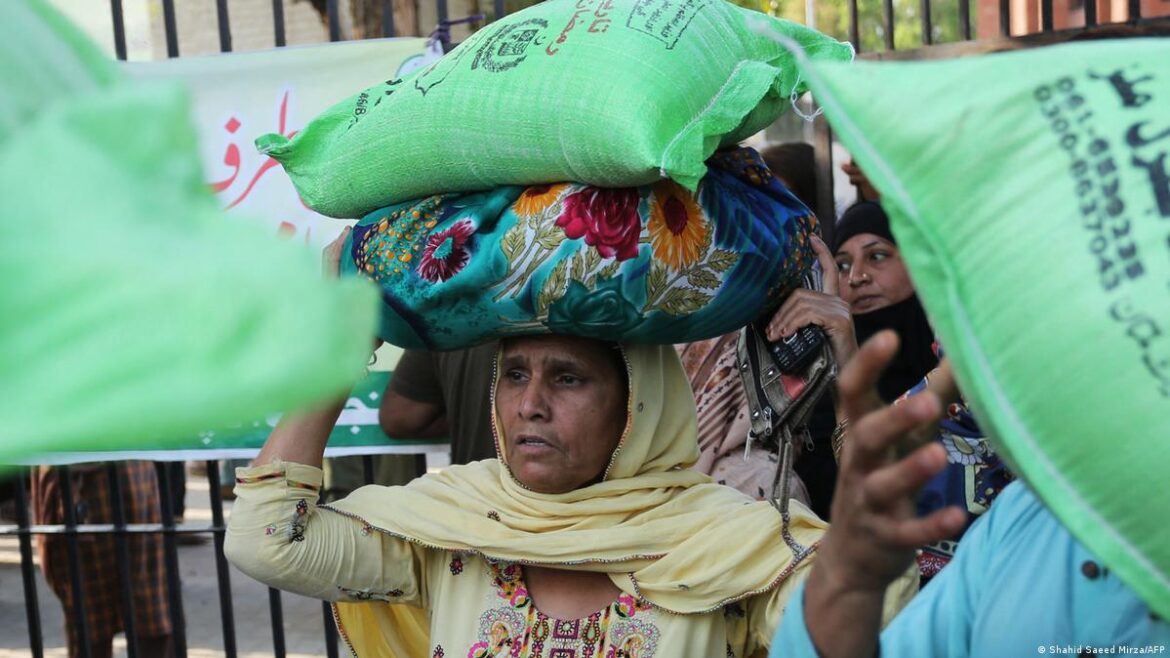
ISLAMABAD: Pakistan’s consumer prices rose 5.8% from a year earlier in January, official data showed, aligning with the finance ministry’s forecast and highlighting the central bank’s caution that inflationary pressures may linger as the economy gathers pace.
The reading, released by the Pakistan Bureau of Statistics on Monday, compared with a 5.6% advance in December and a 2.4% increase in January 2025. On a month-on-month basis, prices climbed 0.4% last month, reversing a 0.4% drop in December and exceeding the 0.2% gain seen a year ago. The uptick pushed average inflation for the first seven months of the fiscal year to 5.24%, down from 6.50% in the same period a year earlier, showing a broader cooling trend even as monthly fluctuations persist.
Urban inflation held steady at 5.8% year-on-year in January, matching December’s pace but well above the 2.7% recorded in January 2025. Month-on-month, urban prices rose 0.2%, compared with a 0.4% decline in December and a 0.2% increase a year prior. In rural areas, inflation accelerated to 5.8% year-on-year from 5.4% in December, significantly higher than the 1.9% seen in January 2025. On a monthly basis, rural prices advanced 0.6%, rebounding from a 0.6% drop in December and outpacing the 0.2% gain from a year ago.
The figures fell within the 5% to 6% range projected by the Finance Division in its January Monthly Economic Update & Outlook, providing some validation for the government’s near-term expectations amid ongoing efforts to stabilize the economy. The data arrives just a week after the State Bank of Pakistan opted to maintain its benchmark policy rate at 10.5% in the first Monetary Policy Committee meeting of 2026, defying market hopes for a cut.
SBP Governor Jameel Ahmad, speaking at a press conference following the decision, warned that inflation could climb above 7% in the second half of the current fiscal year. Ahmad also projected gross domestic product growth of 3.75% to 4.75% for the year, signaling optimism on the expansion front even as price risks loom. The central bank emphasized that the real policy rate remains sufficiently positive to anchor inflation over the medium term, while identifying stronger domestic demand and external pressures—such as widening trade deficits from rising imports—as potential upside risks.
The SBP’s stance echoes concerns raised in a recent International Monetary Fund staff report tied to Pakistan’s $7 billion loan program, which advised against premature monetary easing and urged data-dependent policymaking to solidify inflation expectations and shore up foreign reserves. Pakistan’s economy has been navigating a delicate balance since emerging from a balance-of-payments crisis, with the IMF program imposing strict conditions on fiscal and monetary discipline. While inflation has eased from peaks above 30% in recent years, sporadic supply shocks and currency volatility continue to pose challenges.
The latest inflation print reinforces the central bank’s view that prices may temporarily exceed its 5% to 7% medium-term target band this year, particularly as economic activity revives and global commodity trends exert influence. Still, the moderation in year-to-date averages suggests progress toward sustainable disinflation, provided external buffers strengthen and fiscal targets are met.
Copyright © 2021 Independent Pakistan | All rights reserved