By Staff Reporter
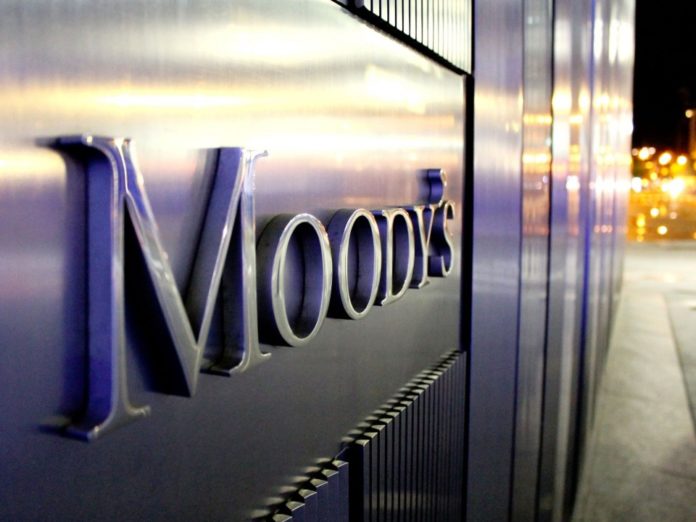
KARACHI: Moody’s Investors Service has revised its outlook on Pakistan’s banking sector to stable from positive, reflecting a gradual economic recovery coupled with persistent challenges to asset quality and profitability.
The global rating agency said on Monday that the operating environment for banks is continuing to recover, albeit slowly, bolstered by the country’s improving economic and fiscal outlook and a strengthening external position. “We have changed our outlook on Pakistan’s banking system to stable from positive,” Moody’s said in a report. It added that banks’ financial performance is expected to remain stable over the next 12-18 months as they navigate ongoing asset quality and profitability pressures.
The sector outlook aligns with that of the Government of Pakistan, which Moody’s rates at Caa1 with a stable outlook, given banks’ substantial holdings of government securities that make up around half of total banking assets. “Pakistan’s long-term debt sustainability remains uncertain, because of its still weak fiscal position, high liquidity and external vulnerability risk,” the agency said.
Moody’s forecast real GDP growth for Pakistan at around 3.5% in 2026, up from 3.1% in 2025, supported by ongoing reforms that are lifting confidence and gradually bolstering economic activity. Headline inflation eased to 4.5% in 2025 from 23% in 2024, but Moody’s anticipates it will climb to about 7.5% in 2026, partly due to base effects. The agency noted that the brighter economic outlook and lower inflation have paved the way for easing monetary policy rates, which in turn will spur credit demand and hold problem loan ratios largely steady.
“Lower borrowing costs will boost credit demand and keep problem loan ratios broadly unchanged. At the same time, margins will remain steady after a decline following rate cuts, but higher business volumes, non-interest income and stable costs will support profits and safeguard capital buffers,” Moody’s said. It highlighted that recent floods are expected to pressure agricultural output, though activity in the industrial and services sectors should stay robust.
Sector-wide nonperforming loan ratios rose sharply at the start of 2025 after the removal of the advances-to-deposits ratio (ADR) tax, prompting banks to shrink their loan books. Although loans represented just 23% of banks’ total assets as of September 2025, Moody’s expects double-digit credit growth in 2026, driven by improving macroeconomic conditions. “Borrower delinquencies will persist nonetheless, particularly in more vulnerable sectors such as agriculture and energy, but lower borrowing costs and higher credit demand will maintain broadly stable problem loan ratios, measured by Moody’s as Stage 3 loans over gross loans, at around 8% for the Pakistani banks we rate,” the report said.
As of September 2025, the system’s Tier 1 and total capital to risk-weighted assets (RWAs) ratios were 18% and 22.1%, respectively, compared with 17% and 21.5% a year earlier, well above regulatory minimums. “Although financing growth will rise in 2026 on the back of lower rates, Pakistani banks will continue to increase their holdings of government securities, which do not carry any risk-weighting, further supporting capital metrics,” Moody’s said. “We expect banks to maintain high dividend payout ratios, but retained earnings — despite slight margin compression — will be sufficient to fund balance sheet growth and maintain capital ratios.”
Copyright © 2021 Independent Pakistan | All rights reserved