By Staff Reporter
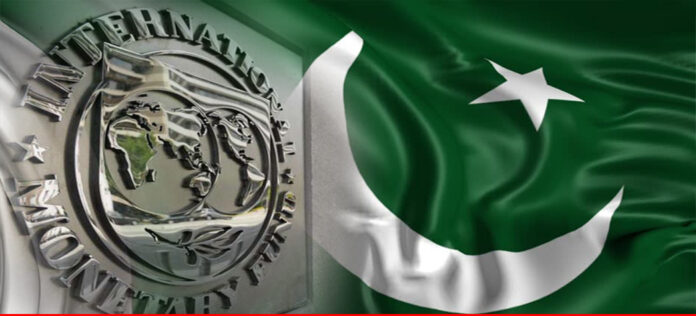
ISLAMABAD: The International Monetary Fund said it has made considerable progress in talks with Pakistani authorities on the third review of the country’s Extended Fund Facility and the second review of its Resilience and Sustainability Facility, even as discussions continue to gauge the economic fallout from the Middle East conflict.
In an end-of-mission statement, Iva Petrova, the IMF’s mission chief for Pakistan, said the lender’s team and government officials held talks on the 37-month EFF arrangement and the 28-month RSF deal in Karachi and Islamabad, as well as virtually from Feb. 25 through March 11.
The physical mission was shortened after US-Israel strikes on Iran prompted security concerns, with discussions shifting online from March 3, according to statements from Pakistani officials at the time. The IMF team had arrived Feb. 26 and begun face-to-face meetings March 2; the reviews had originally been scheduled to wrap up March 11. “While considerable progress was made in the discussions, these will continue in the coming days, including to more fully assess the impact of recent global developments on Pakistan’s economy and the EFF-supported program,” Petrova said.
Implementation of the EFF program remained broadly on track with the authorities’ commitments through the end of February, the statement said. Officials made headway on the policy agenda ahead, including sustaining fiscal consolidation to strengthen public finances, keeping monetary policy tight enough to lock in durable progress toward the State Bank of Pakistan’s inflation target, and pushing reforms to restore viability to the energy sector.
Particular focus was given to deepening structural reforms — a priority for the government as it seeks to accelerate growth — while bolstering social protection and rebuilding spending on health and education. Those conversations are still underway, the IMF noted.
On the RSF front, Pakistani authorities have made good progress implementing their climate-resilience reform agenda, including completion of the associated measures under the facility, according to the statement.
The talks also examined how the Middle East conflict is affecting Pakistan’s economic outlook, balance of payments and external financing requirements. Volatile and rising energy prices, coupled with tighter global financial conditions, are complicating the picture, the fund said.
The IMF team and Pakistani authorities plan to keep discussing these issues “with a view to concluding them in the coming days.” A successful finish to both reviews would unlock roughly $1 billion — equivalent to 760 million special drawing rights — under the EFF and about $200 million under the RSF by the end of April. That disbursement would provide a timely buffer for Pakistan as it navigates higher energy import costs and a more challenging external environment.
Copyright © 2021 Independent Pakistan | All rights reserved