By Staff Reporter
ISLAMABAD: Pakistan reduced speed limits on its motorways and national highways on Thursday as part of a broader push to curb fuel consumption in response to surging global oil prices triggered by the US-Israel war on Iran.
The National Highways and Motorway Police announced the changes in a formal statement, citing direct instructions from Prime Minister Shehbaz Sharif to promote energy efficiency and fuel savings. The move is one of several austerity measures unveiled in recent days by Sharif’s administration, which is grappling with the economic fallout from disrupted global supply routes and higher crude prices.
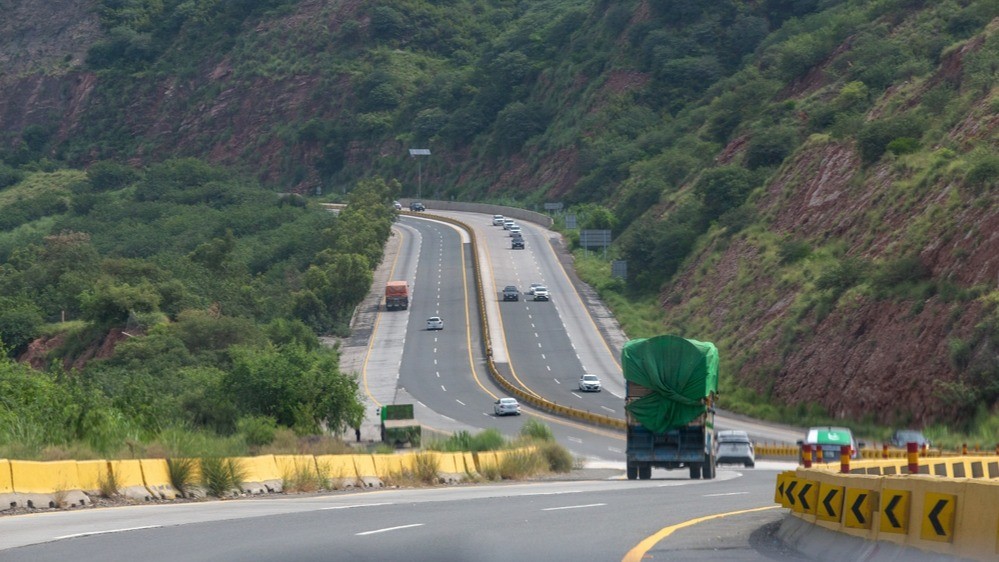
Under the new rules, cars and light transport vehicles on motorways must now travel at a maximum of 100 kilometers per hour, down from 120 km/h. Passenger service vehicles and heavy transport vehicles are limited to 90 km/h, reduced from 110 km/h. On national highways, the limit for cars and light vehicles dropped from 100 km/h to 80 km/h. Passenger and heavy vehicles are now capped at 65 km/h, previously 80 km/h.
The motorway police launched a nationwide awareness campaign to publicize the revised limits and ensure compliance, officials said. “On the directions of the federal government, the speed limits on motorways and national highways have been reduced to conserve fuel, and an awareness campaign has been launched to inform the public,” Syed Imran Ahmed, spokesperson for the Central Region of the motorway police, said in a statement.
The timing coincides with the final days of Ramadan, when millions of Pakistanis traditionally drive to their hometowns for Eid al-Fitr celebrations, one of the busiest travel periods on the country’s intercity roads. Authorities acknowledged that the slower speeds could discourage some long-distance journeys while aiming to reduce overall fuel demand.
Pakistan, which imports the vast majority of its energy needs, has already felt the pinch of rising global prices. Earlier this month, the government raised petrol and diesel prices by about 55 rupees per liter, adding to transportation costs and inflationary pressures.
The speed-limit reductions are part of a wider package of austerity steps announced last week. Those include a 50 percent cut in fuel allowances for official vehicles and a directive requiring half of public-sector employees to work from home, with exemptions only for those providing essential services. Officials framed the measures as necessary to ease pressure on the country’s import bill and shield its fragile economy from the volatility in global oil markets. The Iran conflict has rattled energy supply chains, sending crude prices higher and complicating Pakistan’s efforts to stabilize its balance of payments.
Copyright © 2021 Independent Pakistan | All rights reserved