By Staff Reporter
ISLAMABAD: The government conceded to parliament on Monday that public debt rose sharply in fiscal 2025, pushing the debt-to-GDP ratio higher and increasing the per-capita burden even as fiscal consolidation measures took hold and macroeconomic conditions improved.
In twin fiscal and debt policy statements laid before the National Assembly, the Ministry of Finance acknowledged that the country has been in perpetual violation of the Fiscal Responsibility and Debt Limitation Act for years, with the breach extending through the fiscal year that ended in June 2025.
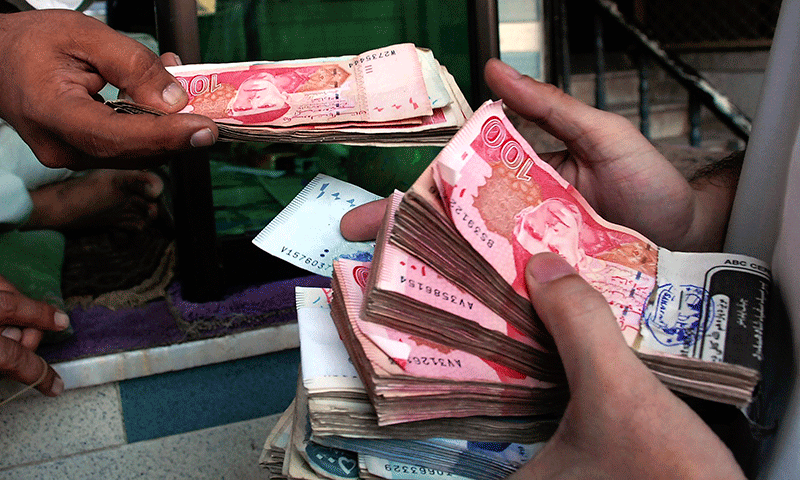
Total public debt climbed to Rs80.52 trillion as of June 2025 from Rs71.25 trillion a year earlier, the ministry reported. The increase was driven primarily by higher interest payments. Debt per capita rose to Rs333,041 from Rs294,098 in fiscal 2024.
The debt-to-GDP ratio deteriorated to 71.7% at the end of fiscal 2025 from 67.6% a year earlier, the statements showed. Government debt alone stood at 64.3% of GDP, up from 61.8%. Under the 2005 law, the debt-to-GDP ratio was supposed to have fallen to 60% by fiscal 2017-18, then decline by 0.5 percentage point annually through fiscal 2022-23 and by 0.75 percentage point annually through fiscal 2032-33, eventually stabilising at 50% or below. Instead, the ministry said the ratio should have been no higher than 56.75% in fiscal 2024 and 56% in fiscal 2025. The government has missed those targets for several years running.
In absolute terms, public debt expanded by about Rs9.3 trillion, or roughly 13%, during fiscal 2025. Of that increase, Rs2.38 trillion was attributable to exchange-rate effects and Rs8.9 trillion to interest expense. The rise occurred despite a primary surplus of Rs1.8 trillion and cash balances of Rs200 billion accumulated during the year. The ministry noted that fiscal consolidation had nevertheless stabilised the pace of debt accumulation. Debt-stock growth slowed markedly from the 25% pace recorded in both fiscal 2022 and fiscal 2023.
All major spending heads were contained except defence, which overshot its allocation. Defence spending reached Rs2.192 trillion, or 103.4% of the Rs2.122 trillion budgeted. By contrast, mark-up payments — the largest single component of expenditure — came in at Rs8.887 trillion, more than 9% below the Rs9.775 trillion estimate, delivering significant savings.
The disclosures mark the latest indication of the tension between Pakistan’s heavy debt-servicing obligations and its efforts to rein in the fiscal deficit while navigating high interest rates and currency volatility. The statements were submitted as required under the debt-limitation law but underscored how far actual outcomes have diverged from statutory targets.
Copyright © 2021 Independent Pakistan | All rights reserved