By Staff Reporter
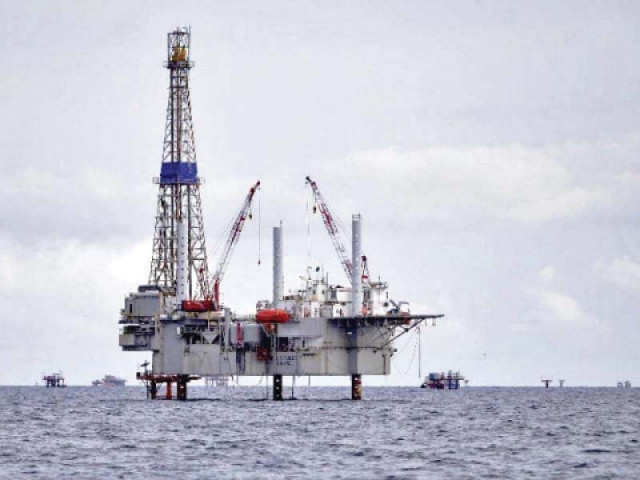
ISLAMABAD: Pakistan formally reopened its offshore oil-and-gas frontier on Wednesday after nearly two decades, signing production-sharing agreements and exploration licenses for 23 blocks in a bid to curb heavy reliance on imported fuel and revive interest in one of the region’s most underexplored maritime basins.
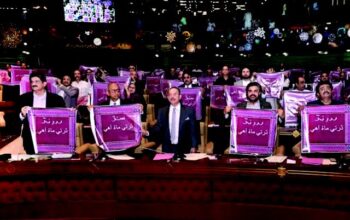
The awards, covering 54,600 square kilometers in the Indus and Makran offshore basins off the coasts of Sindh and Balochistan provinces, mark the completion of the Offshore Bid Round 2025. Two blocks — Offshore Deep-C and Offshore Deep-F — were signed earlier on Dec. 2 at the Prime Minister’s Office. The remaining 21 agreements were finalised on Wednesday in a ceremony witnessed by Petroleum Minister Ali Pervaiz Malik.
The government approved the blocks as part of a broader push to ease pressure on foreign-exchange reserves and shield the economy from global energy-price volatility. Pakistan imports the bulk of its oil, gas and liquefied natural gas, leaving it exposed to swings in international markets.
Offshore activity has been minimal for years because of elevated drilling costs, technical challenges, security issues and a string of dry wells. The country’s last significant effort was the 2019 ultra-deepwater Kekra-1 well, drilled by a consortium that included ExxonMobil Corp., Eni SpA, Oil & Gas Development Co. and Pakistan Petroleum Ltd. That well was declared dry. The Indus and Makran basins remain lightly explored; since independence, only 18 exploratory wells have been drilled across Pakistan’s entire 282,623-square-kilometer offshore area.$82 Million Committed in First Phase.
The Petroleum Division said the 23 blocks will draw an initial investment of about $82 million over the first three-year exploration phase. Work will focus on seismic data acquisition, processing and geological-geophysical studies to assess hydrocarbon potential. If results justify moving to Phase Two, total spending could reach nearly $1 billion, including exploratory drilling, the ministry said in a statement. Should commercial discoveries follow, hundreds of millions of dollars more would be required for appraisal, field development and production infrastructure.
Mari Energies Ltd., one of Pakistan’s largest private explorers, was the most active participant. It secured operatorship of 18 blocks and joint-venture stakes in another five. State-owned Oil & Gas Development Co. and Pakistan Petroleum Ltd. each received eight blocks, including two as operators. Prime Global Energies Ltd. was awarded one block as operator. Other participants include United Energy Pakistan Ltd., Orient Petroleum Inc., Turkish Petroleum Overseas Co. and Fatima Petroleum Co. Ltd. as joint-venture partners in the earlier-signed Deep-C and Deep-F blocks.
Awardees have also committed to social-welfare and capacity-building programs in the coastal regions of Sindh and Balochistan. Malik called the signing “a historic milestone in the government’s energy policy,” according to the ministry statement. “The government is committed to reviving offshore exploration, promoting investment and reducing dependence on imported fuel,” he said. “These agreements reflect investor confidence in Pakistan’s offshore oil and gas potential.”
The minister said the awards demonstrate Islamabad’s efforts to position Pakistan as a credible offshore destination through a transparent, investor-friendly framework. That includes new Offshore Petroleum Rules and a standardized Model Production Sharing Agreement incorporated into the bid round. The Petroleum Division added that it plans to bring in leading international oil companies for the next phase of offshore work, noting that several global energy firms are already reviewing available data.
Copyright © 2021 Independent Pakistan | All rights reserved