By Staff Reporter
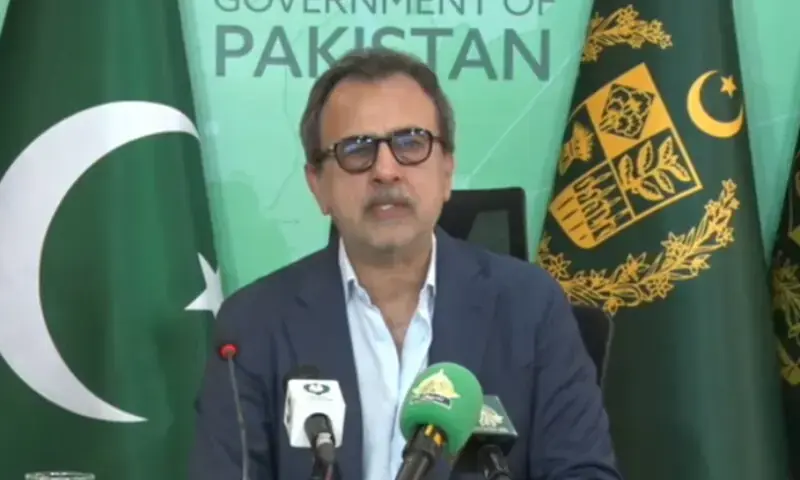
ISLAMABAD: Power minister Awais Leghari pushed back on Sunday against what he called a weeks-long misinformation campaign over electricity subsidies, insisting the government was expanding its protected consumer base rather than retreating from it, even as separate negotiations with Chinese power producers under the China-Pakistan Economic Corridor framework remained deadlocked.
Leghari, addressing reporters in Islamabad, said roughly 29.57 million domestic consumers — 86% of the total — were presently receiving subsidized electricity, and that the number of protected consumers had more than doubled to 21.5 million over the past four years from 9.5 million. The remarks were aimed squarely at media reports from last month suggesting Islamabad had committed to the International Monetary Fund to phase out untargeted residential power subsidies as a condition of a $1.2 billion climate-financing loan.
“The government is not withdrawing electricity subsidies for protected consumers,” Leghari said. “Reports suggesting otherwise are contrary to the facts.”
QR Codes and Eligibility Gates
The minister framed the controversy as a misreading of a new subsidy registration drive rather than any policy reversal. Islamabad has launched a QR code-based enrollment system designed to channel support exclusively to qualifying low-income consumers — defined broadly as those consuming fewer than 200 units per month — and to weed out households that keep grid consumption artificially low by pairing multiple meters with rooftop solar installations.
Around two million single-phase consumers have already registered under the scheme within roughly one month of its rollout, Leghari said. Eligibility criteria would be determined through public consultations, he added, and verified households would face no interruption to their support.
The total subsidy envelope has grown in parallel, rising to Rs423 billion from Rs199 billion, with combined agricultural and domestic subsidies now reaching Rs527 billion, according to the minister. He also ruled out any new electricity taxes.
Tariff Decline Across the Board
Leghari devoted a significant portion of the briefing to defending the government’s track record on electricity costs, presenting data showing the national average tariff had fallen 20% to Rs42.26 per unit in May 2026 from Rs53.04 exactly two years earlier.
Industrial consumers received the steepest relief, with average tariffs dropping 33% over that period. Domestic rates fell 16%, protected consumer tariffs declined 31%, agricultural rates dropped 14%, and commercial tariffs eased 8%. Consumers in Azad Jammu and Kashmir saw the sharpest reduction at 45%, while bulk consumer rates fell 13%.
The minister attributed the declines to a renegotiation of power purchase agreements with independent power producers, which he said had generated Rs3.5 trillion in cumulative savings, along with reductions in distribution losses — saving Rs193 billion — and a Rs780 billion decline in circular debt during fiscal year 2024-25. The sale of surplus machinery from joint network companies contributed an additional Rs47 billion in savings.
The budgeted power sector subsidy has been trimmed as a result — falling to Rs890 billion this fiscal year from Rs1.287 trillion the prior year, with a further reduction to Rs830 billion targeted for the coming fiscal year. Leghari credited part of that compression to the elimination of cross-subsidies on industrial consumers, which he said had removed a Rs250 billion burden from that sector.
Efforts to strip electricity duty from power bills were less successful, the minister acknowledged, saying provincial resistance had blocked that initiative. Lower underlying tariffs, however, had automatically reduced the proportional weight of taxes on consumer bills, he argued.
CPEC Plants: An Impasse
The more pointed revelation of the press conference came when Leghari was asked directly about progress in talks with IPPs established under CPEC, the Chinese-financed infrastructure program whose power projects have long been cited as a structural driver of Pakistan’s high electricity costs.
“Sufficient outcome has not come out yet,” he said.
The minister explained that CPEC-related plants were constructed under a government-to-government framework — with guarantees extended by both Islamabad and Beijing — which sharply constrains the scope of any commercial revision. Efforts had focused on debt re-profiling rather than tariff cuts, he said, but “sufficient results have not materialized yet.”
He struck a cautious tone on the diplomatic dimensions of the negotiations. “We also have to respect investments that flowed in when no investor was ready to look toward Pakistan,” Leghari said, expressing hope that “an agreement would be reached toward an improvement.”
The contrast with progress elsewhere in the IPP renegotiation program was notable. By March, Islamabad had told a parliamentary committee that revisions to power purchase agreements with 29 private and some state-owned plants — spanning contract terms of three to twenty years — had locked in the Rs3.5 trillion in savings the minister cited on Sunday. Those agreements extend to 2053 on the longest tail.
Solar: Regulation, Not Retreat
Leghari also used the briefing to address growing unease among solar energy advocates over changes to Pakistan’s net metering framework. He was emphatic that net metering had not been abolished and characterized the shift to a net billing system as a narrowly targeted correction affecting only three-phase commercial and industrial consumers — leaving roughly 90% of domestic users unaffected.
“Solar is not being discouraged. It is being regulated as a proper generation asset to ensure fairness across all consumer categories,” he said, framing the revision as a protection for non-solar households who would otherwise bear the cost of credits paid to solar generators.
The National Energy Plan includes 8 gigawatts of distributed solar capacity. Licensing requirements for solar installations of 25 kilowatts or below have been scrapped, the minister said, and the National Electric Power Regulatory Authority had approved expanded facilities for smaller projects at the Power Division’s request. Leghari projected that self-generation capacity would reach 50,000 megawatts within a decade, up from under 20,000 megawatts today, notwithstanding the billing mechanism change.
On the broader energy transition, the minister said Pakistan aimed to raise clean energy’s share in its power mix from the current 55% to 90% by 2035, with electricity generated from domestic resources rising from 74% to 96% over the same period. Renewable sources currently account for 57% of the energy mix — a figure Leghari contrasted favorably with India’s approximately 48%.
Neelum-Jhelum Offline
In a separate disclosure, Leghari confirmed that the Neelum-Jhelum Hydropower Project had been offline for about 18 months due to design flaws in the over-Rs500 billion facility. The Water and Power Development Authority requires a further 18 months or more to complete repairs, he said.
“Its closure is causing remarkable losses, amounting to billions of rupees,” Leghari said. “Due to the non-availability of cheap electricity from this project, expensive electricity has to be arranged for.”
The outage has added pressure to a system the government argues is otherwise moving in the right direction — cheaper on average, cleaner at the margin, and better targeted in its subsidies, if not yet fully resolved on its most politically sensitive front.
Copyright © 2021 Independent Pakistan | All rights reserved