By Staff Reporter
KARACHI: The number of people found to be infected with HIV in connection with a children’s hospital in Karachi has climbed to 120, provincial officials said Tuesday, as a public health investigation that began nine months ago continues to widen across working-class neighbourhoods in the city’s industrial quarter.
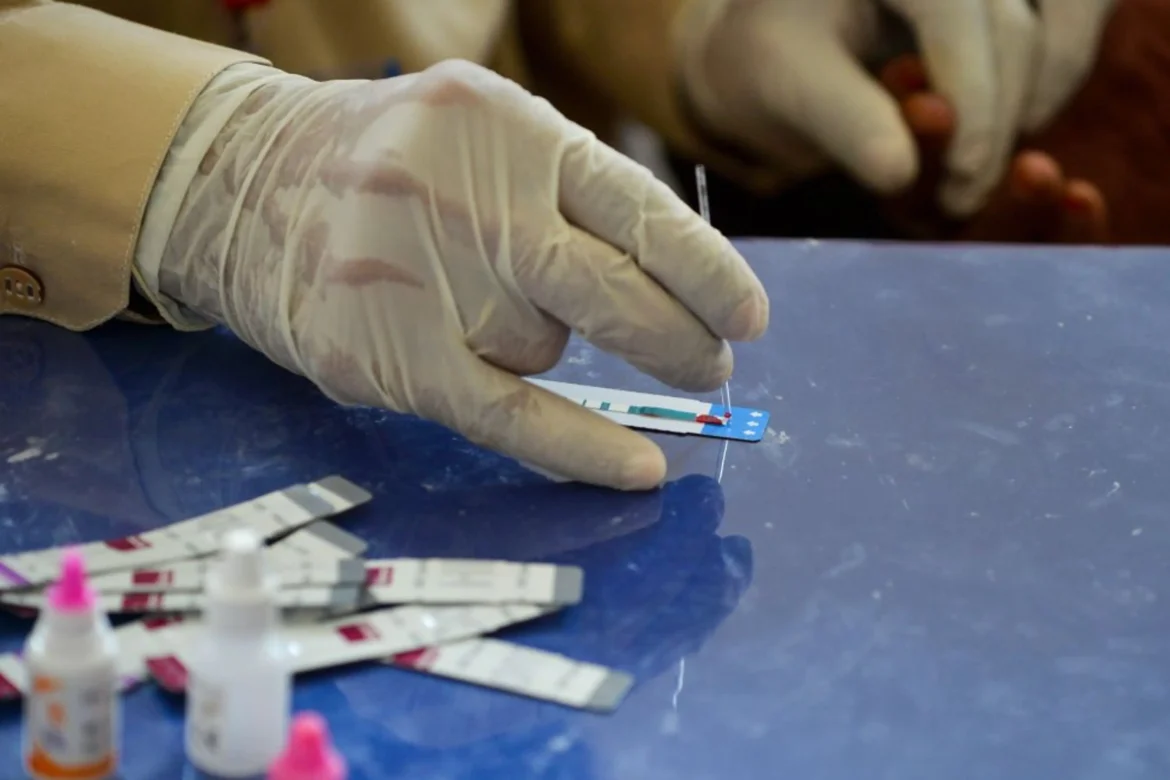
Speaking at a news conference in the Sindh Assembly’s committee room, Saeed Ghani, the provincial labour minister, said more than 10,500 residents living near Kulsoom Bai Valika Hospital have been screened for the virus since October, when the first cluster of infections among young patients came to light. Of those tested, 120 have come back positive.
A separate screening effort at a second facility run by the same state agency, in the Landhi neighbourhood roughly 15 miles away, turned up 10 more cases among 2,000 people tested, Ghani said. Combined, the two screening drives have identified 130 infections in a population of roughly 12,500.
The outbreak has become one of the more closely watched public health failures in Sindh province in recent memory, drawing scrutiny from the Sindh High Court, prompting a Rs2 billion government endowment fund, and putting a spotlight on infection-control practices at a hospital system that serves industrial workers and their families under Pakistan’s social security program.
Ghani, who also chairs the Sindh Employees’ Social Security Institution, or SESSI, which operates both hospitals, said 78 of the 120 confirmed cases involve children, and that six of those children have died. Those figures were drawn from the second of two formal inquiries into the outbreak, the more recent of which was submitted to the provincial ombudsman on June 19.
An earlier inquiry, completed in November, had identified 16 infected children and two deaths, all traced to the hospital’s pediatrics department.
The minister said 81 of the 120 people found to be infected are registered beneficiaries of SESSI, the state agency that insures industrial workers. The remaining 39 are not covered by the program but are nonetheless receiving free treatment from the provincial government, he said.
Screening will continue, minister says
Ghani said the government has no plans to slow the screening campaign, despite the likelihood that the count will keep rising.
“We will not suspend screening out of fear that more cases may emerge,” he said. “The government will take full responsibility for all newly identified patients.”
He said a standardised data-collection form has been introduced to help investigators track the outbreak’s origins and scope, and that all screening and follow-up work is being conducted discreetly, in an effort to shield affected families from public exposure.
All 78 confirmed pediatric cases have been verified through direct contact with victims’ families, Ghani said, though he cautioned that the overall count of positive cases could still climb. He said the affected children are being treated at five institutions, including Indus Hospital, Aga Khan University Hospital, and Dow University of Health Sciences.
Ghani said every confirmed infection traces back to exposure that occurred before October 2025, and that no case has been linked to transmission at the hospital since screening began. “Screening continues in both hospitals and the surrounding communities,” he said.
A fund, and a warning on accountability
The minister said a standing committee of medical specialists will be formed to oversee both the clinical treatment of affected children and the management of the Rs2 billion endowment fund the provincial government has set up for their long-term care. He said the fund could be expanded if the need arises.
“This is a long-term disease and requires a long-term solution,” Ghani said, adding that the provincial government committed early on not to abandon the families involved.
On the question of what caused the outbreak, Ghani pointed to lapses in the disposal of medical waste. He said a proper disposal system exists but that some hospital personnel had disregarded it “for personal gain.” He said disciplinary action against those responsible is underway.
Show-cause notices have gone out to 37 doctors and staff members, the minister said, and those found culpable face dismissal, criminal complaints, and prosecution. Two doctors have already been suspended.
Asked directly whether he bears responsibility for the outbreak, Ghani said he has accepted a measure of it.
“If my resignation could resolve the issue, I have no objection,” he said.
Ghani also invoked Sindh’s confidentiality laws governing HIV patients, which are intended to shield families from stigma, and criticized what he described as efforts by some political and social figures to sensationalize the outbreak in ways that compromised affected families’ privacy.
Physicians describe a wider pattern
Two physicians who have treated patients linked to the outbreak joined Ghani at the news conference: Dr. Abdul Bari Khan, founder of Indus Hospital and Health Network, and Dr. Faisal Mahmood, an infectious disease specialist and associate chief medical officer at Aga Khan University Hospital.
Mahmood said the problem is not confined to a single hospital or neighbourhood, noting that infection-control lapses have also surfaced at private clinics in the area. He said many of the patients found to be HIV-positive had a history of visiting private clinics near their homes.
Khan said Pakistan continues to carry a heavy burden of HIV and hepatitis C, and called for coordinated efforts between the government and health care institutions to bring down the number of cases. He said ensuring that clinics and hospitals use new, single-use syringes will be essential to containing the spread of both diseases.
Copyright © 2021 Independent Pakistan | All rights reserved