By Staff Reporter
ISLAMABAD: US President Trump warned on Tuesday night that the United States would begin striking Iranian power plants and bridges next week if Tehran does not return to the negotiating table, escalating his rhetoric on the same day American forces carried out a fourth consecutive night of strikes against Iranian military targets and reimposed a naval blockade on the country’s ports.
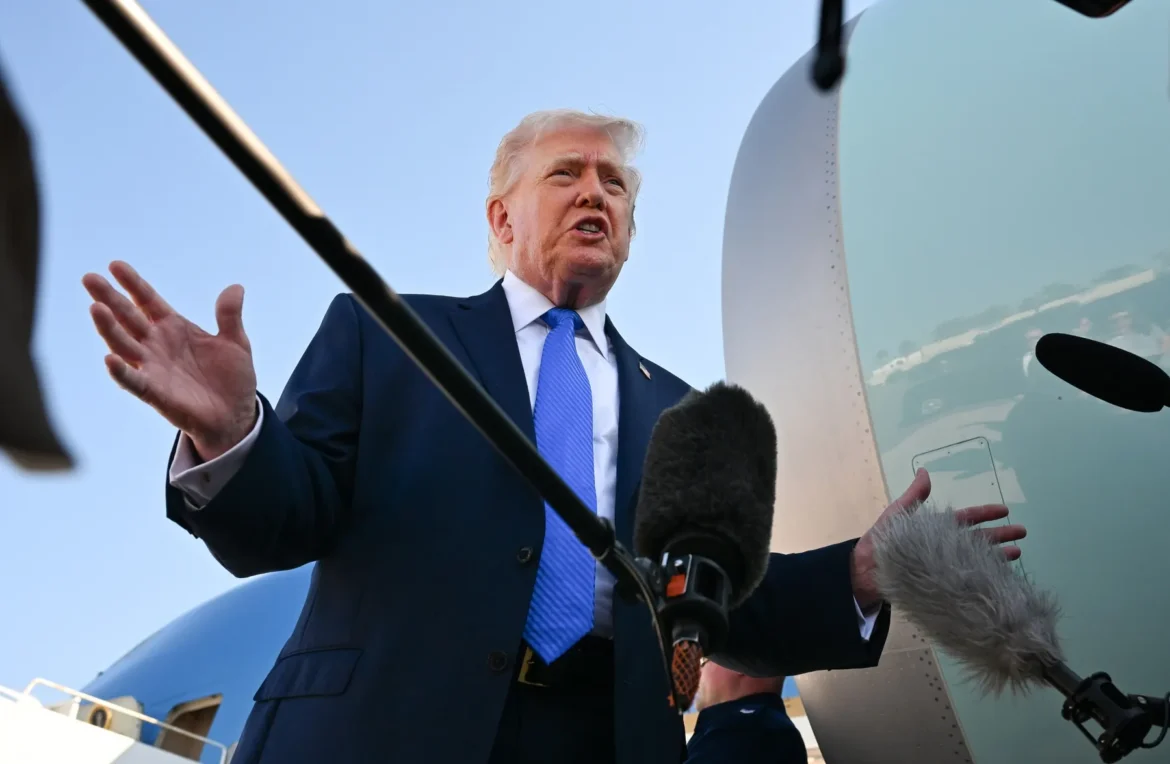
“Next week it gets really bad for them,” Trump said in an interview with Bret Baier that aired on Fox News. “We’re going to knock out all their power plants. We’re going to knock out all their bridges unless they get to the table and negotiate.”
It was not the first time Trump had raised the prospect of hitting civilian infrastructure inside Iran. A similar threat in the spring drew condemnation from the United Nations, whose human rights chief called deliberate attacks on civilian infrastructure a war crime under international law. Retired Brig. Gen. Mark Kimmitt, appearing on CNN Tuesday night, said bridges and infrastructure used to support military forces would be legitimate targets, but added: “I didn’t hear anything about civilian infrastructure. I didn’t hear anything about civilian bridges, so let’s hope we’re going to stay focused on the military targets.”
Trump’s warning came hours after he reversed a separate threat — to impose a 20 percent fee on cargo shipped through the Strait of Hormuz — first announced on Monday as part of a plan to have the US collect what he called reimbursement for guarding the waterway. On Tuesday, with the fee set to take effect at 4 p.m. Eastern time, Trump said in a post on Truth Social that he would replace it with unspecified investment commitments from Gulf states instead.
“Based on highly productive conversations with Middle East leadership, I have decided to replace the 20% United States Reimbursement Fee with Trade and Investment Deals that the various Gulf States will be making into the United States,” Trump wrote. He did not name which countries had agreed to invest or provide further detail, saying only that the commitments would be “MASSIVE” and “extraordinarily good for them, and their future.”
The fee had drawn criticism before Trump dropped it. The International Maritime Organization, the UN’s shipping agency, said there was no legal basis for imposing mandatory tolls on strait transits. Hapag-Lloyd, the German container line, called the proposal “fundamentally wrong.”
Even as he backed off the fee, Trump followed through on reinstating the naval blockade of Iranian ports, which US Central Command said took effect at 4 p.m. Eastern, an hour after American forces began another round of strikes. CENTCOM said fighter jets, drones, and naval vessels spent seven hours hitting Iranian missile and drone sites, naval assets, and coastal defence systems “to further degrade Iran’s ability to threaten commercial shipping and civilian crews.”
Iran’s government said the renewed blockade had effectively killed the truce the two countries reached last month. Deputy Foreign Minister Kazem Gharibabadi said the decision “has, in a way, dismantled” the memorandum of understanding, and told Iranian state television that further pressure would not push Tehran back to the table. “If the US thinks that by tightening its measures against us, its military actions and its economic blockade, we will return to negotiations, it is making a mistake,” he said.
Casualties mount at sea
The exchange of fire has taken its heaviest toll on commercial shipping. Adm. Brad Cooper, head of US Central Command, said in a statement Tuesday night that Iran had “intentionally targeted civilians across the region by attacking seven commercial ships” over the previous week, resulting in “nearly a dozen civilian crew members killed, missing, or injured.” He said Iranian forces had also fired dozens of missiles and drones at neighbouring Gulf countries. “US forces are holding Iran accountable for unwarranted aggression that continues to endanger innocent lives,” Cooper said.
The United Arab Emirates said Iranian cruise missiles struck two of its flagged tankers, the Mombasa and the Al Bahiyah, in Omani territorial waters. The UAE Ministry of Defence said one Indian crew member died and eight others were wounded, four seriously, among the 30 Indian nationals aboard the two vessels. Kuwait’s Defence Ministry said one of its naval vessels was also struck during an Iranian missile and drone barrage, wounding four crew members, and that shrapnel had fallen across several locations in the country, causing damage to civilian facilities.
Iran’s Islamic Revolutionary Guard Corps said separately that it had disabled two tankers it described as “rogue supertankers” for ignoring warnings, shutting off navigation systems, and attempting to use an unauthorised route through the strait.
Overnight and into Wednesday, Kuwait’s military said it was intercepting Iranian drones, and Bahrain sounded air raid sirens in Manama after saying it had turned back what its Interior Ministry called “several treacherous aerial attacks.” “Kuwaiti air defences are currently engaging hostile drone attacks following the nefarious Iranian aggression,” the Kuwaiti army said, urging calm. Jordan said it shot down four ballistic missiles fired from Iranian territory; Iranian state media said the missiles were retaliation for US strikes.
Iranian state media reported explosions near Bandar Abbas and on Qeshm Island, close to the strait, as well as in Bushehr province, home to Iran’s only civilian nuclear power plant, and in Andimeshk in Khuzestan province. A US projectile also exploded near a water and electricity facility on Kish Island, according to Iran’s semiofficial Tasnim news agency. The full extent of the damage from the latest strikes was not immediately clear.
A waterway central to the global economy
The renewed fighting has again put the spotlight on the Strait of Hormuz, the narrow passage between Iran and Oman through which roughly a fifth of the world’s oil and liquefied natural gas moved before the war began. Shipping data show traffic through the strait has slowed to its lowest level in two months, and Brent crude prices have climbed as tanker owners weigh the risk of continuing to send vessels through the corridor. Oil prices rose about 2 percent Tuesday to a one-month high after the blockade was reimposed.
The US first blockaded Iranian ports in April, an operation that by early June had redirected roughly 100 commercial vessels and disabled four attempting to pass through, according to the US military. That blockade was lifted last month as part of the memorandum of understanding both sides signed in an effort to end the conflict — an agreement that had appeared, until this week, to be holding.
A war that has grown unpopular at home
The conflict, which began when the US and Israel struck Iran in late February, has killed thousands and displaced millions across the region, and reignited fighting between Israel and Hezbollah in Lebanon. Since renewed strikes began last week, at least 28 people have been killed in Iran, according to a tally based on Iranian media and official statements.
The war has grown increasingly unpopular in the United States, where gasoline prices have risen since the fighting began and control of Congress will be decided in November’s midterm elections. In a recent Reuters poll, half of respondents said they did not believe the war had been worth its costs.
“I doubt the two sides will resume a full war, especially as Trump will suffer, though there is also a distinct possibility that the Iranians will overplay their hand. That is true of Trump too, of course,” said Yezid Sayigh, a senior fellow at the Carnegie Middle East Center, who described the hostilities as still contained within limits both sides were controlling, for now, as they positioned for eventual talks.
Copyright © 2021 Independent Pakistan | All rights reserved