By Staff Reporter
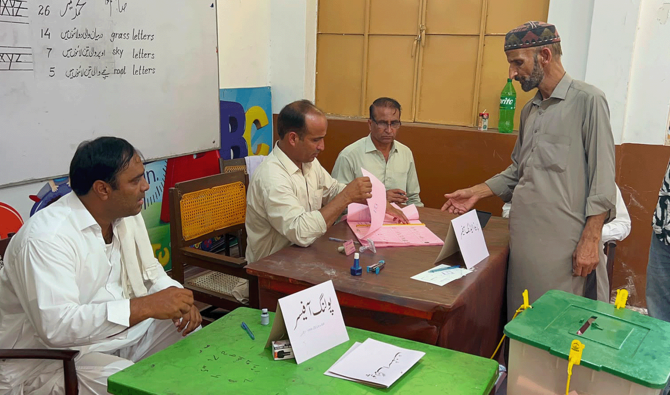
MUZAFFARABAD: The election authority in Azad Kashmir has abandoned plans to hold polling across two entire districts on Sunday, citing fears for the safety of voters in a region shaken by nearly two months of deadly unrest.
The Azad Jammu and Kashmir Election Commission said on Friday that voting due to take place on 10 August would now proceed only in the districts of Bagh and Haveli. The remaining constituencies — covering the whole of Poonch district and the Pallandri area of Sudhnoti — have been pulled from the schedule indefinitely, with officials promising to set a fresh date once conditions allow.
It marks the second time in as many weeks that the territory’s electoral process has had to bend to circumstances on the ground. Voting for the 53-member Legislative Assembly has already stretched across three separate phases rather than the single day originally intended, a concession the commission says was designed to keep the peace but which its critics regard as evidence the exercise was never going to run cleanly.
Under the plan in place until Friday, the third and final phase was to settle 11 seats spread across four districts of the Poonch division — three in Bagh, one in Haveli, five in Poonch itself, and two in Sudhnoti. Only the Bagh and Haveli contests will now go ahead as scheduled.
In a statement, the commission said it had acted on a briefing from the territory’s home secretary flagging “concerns over the law and order situation in some areas of Poonch district and Pallandri district”. It added that it had also received direct appeals from candidates and political figures in the affected districts asking for the vote to be delayed given the circumstances.
“The Election Commission clarifies that the said decision has been made solely in the context of the current law-and-order situation, so that the conduct of elections can be ensured in a free, fair, transparent and peaceful environment,” the statement read.
The postponement follows weeks of upheaval in Rawalakot, the administrative hub of Poonch district, where clashes between protesters and security personnel on 27 July left multiple people dead. The town has been at the centre of near-continuous demonstrations since the start of June, led by the now-banned Joint Awami Action Committee, whose grievances centre on the 12 assembly seats set aside for people displaced from Indian-administered Kashmir.
The committee argues the arrangement hands outsized political weight to voters who do not live in the territory, and has called for the seats to be scrapped altogether. The regional government maintains they are constitutionally protected and cannot be removed without a formal amendment, though it says it has moved to meet most of the group’s other demands.
The human cost of the standoff has continued to climb. The Jammu Kashmir Human Rights Observatory, an independent monitoring group, put the confirmed civilian death toll linked to the unrest at 89 between 5 June and 5 August. Authorities in Muzaffarabad dispute the framing of those figures, rejecting claims that security forces were behind protester deaths and instead accusing JAAC supporters of attacking law enforcement officers, saying two security personnel had been killed in recent violence. Islamabad has separately alleged that “militant elements pursuing a foreign agenda and backed by Indian funding” are behind the unrest, an accusation the protest movement denies.
Speaking earlier in the week, before Friday’s announcement, the territory’s Chief Election Commissioner, Ghulam Mustafa Mughal, acknowledged that safety considerations were central to how the final phase would be handled. Asked what would happen to the assembly given that its current term technically expires on 4 August, he said the process would not be derailed by an incomplete count in a handful of seats.
“Even if elections cannot be held in two or a few more constituencies, one cannot say that the house is not complete or those who have returned cannot take oath or perform their functions,” he said, adding that the new assembly would be sworn in once the 10 August polling had concluded.
The commission used Friday’s statement to push back on separate allegations of malpractice raised a day earlier by Raja Muhammad Shakeel Khan, a candidate for the Pakistan Peoples Party, who claimed polling agents at some stations had not been issued with Form-24 results certificates.
“The Election Commission has not received any complaint regarding any constituency or polling station till now,” it said, insisting that presiding officers had handed out the forms in line with standard practice. It also rejected suggestions that it had exercised discretion over which election symbols were assigned to which candidates, saying allocations followed the procedure set out in the territory’s 2020 election rules “without any bias towards or against any candidate”.
PML-N claims victory as PPP cries foul
The dispute over the vote’s fairness has played out against a backdrop of the governing Pakistan Muslim League-Nawaz all but declaring victory before the final ballots have been cast. Addressing supporters in Haveli, Rana Sanaullah, adviser to the prime minister on political affairs, told the crowd his party had already secured the 23 seats needed for a simple majority — and then some, with 24 seats won so far. He said the PML-N’s record showed it delivered development for the territory whenever it held power there alongside the federal government in Islamabad.
The party’s tally has been built on strong showings in the first two phases: nine of 13 seats in Mirpur on 27 July, followed by 15 more in Muzaffarabad on 2 August, against six for the Pakistan Peoples Party in that round.
Those results have fuelled weeks of sparring between the two parties. Addressing a rally of his own in Poonch on Friday, PPP chairman Bilawal Bhutto Zardari accused unnamed figures inside the PML-N of working to undercut Prime Minister Shehbaz Sharif and drive a wedge between him and his coalition partners.
“High-profile people are saying that the government has collapsed. I’m not saying that, nor am I casting doubt on the prime minister’s intentions. He’s a good man with good intentions. But what can he do when the people around him have bad intentions?” he told the gathering.
Bhutto Zardari said it was not the PPP that had set off talk of the coalition unravelling, but elements within the PML-N itself. “The PML-N’s fight is not with the PPP — it happens in elections, as it has before. The real fight is entirely different, because the PM, with his good intentions and actions, is undermined by a large part of the PML-N,” he claimed, adding that “a big part of the PML-N wants the PM to fight not only the opposition, but also his own allies.”
He also turned his fire on the decision to stretch voting across multiple phases, questioning whether that had ever happened before in the territory’s history. “If Kashmir is one, then the election should have been held on a single day,” he said, before challenging the official justification that phased voting would keep things calm. “But in which phase were the elections free, fair or peaceful?”
“In truth, elections were carried out in phases so they could rig them. They knew that 10 seats were in their pocket from the start,” he alleged. “With the 10 seats in their pocket, they robbed Mirpur, they robbed Muzaffarabad, and they’re looking at you, in Poonch. They are looking at Bagh. On August 10, they will find out that those in Poonch and Bagh hunt tigers.”
Copyright © 2021 Independent Pakistan | All rights reserved