By Staff Reporter
ISLAMABAD: Pakistan’s power regulator signed off on an additional 9.8 billion-rupee charge for electricity users in August, after trimming a bigger request from the country’s power purchasing agency and setting up a fresh round of scrutiny over how utilities manage output during the country’s fastest-growing hours for rooftop solar.
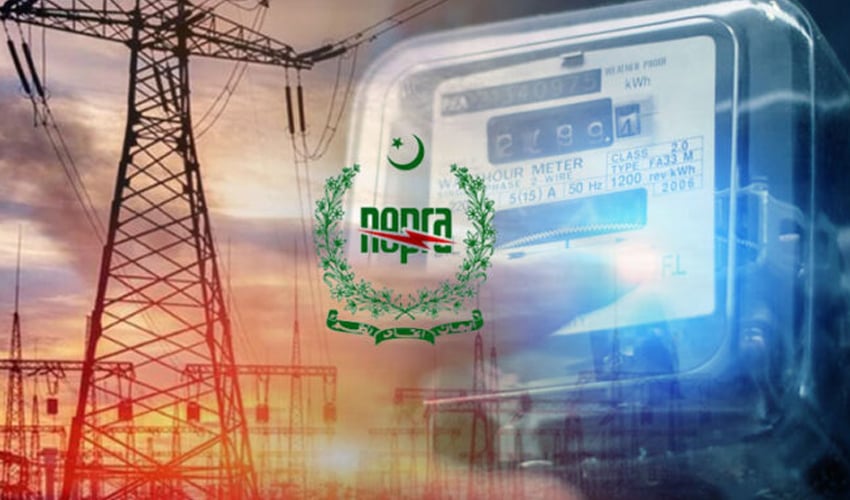
The National Electric Power Regulatory Authority said Friday it would allow distribution companies to recover 75 paisa per unit through a fuel cost adjustment tied to June consumption, notifying the increase for K-Electric and the former Wapda-run distribution companies alike. The mechanism, reviewed monthly under Pakistan’s tariff framework, typically shows up on a single billing cycle before resetting.
The approved figure marks a retreat from what the Central Power Purchasing Agency had sought. CPPA had asked Nepra to pass through Rs1.20 per unit, arguing that June’s actual fuel charges — Rs8.9138 per kilowatt-hour — ran well above the Rs7.7138 baseline built into the notified consumer tariff. Nepra’s own review pared that actual cost down to Rs8.4641 after adjustments, cutting the pass-through by more than a third.
Consumers will still pay more than they did in July, when the fuel adjustment stood at 34 paisa per unit. The shift between the two months leaves the net average fuel cost roughly 41 paisa per unit higher heading into August. The increase excludes lifeline consumers, electric-vehicle charging stations and households on prepaid meters, while applying to customers under the incremental consumption package. Distribution companies and K-Electric must reflect the adjustment in bills issued this month for power consumed in June.
Generation Shortfall, Partial-Load Costs Draw Regulator’s Attention
Beyond the headline number, Nepra’s determination flagged a broader set of operating issues facing the power division. Overall generation came in 5.6% below the projected level for June, according to figures reported by the power division and its entities.
The regulator also pressed on partial-loading charges that reached Rs4.9 billion during the month — payments made to power plants for running below full capacity. CPPA defended the charges as a byproduct of the grid’s changing demand curve rather than a sign of operational strain, telling the regulator that plants were throttled back during peak solar hours, when rooftop generation cuts into daytime grid demand, then ramped up again as evening consumption climbed.
The exchange points to a structural shift facing Pakistan’s grid operators as rooftop solar capacity expands. The power division warned that wind and solar output may eventually need to be curtailed if daytime demand keeps falling, a scenario that would mark a reversal for a government that has spent recent years courting renewable investment.
Base Tariff Adjustments Run on a Separate Track
The fuel charge is only one lever available to regulators. Under Pakistan’s tariff mechanism, monthly fuel cost adjustments pass through automatically, while a separate quarterly process folds in changes to power purchase prices, capacity charges, variable operations and maintenance costs, system-use charges, and transmission and distribution losses. Those quarterly revisions are set by the federal government and built directly into the base tariff, rather than added as a monthly surcharge.
That distinction matters for what comes next. Islamabad signaled last week that it was preparing another tariff package, having separately sought Nepra’s approval for roughly Rs1.20 per unit in additional fuel costs to collect Rs15.7 billion in August billing for June consumption — a request that appears to sit alongside, rather than duplicate, Friday’s determination.
Copyright © 2021 Independent Pakistan | All rights reserved