By Staff Reporter
KARACHI: After a day of confusion, accusation and last-minute reversals, the Sindh government on Friday evening backed down and reinstated the original eight-member medical board assigned to exhume the body of Mir Raza Ali, the young businessman whose death last month has become one of Karachi’s most closely watched cases. The exhumation, abandoned on Friday morning amid furious objections from Ali’s family, is now due to go ahead this morning.
The reversal caps a day in which the panel meant to oversee the procedure was swapped out overnight without explanation, prompting the family to plant themselves at the graveside and refuse to let the dig proceed — and setting off a public standoff that drew in the province’s chief minister and the leader of the ruling Pakistan Peoples Party.
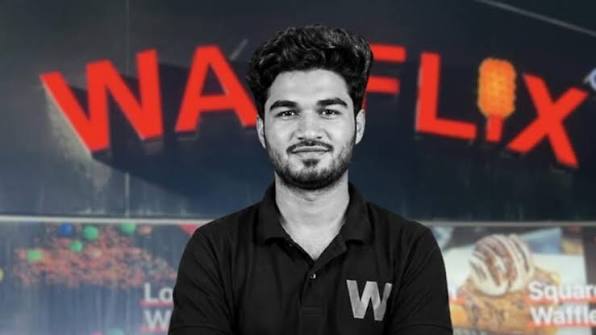
Ali, a 25-year-old graduate of the Institute of Business Administration and owner of the eatery Wafflix, disappeared on the night of 28 July after telling his family he was stepping out and would return within ten minutes. His body was recovered the following day from bushes near Shahi Qila Ground in Gulistan-i-Jauhar, bearing what investigators established was a gunshot wound to the chest.
What might have remained a contained, if tragic, missing-persons case has since spiralled into a dispute over the competence and independence of the original post-mortem — and, this week, over who gets to decide who conducts a second one.
A magistrate’s order, then a midnight swap
The case took its most consequential turn on Thursday, when a judicial magistrate in Karachi granted an application from Ali’s father, Mir Hussain Ali, to have his son’s body exhumed for a fresh examination. The magistrate directed the Karachi police surgeon and the Sindh health secretary to assemble a medical board to carry out the procedure without delay.
Officials moved quickly. The Sindh health department named an eight-member panel, led by Police Surgeon Dr Summaiya Syed as convener and including senior figures from some of Karachi’s most established medical institutions: Professor Dr Naseem Ahmed of Dow University of Health Sciences, Dr Farah Waseem of Jinnah Sindh Medical University, forensic identification expert Amir Hassan Khan of the Citizens Police Liaison Committee, Additional Police Surgeon Dr Sirichand, and Dr Kamran Khan and Dr Daniyal Mirza of Jinnah Postgraduate Medical Centre, alongside Dr Mohammed Yaseen, administrative in-charge of the police surgeon’s office.
It did not last the night. In the small hours of Friday, an order from the director general of the Sindh health department scrapped that board and replaced most of its members. Dr Syed stayed on as convener, but the panel around her was rebuilt with four doctors drawn largely from outside Karachi: Professor Dr Zakiuddin of Dow University, Professor Dr Kazi Akbar and Professor Dr Abid Hussain Chang of the Liaquat University of Medical and Health Sciences in Jamshoro, and Hyderabad’s police surgeon, Dr Waseem Khan.
The family draws a line at the graveside
By Friday morning, Ali’s relatives had gathered at the Tariq Road graveyard, next to Rehmania Masjid, where the exhumation had originally been scheduled to take place. It never went ahead. The family’s lawyer, Jibran Nasir, told reporters at the scene that he had already informed the investigating officer that the family would not accept an exhumation carried out by the newly assembled board “under any circumstances”.
Standing beside Ali’s father, Nasir accused the police, the health department and the provincial government of working to obscure the truth, and said responsibility for the day’s delay lay squarely with them. The family, he said, could not permit an examination to be performed by doctors whose “qualifications and intentions were under question” — a reference to the sudden and unexplained substitution of Karachi-based specialists for a panel weighted toward Hyderabad.
He went further, alleging that the health directorate had tried to paper over the controversy after it broke by issuing a “backdated notification” at around 10am on Friday — one that nominally allowed further members to be added to the board, while insisting the four Hyderabad-linked appointees remain in place regardless. Nobody, he said, had yet explained to the family why the original board had been dissolved in the first place.
Nasir made clear the family’s grievance was not primarily with the police. Ali’s father, he said, was directing his questions instead to Sindh Chief Minister Murad Ali Shah and to Bilawal Bhutto-Zardari, chairman of the Pakistan Peoples Party, which governs the province. “Sindh government, they were hired by you,” he said. “And if they are not competent enough, then how were they appointed in the first place?” The family, he added, trusted only the original eight-member board and would accept no substitute.
Nasir subsequently delivered a formal letter to the police surgeon, recording the family’s refusal to consent and arguing that the reconstituted board had no legal standing, having been assembled in what he called “complete violation and negation” of the magistrate’s order. Any attempt to proceed on that basis, he warned, would amount to contempt of court, would jeopardise the dignity of the deceased and would put forensic evidence at risk. He described the reshuffle as “nothing but a malicious attempt to interfere with judicial proceedings” and cautioned that any official backing for the disputed panel would be treated as a further attempt to shield those responsible and derail a transparent inquiry.
A third notification, and a dispute over what happened to it
The confusion did not end with the morning’s stand-off. Nasir later said a third notification had been issued during the day, this time purporting to merge the original eight-member board with the reconstituted five-member one into a single panel. The family, he said, rejected that formulation just as firmly as the one before it — and continued to insist that only the doctors named in Thursday’s original order be permitted anywhere near the exhumation.
He used the moment to raise broader concerns about how the investigation was being handled, questioning the selective release of CCTV footage from the vicinity of Gulistan-i-Jauhar. Clips shown so far, he said, captured a person collecting refuse and a motorcycle passing near the site where Ali’s body was later found, and he argued that anyone who had passed through the area at the relevant time ought to be identified and questioned. He also pushed back on suggestions that a message attributed to Ali supported a theory of suicide, noting that even accepting the message at face value, it contained no reference to taking his own life.
A late reversal
The stand-off broke late on Friday evening, when the Sindh health secretary issued a fresh notification restoring the original eight-member board in full. The police surgeon subsequently wrote to the magistrate and to the board’s members confirming that the exhumation would go ahead as originally intended — this time at 11am on Saturday, at the graveyard beside Rehmania Masjid.
Earlier in the day, before that reversal, Dr Syed had aired her frustration over what she described as “impediments” to the process in a post on X; the post was removed once the government restored the original panel.
The autopsy dispute that started it all
The current row traces back to an interview Dr Syed gave a private news channel on Tuesday, in which she said the post-mortem findings had raised a number of questions, and that certain observations recorded in the report did not appear to correspond with the photographic evidence available. Her comments prompted a swift response from police, who issued a statement warning that such public observations risked undermining the ongoing investigation.
That dispute is what ultimately persuaded the magistrate to grant the exhumation request — and what has left a grieving family standing over an open grave, still waiting for a set of answers they say the authorities appear reluctant to give.
Copyright © 2021 Independent Pakistan | All rights reserved