By Staff Reporter
ISLAMABAD: Pakistan lodged a formal protest with the United States on Wednesday, summoning the American charge d’affaires in Islamabad to convey what the Foreign Office described as a “strong demarche” after the US ambassador to India referred to Jammu and Kashmir as part of India during a visit to the disputed territory.
The envoy, Sergio Gor, travelled to Indian-occupied Kashmir on Wednesday, where he described the region as “an important part of India” — a characterisation that immediately drew condemnation from Islamabad, which regards Jammu and Kashmir as internationally recognised disputed territory whose future has yet to be settled under United Nations resolutions.
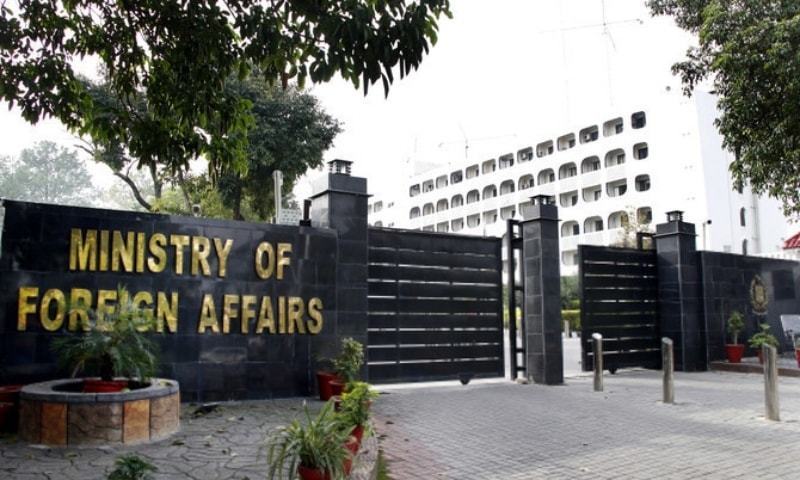
In a statement issued after the summons, the Foreign Office said Pakistan “strongly condemned and categorically rejected” the ambassador’s description of the region as part of India. It said Pakistan’s officials had underscored to the American diplomat that Jammu and Kashmir remained “an internationally recognised disputed territory, awaiting final disposition in accordance with the relevant UNSC resolutions and the aspirations of the Kashmiri people.”
The Foreign Office went further, calling the ambassador’s remarks “irresponsible” and arguing that they “negated the long-standing and well-documented position of the United States on the Jammu and Kashmir dispute.” It added that the comments also sat awkwardly with Washington’s own professed commitment to “the supremacy of international law and the UN Charter.”
Despite the rebuke, Pakistan used the same statement to acknowledge President Donald Trump’s earlier offer to mediate between Islamabad and New Delhi over Kashmir, an offer renewed in the aftermath of Marka-e-Haq, the codename for Pakistan’s military response during its most recent confrontation with India. But the Foreign Office was pointed in its message to Washington: any mediation effort would need to be matched by consistency, and US officials should ensure their public statements did not contradict the disputed status of the territory they were now offering to help resolve.
A dispute dating to partition
Kashmir has been contested by India and Pakistan since the two countries were carved out of British India in 1947. The neighbours fought their first war over the territory in 1948, a conflict that ended with the creation of Azad Jammu and Kashmir on the Pakistani side of the ceasefire line. A UN Security Council resolution passed the following year affirmed that Kashmiris should be allowed to determine their own future through a UN-supervised plebiscite. That vote has never taken place.
The dispute hardened further in August 2019, when Narendra Modi’s Bharatiya Janata Party government stripped the valley of the special autonomous status it had held under Article 370 of the Indian constitution. India’s Supreme Court upheld that decision in December 2023, closing off one avenue of legal challenge but doing nothing to soften Pakistan’s objections or the wider international unease over the region’s status.
Pakistan has continued to press India to reverse the steps taken since 2019, calling for occupied territories to be vacated, “draconian” laws to be repealed, and independent observers — including human rights organisations and international media — to be given access to assess conditions on the ground. Islamabad’s position remains that any lasting settlement must involve Kashmiris themselves exercising their right to self-determination, in line with the Security Council resolutions passed more than seven decades ago.
Trump’s repeated mediation offers
President Trump has raised the prospect of mediating between the two nuclear-armed states on several occasions, going back to his first term. Speaking to reporters in 2019, he said he would be willing to get involved if both sides wanted him to. “But if they wanted somebody to intervene, to help them […] and I spoke with Pakistan about that and I spoke frankly in India about it […] that battle has been going on for a long time. If I can, if they wanted me to, I would certainly intervene,” he said at the time. Told that India had rejected the offer, Trump replied that the decision was “really up to Prime Minister Modi.”
The offer resurfaced last year after Trump helped broker a ceasefire following the most intense military confrontation between Pakistan and India in decades. In remarks praising both governments for reaching an agreement, he suggested he was prepared to go further, saying he would “work with both of you to see if, after a ‘thousand years’, a solution can be arrived at concerning Kashmir.”
Asked in June what concrete steps the administration intended to take on the back of that offer, State Department spokesperson Tammy Bruce told a White House briefing she could not detail the president’s plans but suggested more would follow. “So, while I can’t speak to his plans, the world knows his nature, and I can’t speak to any details of what he might have in that regard,” she said, adding that the White House would “have plenty to say” on the matter in due course. Bruce also credited Trump with bringing together parties who had previously refused to engage with one another, saying he had “been the only one to bring certain people to the table to have conversations that nobody thought was possible” — and said she remained hopeful the same approach could eventually be applied to Kashmir.
For now, though, Wednesday’s demarche makes clear that Islamabad sees a gap between that stated ambition and the language being used by Washington’s own diplomats on the ground — and that it intends to keep raising the issue every time it believes that gap opens up.
Copyright © 2021 Independent Pakistan | All rights reserved