By Staff Reporter
ISLAMABAD: Pakistan unveiled a budget on Friday that aims to boost economic growth to 3.5 percent in the next fiscal year, while keeping the budget deficit below 7 percent to meet the conditions of an International Monetary Fund (IMF) bailout program.
The budget for the year starting July 1 projects a deficit of 6.54 percent of gross domestic product (GDP), slightly lower than the revised estimate of 7 percent for the current year.
The deficit target for the current year had been raised from an earlier projection of 4.9 percent, as the government struggled to contain spending and boost revenues amid currency depreciation and unprecedented summer floods.
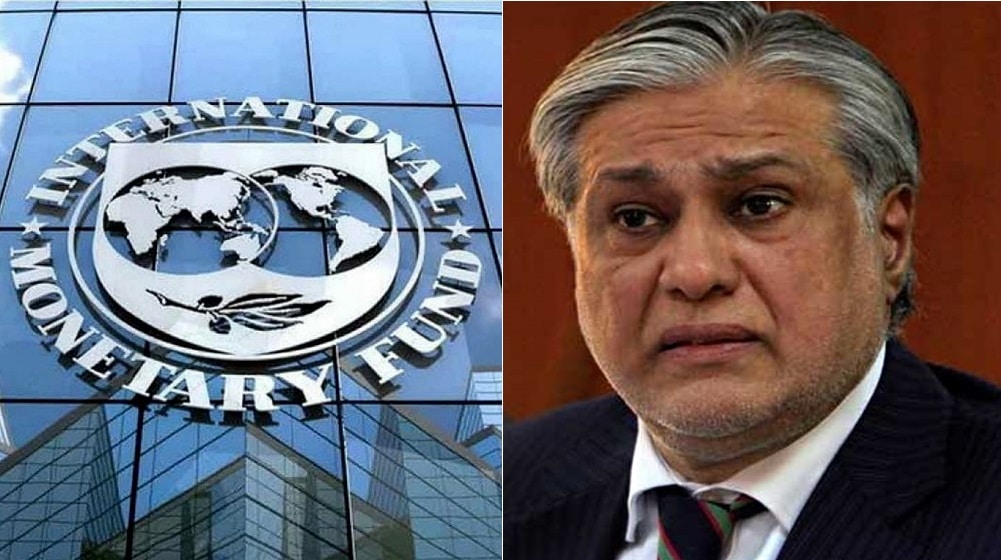
Finance Minister Ishaq Dar told parliament that the government had prepared “a responsible budget, not an election budget”, ahead of a general election due by November.
The minister said the country is passing through the worst phase of its economic history.
Dar reiterated that the government hoped to get an agreement with the IMF soon, echoing comments made earlier in the day by Prime Minister Shehbaz Sharif as he addressed his cabinet.
“We are trying our best to sign the agreement as soon as possible and complete the ninth review this month,” he said in his budget speech.
Pakistan’s bailout programme with the IMF has been stalled at the ninth review since November last year, while talks on the staff-level agreement have dragged on over securing necessary financing assurances to bridge the balance of payments gap.
The IMF has forecast Pakistan’s GDP growth at 3.5 percent for the next fiscal year, up from an estimated 0.3 percent in the current year.
The government plans to raise tax revenues by 28 percent to Rs9.2 trillion and spend a record Rs1.15 trillion on public sector development projects.
It also announced a 35 percent increase in salaries for government employees and a 17.5 percent hike in pensions, as well as subsidies and incentives for the agriculture and technology sectors. There would be no new tax on the industrial sector.
The budget allocates Rs1.8 trillion for defence spending and Rs7.3 trillion for debt servicing.
Pakistan raised expenses by about 30 percent to Rs14.5 trillion with about half allocated to debt servicing. It plans to raise some of the revenue by adding a 10 percent tax on companies issuing bonus shares.
Pakistan also plans to borrow Rs2,527 billion from external sources, including Rs1,601 billion from commercial and Eurobond markets.
The government expects inflation to average 21 percent in the next fiscal year.
With an eye to elections, the government is making some populist moves. It announced subsidized fertilizer and duty-free import of seeds for agricultural growth. It also announced incentives for the technology sector.
Analysts said budget fails to address key economic challenges and may not improve the chances of reviving an IMF programme
“Pakistan will have a hard time convincing the IMF with such an ambitious budget,” said Khurram Schehzad, chief executive officer of Alpha Beta Core Solutions Pvt Ltd., a financial consultancy in Karachi.
Ghias Khan, president of Engro Corp, one of the largest conglomerates in Pakistan, said the ongoing economic challenges call for bold action to address deep-rooted problems.
“The announced budget falls short of tackling critical issues like expanding the tax net, investing in education and human development, managing the mounting fiscal deficit, and creating an enabling business environment,” Khan said.
He added that Pakistan cannot prosper until it generates higher exports and equitable tax revenues from real estate, agriculture, and retail sectors.
“The budget has enhanced the tax burden on the already compliant formal sectors, which will limit capital formation and growth-oriented initiatives in the manufacturing sector.”
Ehsan Malik, CEO of the Pakistan Business Council, said it was a budget “as usual” at times “unusual”.
“It fails to take the opportunity of fundamental reforms by taxing the untaxed and under-taxed sectors – wholesale, retail and real estate. Nor is there a mention of steps to harvest data on non-filers and NADRA (National Database and Registration Authority) to widen the tax base. Nothing on stemming under-invoicing.”
He welcomed some measures such as the focus on agriculture, IT exports, and reduction in minimum tax on listed companies, but said the opportunity of encouraging consolidation and widening the shareholder base by removing double taxation of intercorporate taxes was missed.
“Business will derive confidence from the limited mention of steps taken to revive the IMF programme especially also as there was no mention of how debts would be reprofiled.”
Copyright © 2021 Independent Pakistan | All rights reserved