By Staff Reporter
ISLAMABAD: Afghanistan’s deputy prime minister for economic affairs asked traders to ditch Pakistan as a transit route for imports and exports within three months, signaling a deepening rift between the neighbours amid escalating security tensions.
Mullah Abdul Ghani Baradar told a meeting of traders in Kabul on Wednesday that the government would no longer handle complaints tied to Pakistani commerce after the deadline. He accused Islamabad of politicizing trade and humanitarian issues, including blocking routes during harvest seasons and shipping subpar medicines.
“All the country’s traders and industrialists should seek alternative routes for trade,” Baradar said. “Those items that we were buying in Pakistan, now other markets and countries be explored.” Baradar said after “this notice, if traders continue to export and import items to and from Pakistan, then the Islamic Emirate has no responsibility to hear their grievances or address their issues”.
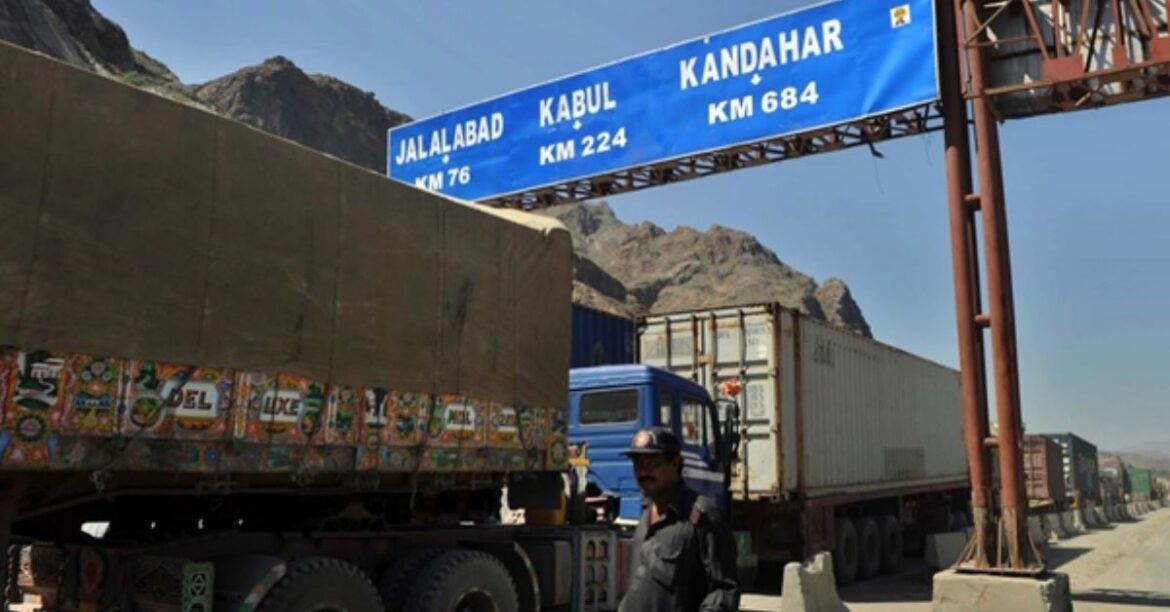
The move highlights fraying ties, with Pakistan blaming Kabul for sheltering Tehreek-e-Taliban Pakistan militants behind recent attacks, including a suicide bombing in Islamabad this week that killed 12 and an attempted assault on a cadet college in the northwest. The border has been shut since last month after clashes and Pakistani airstrikes into Afghan territory, disrupting a key artery for bilateral trade worth nearly $2 billion in fiscal 2024-25. Pakistan shipped $1.14 billion in goods—mainly food, building materials, textiles and drugs—while importing $850 million in Afghan coal, dried fruits, gems and produce, mostly through Torkham and Chaman gates.
Baradar gave a three-month window to settle Pakistani contracts. “Pakistan has repeatedly blocked trade routes and has politically exploited commercial and humanitarian matters, harming traders and industrialists of both countries,” he said.
For decades, Pakistan has served as Afghanistan’s primary transit corridor for goods and aid, but bilateral commerce, constantly at the mercy of political relations, has been hit hard by escalating tensions, cross-border attacks and visa restrictions. Afghanistan’s realistic alternatives to Pakistan’s trade routes lie to its north and west, through Iran, Central Asia, and China.
The Chabahar Port in Iran, developed with Indian support, offers a viable maritime outlet via the Arabian Sea that bypasses Pakistan entirely, though its use has been limited by sanctions and logistics costs. To the north, Afghanistan has access to Central Asian corridors through Uzbekistan, Turkmenistan, and Tajikistan, connecting to regional transport networks like the Trans-Caspian International Route and China’s Belt and Road corridors. However, these routes are longer, more expensive, and less efficient for perishable goods, meaning that while diversification is possible, replacing Pakistan’s short and cost-effective access to Karachi and Gwadar ports remains a major challenge.
Despite periodic border closures and political tensions, Afghanistan remains one of Pakistan’s top regional trading partners, with much of the commerce conducted through the key Torkham and Chaman crossings that link the two countries’ supply chains and consumer markets.
Copyright © 2021 Independent Pakistan | All rights reserved