By Staff Reporter
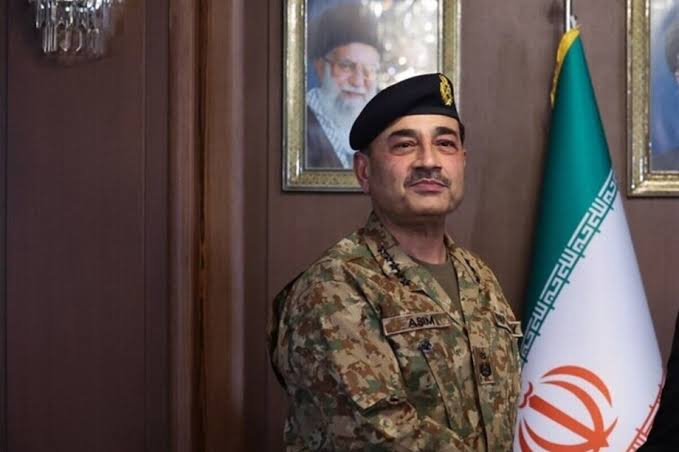
ISLAMABAD: Pakistan’s army chief, Field Marshal Asim Munir, is due in Tehran on Tuesday to discuss his country’s mediation in the war between Iran and the United States, a Pakistani official and Iranian media have said.
Field Marshal Munir, who is also Chief of Defence Forces, will meet Iranian officials, according to Tasnim, the semi-official Iranian news agency, which reported the plan on Monday. Pakistan has not publicly confirmed the trip.
“According to Tasnim correspondent, Pakistani Army Chief Asim Munir will travel to Tehran on Tuesday, to meet and consult with officials of the Islamic Republic of Iran,” the agency said.
It said the talks would cover bilateral cooperation between Islamabad and Tehran and regional developments. “Pakistan’s role as a mediator between Iran and the United States is another agenda item on Munir’s trip to Tehran,” Tasnim added.
The visit follows earlier talks between the field marshal and Iranian leaders in the summer, which focused on preventing further escalation and reopening the Strait of Hormuz. He first travelled to Tehran this year in April, shortly after the Islamabad Talks, the first direct US-Iran negotiations in more than four decades, ended without a breakthrough. He visited again in August, accompanied by Interior Minister Mohsin Naqvi. Naqvi made a further trip to Iran in September, which Tehran described as part of bilateral engagements.
The latest visit comes a day after Russia’s foreign minister, Sergei Lavrov, held talks in Tehran on his first visit to Iran since February 2025. At a joint press conference, Iran’s foreign minister, Abbas Araghchi, blamed the United States for insecurity and tension in the Strait of Hormuz while saying regional disputes should be settled through diplomacy. Neither man announced a new Russian mediation initiative.
The rhetoric from Washington has hardened. On Sunday, President Donald Trump warned that the US could “soon finish the job” against Iran and gave Benjamin Netanyahu his full endorsement ahead of Israel’s 27 October election. Tehran responded with warnings of retaliation.
Iran and the US have been locked in conflict since 28 February, when US-Israeli strikes on Iran began. Iran retaliated with attacks on nearby Gulf states. An interim deal, the 14-point Islamabad Memorandum of Understanding, was signed on 18 June with Pakistan as mediator and provided a framework for ending the war. It collapsed weeks later, in July. Hostilities in and around the Strait of Hormuz have not ceased, and talks have stalled.
After the ceasefire broke down, Iran presented a proposal in September to reopen the strait, the oil trade route that has stayed at the centre of the conflict. The US said it had rejected the plan. Iran’s security chief said negotiations had stalled because Washington had not met all seven of Tehran’s conditions for reopening the waterway. On Sunday, Mr Araghchi said Iran’s offer to reopen the strait within seven days remained on the table. President Trump and US Central Command maintain that the route is already open to all ships except Iran’s.
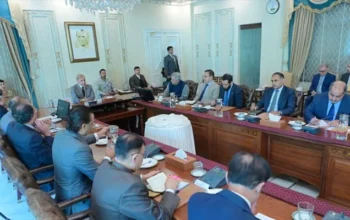
Pakistan has been one of the principal mediators, working alongside Qatar. Field Marshal Munir and senior civilian leaders, including Prime Minister Shehbaz Sharif, Foreign Minister Ishaq Dar and Mr Naqvi, have regularly exchanged messages with Iran’s leadership in the hope of securing a lasting peace.
‘We never gave up’
Naqvi on Monday highlighted those efforts at the 8th Global Security Forum in Doha, held under the title “The Future of Alliances”. According to Qatar News Agency, the forum brings together senior officials from more than 100 nations.
“The last few months have been very difficult for our region,” he said. “The conflict involving Iran and the United States created serious risks not only for the Middle East, but for the entire world.”
Pakistan, he said, had chosen the path of peace and made “every possible effort to reduce tensions”.
“There were moments when the situation was extremely tense, but we never gave up. We continued talking, listening and working to build trust. And I can tell you from my experience: peace is not achieved in one meeting; it requires patience, trust and continuous efforts.”
He singled out the “remarkable role” played by Field Marshal Munir, and recalled the Lake Lucerne summit in Switzerland, which followed the June memorandum and was organised by Pakistan and Qatar. There, he said, Qatar’s prime minister, Sheikh Mohammed bin Abdulrahman Al Thani, and Field Marshal Munir worked for “more than 16 hours without a single break”.
“No cameras, no announcements; only two men who refused to let the talks fail,” Mr Naqvi said, adding that the only aim of the two mediating countries was to “stop further conflict and to save innocent lives”.
He praised Qatar’s role. “In the diplomacy of our time, when others chose sides, Qatar chose to keep talking,” he said. “Pakistan has seen this closely because we have worked beside you.”
Naqvi said the experience had taught Pakistan three lessons: never close the door to dialogue, trust is the most important key to any talks, and peace requires sincere effort from everyone. No single country, he added, could achieve regional peace alone.
“We believe that winning peace is far more important than winning a war,” he said. “We do not want credit for stopping wars. We want a future where wars do not start.”
Saudi pledge tested
Field Marshal Munir’s expected visit also comes as the Iran-backed Houthis step up attacks on Saudi Arabia. The Yemen-based group has fired missiles and drones at Saudi energy and aviation facilities this month. A missile strike on Riyadh’s King Khalid International Airport on 10 October killed at least 12 people and injured more than 300, in what was the deadliest attack on the kingdom in more than a decade.
The attacks have intensified alongside heavier fighting between Yemen’s internationally recognised government and the Houthis since Operation Dawn of Yemen began on 5 October. The Coalition to Restore Legitimacy in Yemen is providing air support for the offensive, which aims to retake Houthi-held territory and restore government control over state institutions, including in the capital, Sanaa. A truce in the long-running Yemen war unravelled in July.
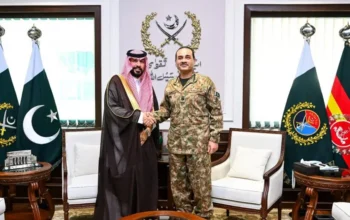
Pakistan signed a bilateral defence pact with Saudi Arabia in September 2025, and the Makkah Joint Defence Agreement with Saudi Arabia and Türkiye in August. Islamabad has vowed to come to the kingdom’s defence if the attacks continue.
Under the Makkah pact, the three countries have formed the Makkah Defence Alliance, which treats an attack on one signatory as an attack on all. Mr Naqvi insisted it was no threat to others. “It is a pact for defence, not for war,” he said, adding that no country could “enjoy lasting peace if its neighbours are facing conflicts”.
He also called for closer international cooperation against terrorism, which he described as a “common enemy”. “Pakistan has suffered greatly; thousands of our citizens, soldiers, and policemen have lost their lives,” he said. “Even today, we continue to fight.” He urged “stronger cooperation, better intelligence-sharing and joint efforts to defeat it”, and pointed to Pakistan’s contribution to United Nations peacekeeping missions.
Copyright © 2021 Independent Pakistan | All rights reserved