By Staff Reporter
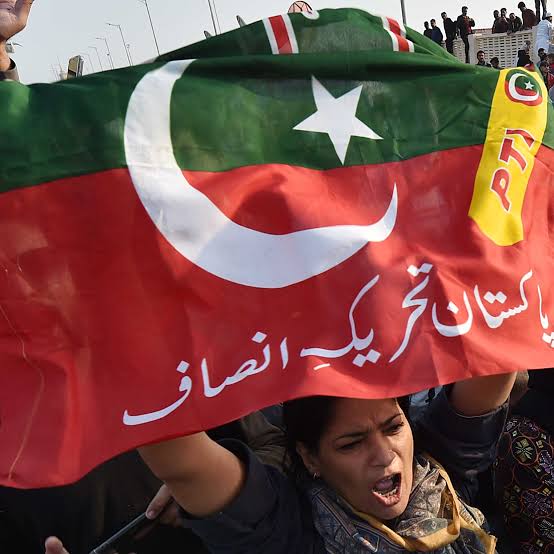
ISLAMABAD: Imran Khan’s Pakistan Tehreek-e-Insaf (PTI) has set up an internal inquiry into the collapse of its Islamabad protest march, after senior figures reportedly blamed the suspended Khyber Pakhtunkhwa chief minister, Sohail Afridi, even as party leaders publicly deny any rift.
The core and political committees agreed on Sunday to form a fact-finding panel, with several participants holding Afridi responsible for failings in the march’s organisation, according to Pakistani media reports.
The party’s secretary general, Salman Akram Raja, took to X the same day to play down talk of a “disagreement” in the core committee and to answer the criticism directed at Afridi.
“There should be no ambiguity,” he wrote, describing the chief minister as “a brave young man” who had stayed true to the ideology of the party’s jailed founder. He conceded, however, that the administrative side of the march needed a critical review, if only to counter the “narratives” circulating against Afridi. He accused critics of presenting committee discussions “out of context” to fuel “conspiratorial narratives”.
A senior party figure who attended the meeting, and spoke to a local newspaper on condition of anonymity, gave a less settled account. The meeting began after 10pm on Saturday and ended after 2am, the leader said, and only 16 members had been able to speak. The rest would be heard in later sessions.
“At the outset, PTI Chairman Barrister Gohar said the meeting was called to discuss the current situation and the way forward,” the leader said. Raja, however, suggested the committee first examine how the 27 September date for the march had been announced.
The leader said the meeting heard that Afridi had convened a gathering in Khyber Pakhtunkhwa in August attended by Gohar, Raja, Asad Qaiser, Shafiullah Jan, Mina Khan, Shahid Khattak and Taimur Jhagra. The date was discussed there but later leaked to some vloggers. When criticism followed that neither the political nor the core committee had been consulted, both were summoned on the same day, and Afridi announced the date at a public meeting that evening.
Afridi had in fact announced the march at a rally in Peshawar on 5 August, prompting several PTI leaders to say they had no prior knowledge of the plan. The party’s central information secretary, Sheikh Waqas Akram, confirmed at the time that neither committee had been consulted, though he said Imran Khan had given Afridi charge of the street movement and he could therefore decide at his own discretion. Akram declined to comment on the latest allegations when contacted.
According to local media, the committee was also told that the leadership had been kept in the dark about the march’s operational strategy and the party’s wider negotiating tactics. “It was also revealed that Afridi was asked a number of times what the plan was, but he kept his cards close to his chest,” the leader said.
The source said the meeting also heard that the PTI negotiating team had decided to walk out of talks over the issue of terrorism, and that when it realised this could draw criticism, it was decided to invoke Khan’s name and a meeting with him.
Raja also asked Ali Asghar Khan, the PTI’s secretary general in Khyber Pakhtunkhwa and head of the march’s coordination committee, why the party had not gone ahead with the protest after Afridi’s arrest. Khan, the son of the late Air Marshal Asghar Khan, said he knew of no such plans. “Asghar claimed that he had asked Afridi and Junaid Akbar many times, but they said details would be shared soon,” the leader said.
That answer angered many on the committee, the source said, because more than 1,400 workers and leaders had been arrested under the Maintenance of Public Order law while the party’s provincial branch had no plan.
A second leader said Haleem Adil Sheikh told the meeting that the opposition bore 70 percent of the responsibility for the failure of talks with the government and the government 30 percent. The second leader said an agreement had been finalised when Interior Minister Mohsin Naqvi brought an amended text that both sides accepted without meeting Khan. “Soon after that, a call also came from Afridi to say that the meeting could not be held without first consulting Imran Khan,” the leader said.
Naqvi has said the PTI agreed during the talks that emergency rule should be imposed in 12 districts of the province. Akram has said the party’s negotiators referred the proposal to Afridi, who rejected it.
Sources told Pakistani media that Raja reported particularly low turnout in Charsadda and Mardan and highlighted the lack of arrangements for overnight stays, with no tents or other basic provisions in place. Several participants argued that the exercise had become a street movement rather than a properly organised long march, with no defined points of advance, logistics or strategy. Others complained of too little consultation with party leaders and members of the provincial assembly.
The committees also discussed giving Barrister Muhammad Ali Saif responsibility for access to Khan in jail, and some members called for responsibilities held by Mahmood Khan Achakzai and Allama Raja Nasir Abbas, the leaders of opposition in the National Assembly and the Senate respectively, to be reassigned.
The committee heard reports that Gohar had approved setting up offices of the Tehreek Tahaffuz-e-Ayeen-e-Pakistan (TTAP) at district level, the second leader said. Raoof Hasan objected, and Gohar replied that he had given no such approval. Seemabia Tahir proposed another march, the source said, but most members judged it impossible in present circumstances.
The PTI had first fixed the march for 27 September to press for Khan’s release. The political committee later deferred it until 4 October, with a majority of the leadership reportedly favouring the original date. Government-PTI talks aimed at averting the march ended in deadlock, with counterterrorism strategy among the sticking points.
On 11 October, the federal government imposed emergency and governor’s rule in Khyber Pakhtunkhwa, citing a deteriorating terrorism situation and accusing the PTI-led administration of deliberate indifference in the fight against militancy. Afridi, who had been leading the march, was reportedly taken into custody shortly afterwards. The PTI says his “arrest” cannot be separated from the decision to impose emergency rule, which it says is meant to weaken the party. Most members of the former provincial cabinet have reportedly gone into hiding. The federal government has since appointed an 11-member technocratic advisory council for the province.
The Peshawar High Court is due to hold a preliminary hearing on Tuesday on a petition by Mr Gohar seeking to have the emergency declared unconstitutional.
Copyright © 2021 Independent Pakistan | All rights reserved