By Staff Reporter
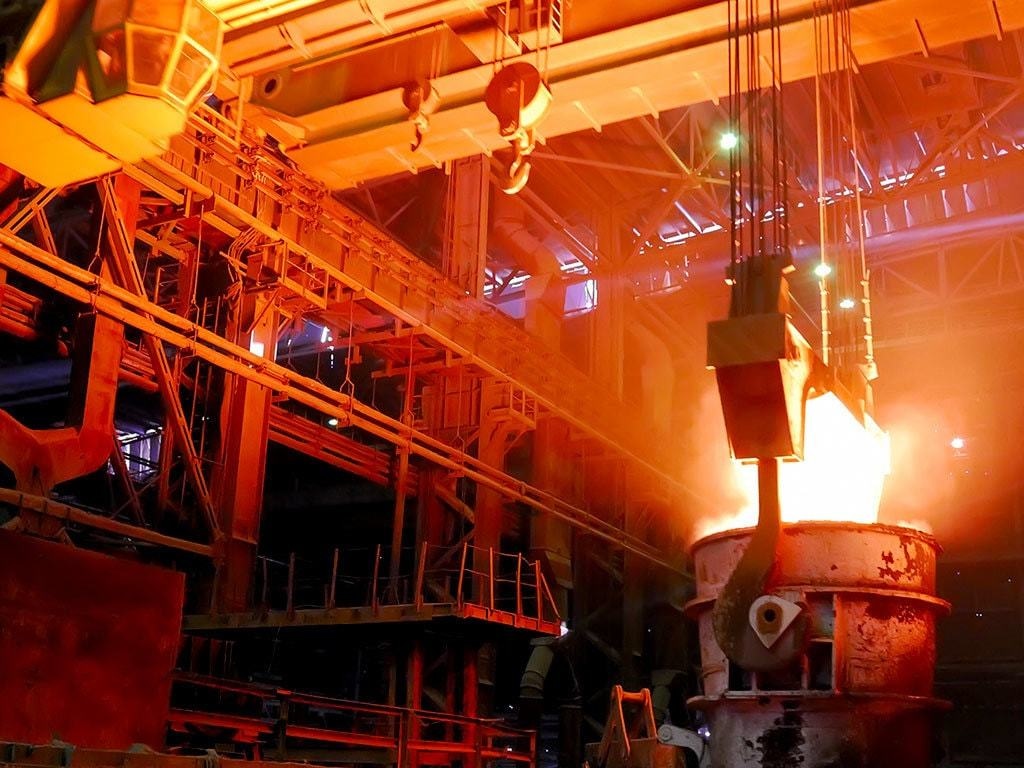
ISLAMABAD: The Competition Commission of Pakistan is pushing for a dedicated steel ministry and a national policy to tackle longstanding distortions in the country’s steel industry, including weak regulation, unfair tax exemptions and heavy reliance on imports.
The commission released a report titled “Competition Assessment Study of the Steel Sector in Pakistan,” highlighting key competition-related challenges and recommending the establishment of a dedicated Steel Ministry, citing successful models from China and India.
Pakistan’s manufacturing sector has remained a cornerstone of economic expansion, contributing 71 percent of total exports and employing about 15 percent of the workforce. Within this sector, the steel industry plays a vital role. Large Scale Manufacturing dominates the sector, accounting for more than 69 percent of manufacturing and 8.2 percent of GDP.
In fiscal 2024, local steel production totaled 8.4 million metric tons, including 4.9 million metric tons of long steel such as billets and ingots, and 3.5 million metric tons of flat steel including coil and plates. Steel scrap imports stood at 2.7 million metric tons, underscoring the industry’s reliance on imported raw material. Despite this output, per capita steel consumption remains low at 47 kilograms, reflecting limited industrial activity and slower infrastructure development.
Demand for steel is driven by infrastructure development, urbanization, industrial growth and major projects like the China-Pakistan Economic Corridor, with construction and real estate as key consumers. On the supply side, the industry faces heavy import dependence, energy constraints and limited local raw material availability.
Pakistan Steel Mills, once a strategic asset with 1.1 million tons of annual capacity, has been non-operational since 2015 due to financial losses and outdated technology, leaving liabilities of Rs400 billion. By contrast, international peers like China, India and Russia advanced through government support, innovation and strategic investment. Lessons from global players highlight the need for Pakistan to develop local coal and iron ore, modernize infrastructure and adopt sustainable, energy-efficient technologies.
Regulatory and institutional inefficiencies exacerbate challenges. The Ease of Doing Business Committee lacks industry-specific expertise, while frequent changes in statutory regulatory orders create uncertainty for businesses. Substandard steel accounts for 50–60% of domestic production due to weak enforcement by the concerned authorities, disadvantaging compliant producers.
Tax exemptions in ex-FATA/PATA distort competition, with 1.5 million tons of untaxed steel entering settled areas annually, causing Rs40 billion in revenue losses. The sector also suffers from market concentration, policy biases and limited diversification into high-value-added products. High entry barriers, the dominance of undocumented units and minimal R&D investment constrain competitiveness. Import dependency on scrap further exposes the industry to global shocks, while weak compliance erodes consumer trust and compromises safety.
The report recommends a comprehensive framework, including developing a national steel policy, rationalizing taxes, ensuring stable SROs and supporting anti-dumping protections. It also calls for expanding the Council of Ease of Doing Business to include industry experts and CCP representation, strengthening the Ministries of Industries and Commerce, and accelerating National Tariff Commission processes.
Further steps include enforcing quality standards, formalizing undocumented units and eliminating distortions from ex-FATA/PATA exemptions. The commission urges encouraging Direct Reduced Iron technology, incentivizing iron ore mining and value addition, and promoting green technologies.
Copyright © 2021 Independent Pakistan | All rights reserved