By Staff Reporter
QUETTA: The families of 27 police officers slaughtered by militants in one of the deadliest attacks on the security forces in years ended a 10-day sit-in here on Saturday, after the Balochistan government agreed to their central demand: an independent judicial inquiry into how the ambush was allowed to happen.
The agreement, signed late Friday night after days of tense and repeatedly stalled negotiations, brought a quiet close to a standoff that had gripped this provincial capital since July 9, when grieving relatives set up camp at a major traffic intersection alongside the coffins of their dead.
By early Saturday morning, the bodies of seven of the martyred officers — the last of those still in Quetta — were on their way home to their native villages. The intersection where the sit-in had stood, known as Koila Phatak, reopened to traffic for the first time in more than a week.
“The sit-in has been called off,” the protest committee said in a statement announcing the deal, noting that the remains had been “shifted to their native areas in the early hours of the day” and that the roadway had been “opened for traffic after 10 days.”
The officers were killed on July 6 in an assault on a police post guarding construction of the Mangi Dam, a water project in Ziarat district roughly 80 miles from Quetta. Nine were shot dead in the initial attack. The remaining 18 were taken captive and, authorities later determined, executed by their captors. It was the deadliest single strike against police in the province in recent years, and it landed less than 24 hours after a separate assault a day earlier in the Hanna Urak valley, on Quetta’s outskirts, in which armed men killed five tribesmen, wounded eight others and abducted 11 more.
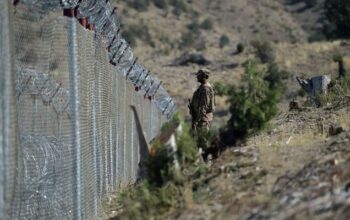
The back-to-back attacks set off a security crisis across Balochistan, a mineral-rich province wedged against the Afghan and Iranian borders that has weathered a separatist insurgency for two decades and, more recently, a resurgence of Pakistani Taliban activity. In response, the military launched a sweeping counterterrorism campaign, Operation Shaban, that had killed 91 militants as of Thursday, according to security officials — part of a broader crackdown that has intensified by the week since the attacks began.
For the families who lost sons, husbands and fathers at Mangi Dam, the death toll was only part of the anguish. What drove them into the streets, and kept them there through nine sweltering days and nights beside the coffins, were unanswered questions about how the ambush unfolded — why reinforcements were slow to arrive, and who, if anyone, would be held to account.
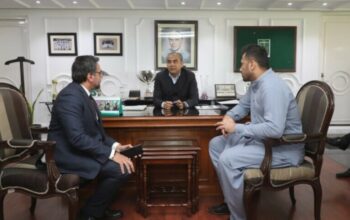
Balochistan Home Minister Ziaullah Langove signed the agreement on behalf of the provincial government. Representing the protesting families was Abdul Rahim Ziaratwal, secretary general of the Pashtunkhwa Milli Awami Party, who had spent days shuttling between the sit-in camp and the negotiating table.
Officials moved quickly once the ink was dry. Within hours, the government began implementing the deal’s provisions, starting with a gesture aimed squarely at the grief that had animated the protest: Koila Phatak Chowk, the traffic circle where the families had held vigil, was renamed Shuhada-i-Ziarat Chowk — Martyrs of Ziarat Circle — effective immediately, according to a notification dated July 17.
Four police stations are to be renamed for individual officers killed in the attack: Sarmaksi Police Station will become Shaheed Hasratullah Kakar Police Station; Dosarka Shabozai Police Station will become Shaheed Jandad Khan Police Station; Mangi Police Station — the post that came under direct assault — will become Shaheed Zainullah Panezai Police Station; and Zandra Police Station will become Shaheed Major Zaman Panezai Police Station.
Three schools will carry the names of slain constables: Government Boys High School Kan Depo will be renamed for Constable Mustafa Khan; Government Girls Middle School Kan Depo will be renamed for Constable Muhammad Asif; and Government Boys High School Kaus Gharbi will be renamed for Constable Muhammad Usman.
Two health facilities will also be renamed: the Rural Health Centre in Ahmadun for Constable Azhar Ahmed Ahmad Damar, and the Basic Health Unit in Kaus Gharbi for Constable Fareedullah.
Balochistan Chief Minister Sarfraz Bugti, in a statement, said the province was committed to carrying out every element of the agreement.
“Naming public institutions after them is a meaningful tribute that will preserve their legacy and inspire future generations with their courage, dedication, and sense of duty,” Bugti said of the slain officers, whom he described as having died “in defence of the country, for the establishment of peace, and for the protection of the lives and property of the people” — sacrifices he called “a source of pride for the entire nation.”
Bugti pledged that the government’s commitments would extend beyond symbolism, promising continued support for the martyrs’ families and full follow-through on the agreement’s terms.
Health Minister Bakht Muhammad Kakar, who sat on the government’s negotiating team, said the province had ultimately agreed to the bulk of what the families were asking for.
“Provincial government has accepted a majority of the demands of the protesters after which they agreed to call off the sit-in,” Kakar said, adding that a judicial commission would be formed to examine the attack and that authorities would step up patrols in the area even as the military operation continues.
Copyright © 2021 Independent Pakistan | All rights reserved