By Staff Reporter
ISLAMABAD: Pakistan’s civilian and military leadership has delivered a blunt warning to Iran at the highest levels of government: Any further Houthi missile strikes on Saudi Arabia will be treated as an attack on Pakistan itself, Reuters reported on Saturday.
The message marks one of the starkest statements yet of how far Islamabad is prepared to go to defend its Gulf ally — and how precarious its position has become as fighting between Yemen’s Houthi movement and Saudi Arabia threatens to reignite after four years of relative calm.
“Our top civil and military leaders have conveyed to Iran at the highest level that the attacks on Saudi Arabia are attacks on Pakistan,” the official said. “It is our red line.”
The warning comes at a delicate moment for Pakistan, a nuclear-armed nation of more than 240 million people that has spent the past several months trying to play two roles that are growing harder to reconcile: military guarantor to Saudi Arabia and diplomatic go-between for Washington and Tehran.
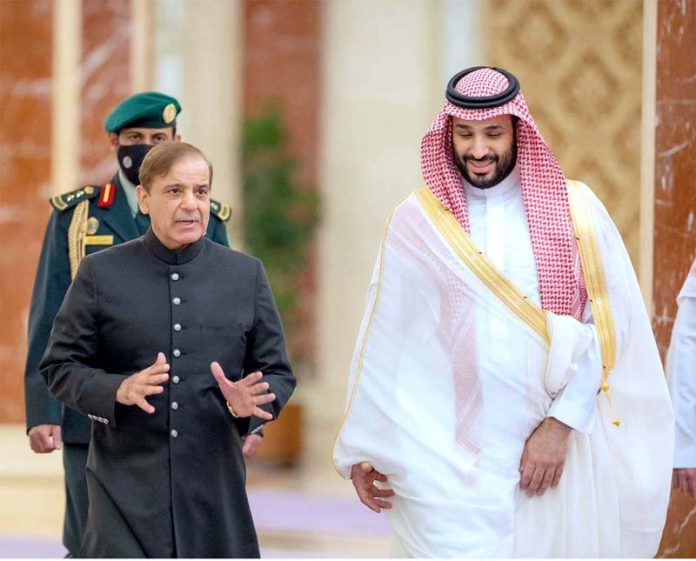
Islamabad helped broker an interim deal last month aimed at cooling the conflict between the United States and Iran. It also signed a mutual defense pact with Saudi Arabia last year, obligating each country to treat an attack on the other as an attack on itself — language that now appears to be driving Pakistan’s calculus as the Houthis test the fragile truce along the Saudi-Yemeni border.
The Houthis fired missiles into Saudi Arabia this week, accusing the kingdom of bombing an airport under Houthi control days earlier. Saudi authorities said they intercepted the incoming fire; a Houthi military spokesman said the intended target was Abha International Airport, in the kingdom’s mountainous south near the Yemeni border. The exchange broke a truce that had held for roughly four years, though as of Friday it remained confined to a single round of strikes rather than a sustained campaign.
Still, the episode has rattled officials in Islamabad, according to three Pakistani sources who described the government’s internal deliberations on condition of anonymity, saying they were not permitted to speak to reporters.
“Pakistan wasn’t anticipating that the tensions will rise so suddenly,” said Muhammad Amir Rana, a Pakistani security analyst who tracks the country’s regional posture.
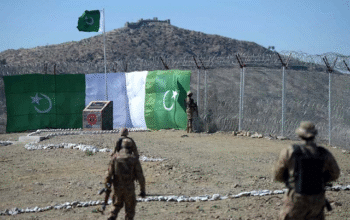
Part of what has unnerved Pakistani officials is how close their own forces sit to any potential fighting. Pakistani soldiers are already stationed near the Saudi border with Yemen, two officials said — a deployment that puts them well within reach of an escalation, rather than watching from a safe remove as Pakistan has largely been able to do during past flare-ups in the region.
There is a second worry layered on top of the military one: trade. Officials in Islamabad fear that a broader Houthi campaign could choke off shipping through the Red Sea, a corridor that Pakistan, like much of the world, depends on to move goods and energy supplies. That anxiety is compounded by a more immediate memory. Earlier this year, tension around the Strait of Hormuz — the narrow waterway at the mouth of the Persian Gulf — disrupted the flow of oil and gas into Pakistan, forcing the government to order businesses to close early and take other emergency steps to head off a fuel shortage. Pakistan imports the bulk of its energy from the Middle East, leaving it with little cushion if shipping lanes tighten again.
For now, officials say, Pakistan’s leadership is trying to avoid choosing between its two roles. “Pakistan’s top leaders are still engaged in appeasing all stakeholders,” one analyst said, though he cautioned that the posture could shift quickly “if the Houthis expand the radius of their attacks in Saudi Arabia.”
The dual commitments Pakistan is trying to hold together are themselves the product of a shifting regional order. When the defense pact with Saudi Arabia was signed last September, it was widely read across the Gulf as evidence that Saudi and other Arab states were hedging against Washington, uncertain whether the United States would remain a reliable security guarantor over the long term and looking instead to Pakistan and other regional powers to help fill that role.
Pakistan’s mediation between Washington and Tehran has always carried a second, less publicly discussed motive beyond diplomatic standing: reopening supply routes disrupted by the broader conflict, according to analysts and officials familiar with the effort. Even amid the latest strain, Pakistani officials insisted the mediation itself was not in jeopardy. “Yes, there is frustration, but that doesn’t mean that we are abandoning this project,” one official said. “We have invested a lot in it, and we have an interest in keeping it afloat.”
But the space for Pakistan to hold both positions at once appears to be narrowing. Rarely this year has Islamabad seemed as close to having to pick a side as it does now, officials and analysts said.
“It’s in everyone’s best interest for the war to end,” said a Pakistani source with knowledge of the mediation effort. “But if Saudi calls us in, we will stand by them and there is no doubt about that.”
Copyright © 2021 Independent Pakistan | All rights reserved