By Staff Reporter
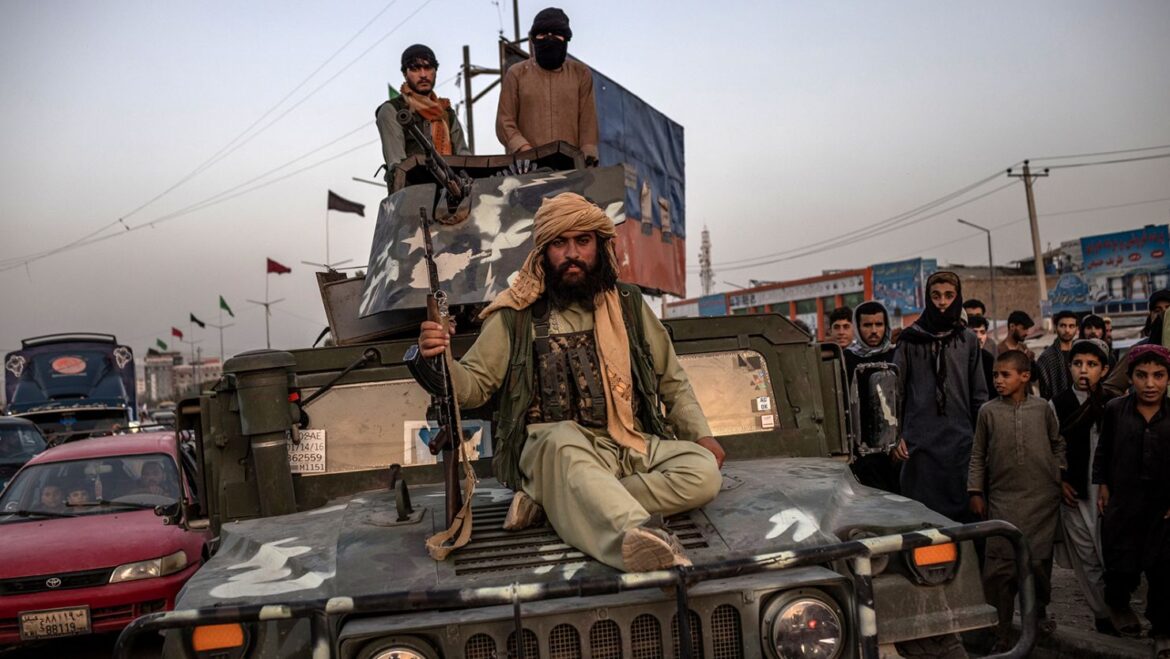
Four years after the Taliban seized power, Afghanistan is no longer sliding backward. It is hurtling into a deliberate abyss of codified cruelty, where the state’s highest authorities have decided that beating women, flogging citizens and executing dissenters in public stadiums constitutes governance.
The regime’s own records, released through its Supreme Court, tell the story with chilling precision: in the solar year 1404 — from March 2025 to March 2026 — Taliban authorities carried out at least 1,186 floggings and six public executions across dozens of provinces, from Kabul and Kandahar to remote districts in Badakhshan and Nimroz. The tally excludes the final 12 days of the period; the true number is almost certainly higher.
These are not isolated incidents. They form part of a deliberate, expanding system of corporal punishment that the Taliban now openly defends as the enforcement of Islamic law. Yet the human cost is unmistakable, and it falls with special cruelty on Afghan women and the ordinary citizens who must live under this regime’s shadow.
The numbers alone are grim. Nearly 100 women were flogged in public over just eight months of the year. In provinces like Khost, residents — including children — watched a man hanged in a sports stadium. Three executions took place in Badghis, one each in Farah and Nimroz. The message is delivered with theatrical clarity: the state claims the right not only to punish but to humiliate, to make examples, to instill fear.
Then, last month, came the formal codification of that fear. A new penal regulation endorsed by Taliban leader Hibatullah Akhundzada — leaked to Afghan rights groups, translated by the Afghanistan Analysts Network and analysed by Amnesty International — makes explicit what had already been happening in practice. Sodomy is punishable by death. Men may beat their wives provided they do not break bones or leave “visible, lasting wounds.” A husband who does cause such injury faces a mere 15 days in prison — if his wife can even reach a judge. A woman who repeatedly visits her parents without permission can be imprisoned for three months. Touching or hugging a man who is not a close relative can earn her a year behind bars. The testimony of a woman remains worth half that of a man.
The consequences are already visible. According to the Taliban’s own Interior Ministry, the number of women in Afghan prisons has surged 435 percent since the group seized power, reaching 1,825. They are now held in 34 facilities across the country, with the largest concentration in Kabul. In the final year of the republican government, the figure never exceeded 840. Today, women make up 7.5 percent of the total prison population of more than 24,000 — a striking proportion in a society where female mobility is already severely restricted. Many are detained for “moral crimes”: running away from home, alleged extramarital relationships, or violating the ever-expanding edicts of the Ministry for the Promotion of Virtue and Prevention of Vice.
The United Nations’ top human rights official, Volker Türk, did not mince words when he addressed the Human Rights Council last week. “Afghanistan is a graveyard for human rights,” he said. “Afghanistan’s women and girls face extreme gender-based discrimination and oppression that amounts to persecution. The system of segregation is reminiscent of apartheid, based on gender rather than race.” He is right. Since August 2021, the Taliban have barred girls from secondary school and universities, shutting more than two million girls and women out of education, according to UNICEF. Women have been banned from almost all work outside the home. The result is not merely economic desperation but a deepening social catastrophe. Families lose income; women lose agency; entire communities slide into poverty. Some women in Kabul have turned to begging and been arrested for it. Others flee domestic violence only to find that the new penal code has lowered the threshold for criminalising them while raising the bar for punishing their abusers.
Human rights researcher Abdul Ahad Farzam put it plainly: “These punishments violate basic human rights standards and create a climate of fear in society.” That fear is the regime’s most effective tool. The new code also criminalises “propaganda against the system” — a man in Kapisa received 39 lashes and 18 months in prison for the offence — and “insulting” senior Taliban officials. Insulting Hibatullah Akhundzada himself carries 39 lashes and a year in jail. Dissent, even private grumbling, is now a punishable offence.
The regulation’s reach extends further still. It prescribes harsher punishments for people of lower social status, appears to recognise forms of slavery, and allows the death penalty for an expanded list of offences, including “habitual sodomy” and spreading doctrines “contrary to Islam.” Religious minorities and anyone whose beliefs deviate from the Taliban’s strict interpretation of Hanafi Sunni jurisprudence now live under permanent threat. Amnesty International’s South Asia director, Smriti Singh, captured the broader picture: “The regulation makes an already repressive legal system even more draconian. Women and girls are, of course, among the most affected, with provisions that normalise domestic violence and place even greater restrictions on their movement and autonomy.”
Mahbouba Seraj, the veteran women’s rights activist in Kabul, hears the despair every day. “I cannot tell you the number of calls I’m getting from women who are desperate all over Afghanistan,” she told reporters. “When you have these kinds of laws being implemented, and the husband can decide on everything, then forget it. At least before, there was fear of the courts and judges. Women would complain. Now what?” The Taliban’s Ministry of Justice has responded to criticism in the only way it knows how: by declaring that any objection to its laws constitutes opposition to Sharia itself and is therefore a crime. The message is clear. There will be no debate, no reform, no softening.
Four years on, Afghanistan is more isolated than ever. International aid is limited, recognition withheld. The regime’s leaders appear unconcerned. They have replaced a flawed but evolving constitutional order with a series of decrees and now a penal code that institutionalises violence, entrenches inequality and treats half the population as legal minors at best, property at worst. The ordinary Afghan — the farmer in Helmand, the shopkeeper in Herat, the mother in a Kabul apartment — lives in the knowledge that the state can flog him, imprison his daughter, execute his neighbour, all in the name of a divine order that admits no questioning. The women who once hoped the world’s attention might protect them now understand that the world has largely looked away.
History will record the names of those who suffered under this system: the girls denied an education, the wives beaten within the legal limits, the prisoners whose numbers keep rising, the citizens whipped in stadiums while children watch. The question for the rest of us is whether we will continue to treat this as a distant tragedy — or recognise it for what it is: one of the most comprehensive assaults on human dignity in the 21st century. Afghanistan’s women and its people deserve better. They have not given up demanding it. The world should not give up listening.
Copyright © 2021 Independent Pakistan | All rights reserved