By Staff Reporter
KARACHI: Pakistan’s 2025 monsoon floods are expected to cause economic losses of about $1.4 billion, or 0.33% of gross domestic product, with agriculture suffering the most damage and threatening to slow growth while pushing up inflation, analysts said.
Initial estimates from brokerage Arif Habib Limited (AHL) put the total cost at Rs409 billion, with agriculture damages alone at Rs302 billion, or about 0.24% of GDP. “This accounts for nearly three-fourths of the total and about 0.24% of GDP, reflecting the sector’s acute vulnerability to climate shocks and the risks these events pose to food security and rural livelihoods,” the report said.
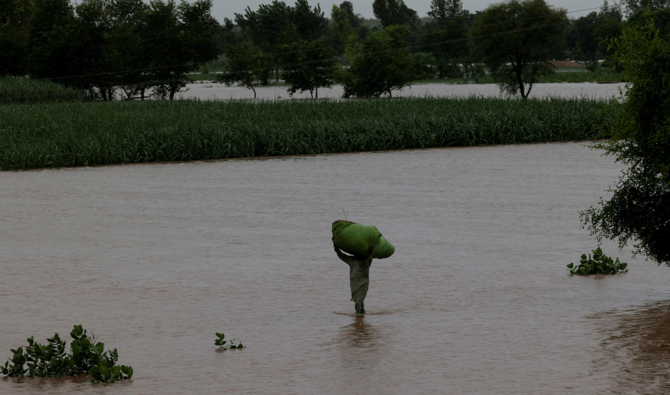
The floods have submerged 1.3 million acres of farmland in Punjab, Pakistan’s main agricultural region, destroying crops such as rice, sugarcane, cotton and maize. “The latest floods have submerged millions of acres of farmland across the country, crippling output and threatening livelihoods,” the report said.
AHL revised its fiscal year 2026 GDP growth forecast to 3.2% from 3.4%, with agriculture growth cut to 1.1% from 2.2%. “Media reports suggest that agricultural output in affected regions may fall by 15–20%, translating into a 0.5–1.0% drag on national GDP growth in the current fiscal year,” the report said.
“Beyond the immediate destruction, secondary repercussions such as soil salinity, disruptions in irrigation systems, and breakdowns in supply chains are expected to intensify the strain, potentially pushing food inflation higher by 20–30% and raising import needs for essential commodities like wheat and cotton by 10–15%, according to preliminary estimates.”
The trade balance could deteriorate by $1.9 billion in fiscal 2026, with cotton imports rising by more than $1 billion to support the textile industry. Export earnings from rice may drop by $278 million, sugar by $283 million and textiles by about $300 million. Inflation is also set to rise, with shortages of meat, rice, vegetables and sugar likely to drive prices higher.
This “could lift our annual average CPI forecast for FY26 to 7.2%, compared with the pre-flood estimate of 5.5%,” the report said.
Analysts noted that the 0.33% of GDP figure is an early assessment and the final tally could be higher as direct and indirect effects emerge. Financial experts and traders also warned that the floods in Punjab could fuel inflation through livestock losses and supply disruptions.
Pakistan has 251.3 million livestock, including 56 million cows, 48 million buffalos, 45 million sheep, 96 million goats, 1.5 million camels and 4.8 million asses, according to the latest agriculture census from the Pakistan Bureau of Statistics. Heavy rains and water releases from India have swollen rivers in Punjab since late August, killing at least 56 people and flooding more than 4,000 villages. Nationwide, floods have killed more than 6,180 livestock since June 26, according to the National Disaster Management Authority (NDMA).
In Punjab, 121 livestock have died since June 26, but rescue teams have evacuated over 1.5 million animals from late August to Sept. 7, said Provincial Disaster Management Authority (PDMA) Director General Irfan Ali Kathia. “The recent floods may push up food inflation and overall inflation in the months to come amidst expected damages to crops and the supply chain,” Shankar Talreja, head of research at brokerage firm Topline Securities, told Arab News. “These floods are likely to create an additional 100 basis points impact on inflation.” “We expect Pakistan’s inflation to average between 6–7 percent this year,” Talreja said, referring to the impact caused by losses inflicted by floods on both crops and livestock. “The impact of floods is likely to keep food prices under pressure.”
The government has reduced inflation to 0.3% in April from 38% in May 2023, and the central bank has cut its key interest rate to 11% since May 2024. Wheat prices have risen to 4,000 rupees per 40 kilograms, the highest in two years, while the weekly inflation index has hit a 35-week high.
In Punjab’s cattle markets, traders reported immediate effects. “The prices of animals have started rising because of the livestock shortage these floods are creating,” Karachi-based beef trader Sher Alam said. “For example, today I bought a bull weighing 90 kilograms for Rs125,000. Before the floods, such animals cost Rs110,000,” he added.
Alam, who sells up to 250 kilograms of beef daily, said routes to markets in Bahawalpur and Multan are blocked, forcing purchases from Karachi’s buffalo colony. “We are forced to buy from Karachi’s buffalo colony instead,” he said. “With many roads under water, our access to Punjab’s major cattle hubs is cut off.” Transport costs have risen, with trailer operators charging up to 400,000 rupees per trip from 150,000 rupees for about 35 animals. “The biggest problem we are facing is the shortage of animals in cattle markets,” Alam said. “Every animal put up for sale now has four buyers waiting. “I used to slaughter three animals a day. Now I’m down to one, and that too at a loss.”
In Khyber Pakhtunkhwa, the cabinet was informed that wheat stocks are satisfactory amid surging prices due to Punjab floods, and any procurement decisions will align with needs. The cabinet, chaired by Chief Minister Ali Amin Khan Gandapur, approved raising the minimum wage to Rs40,000 per month from Rs36,000 for adult, unskilled, juvenile and adolescent workers.
The cabinet sanctioned Rs1,247.500 million for the Provincial Disaster Management Authority to support voluntarily displaced families from anti-terror operations in Bajaur district villages. “The chief minister issued directions that the funds should be released without delay. He stressed that government bears full responsibility of care of displaced people, whether in camps or with host families,” chief minister’s aide on information and public relations, Barrister Muhammad Ali Saif, quoted the chief minister as saying.
Copyright © 2021 Independent Pakistan | All rights reserved