By Staff Reporter
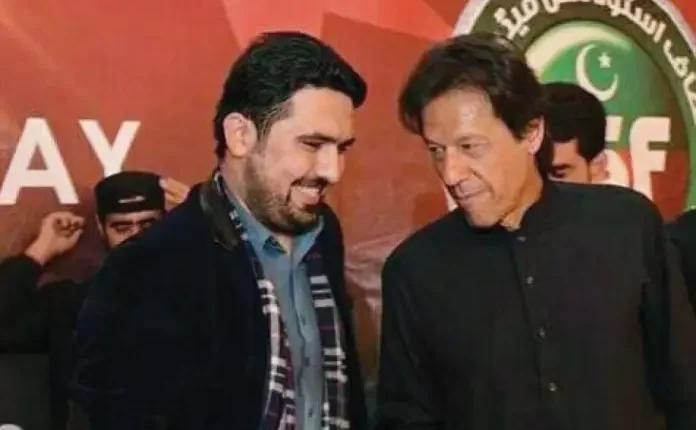
ISLAMABAD: The federal government has requested that Punjab Province arrange a meeting between the newly elected chief minister of Khyber Pakhtunkhwa and Imran Khan, the imprisoned founder of the Pakistan Tehreek-e-Insaf party, in an effort to resolve delays in forming a provincial cabinet, officials said on Tuesday.
The move comes amid escalating tensions between the central government and the PTI-led administration in Khyber Pakhtunkhwa, where Chief Minister Sohail Afridi has accused federal authorities of blocking his access to Khan, who has been held in Adiala Jail since August 2023. Khan is serving a sentence in a £190 million corruption case and faces ongoing trials under the Anti-Terrorism Act linked to protests on May 9 of that year.
Afridi, elected last week, visited the prison on Thursday but was denied entry. Speaking to reporters afterward, he said he would announce his cabinet only after consulting Khan and seeking his input. He claimed to have notified both the Punjab and federal governments in advance of his planned visit, receiving no response. During a subsequent phone call, he said, Prime Minister Shehbaz Sharif did not reply to his request for facilitation.
On Friday, Afridi petitioned the Islamabad High Court for permission to meet Khan. The PTI has repeatedly voiced concerns about restricted access to its founder, with family, friends and party leaders often hindered from visiting him.
In an interview on a private television channel, Huzaifa Rehman, special assistant to the prime minister, said he “hope this meeting will take place in the coming days.” “The federal government has asked the provincial government to arrange this so the cabinet there (in KP) can be formed.”
Pressed on whether the central government had issued a directive, Rehman clarified that no order could be given, given the autonomy of provincial governments. Instead, he said, the prime minister had “urged” provincial authorities, and the federal government had requested action “as soon as possible.” He added that, based on his information, Punjab was devising a mechanism and fulfilling all “cordial formalities,” with the meeting expected to be “held soon”.
During Monday’s session of the Khyber Pakhtunkhwa Assembly, Afridi reiterated his frustrations, saying he had written letters to the chief justice of Pakistan, as well as federal and provincial governments, and even approached the Islamabad High Court, all without success. He vowed to challenge the federal government over the continued denial and announced he would boycott any meetings called by it.
The standoff has unfolded against a backdrop of broader disputes over counterterrorism policy. On Monday, Talal Chaudhry, the minister of state for interior, sharply criticized Afridi, accusing the provincial government of undermining efforts against terrorism for political gain. The PTI, which has governed Khyber Pakhtunkhwa since 2013, has opposed military operations, a stance echoed by many in tribal areas who resist them due to the displacements they often cause.
Chaudhry’s remarks followed Afridi’s comments a day earlier, during his first high-level meeting since taking office on Oct. 15. Afridi had succeeded Ali Amin Gandapur, who resigned earlier this month on instructions from Khan, the party chairman. Afridi blamed the federal government’s “flawed policy” for a resurgence of terrorism in the province. He alleged that the center was withholding funds allocated under the national war against terrorism and denying “other Constitutional rights.” He also criticised the provision of “defective and old” armored vehicles to the provincial police, demanding their recall.
Addressing the media on Tuesday, Chaudhry took issue with those statements. “The operation you are rejecting may serve you well politically, but it will also lead to loss of lives, for which you alone will be held responsible,” he said.
He expressed disappointment that “the fight against terrorism and sacrifices made by soldiers were being overshadowed by politics.” Accusing the PTI-led government of cowardice, Chaudhry said: “You don’t want to fight against terrorists, you are scared, you have political motives.”
He alleged the provincial administration was opting out of the fight “so they could use it to blackmail the government.”Invoking Article 148 of the Constitution, Chaudhry warned that “provinces can not unilaterally make any decision which affects the rest of the country.” “The fight against terrorism is the entire country’s fight.”
On Afridi’s appointment, Chaudhry suggested it was strategic. “It was a deliberate decision to elect someone who would not hesitate to prioritise political point scoring and his chairman’s narrative over matters of national interests and his responsibilities as the chief minister.”
Copyright © 2021 Independent Pakistan | All rights reserved