By Staff Reporter
ISLAMABAD: For two months, a baby boy lived in a hospital nursery because no one would say who he belonged to.
His mother, believed to be around 15, gave birth to him on June 21 at the Pakistan Institute of Medical Sciences. Within days, hospital staff were asking her husband and grandmother for proof the marriage was legal. They never produced it. They never came back.
Police, involved in the case from the moment of the birth, refused to release the infant to his family without that documentation. And so the boy stayed — first as a legal question, then simply as a fixture of the ward — growing up alongside sick and dying children in the hospital’s Mother and Child Health nursery, fed and clothed by donations, staff-named “Ali” because the paperwork only ever listed him as “baby of ‘H.'”
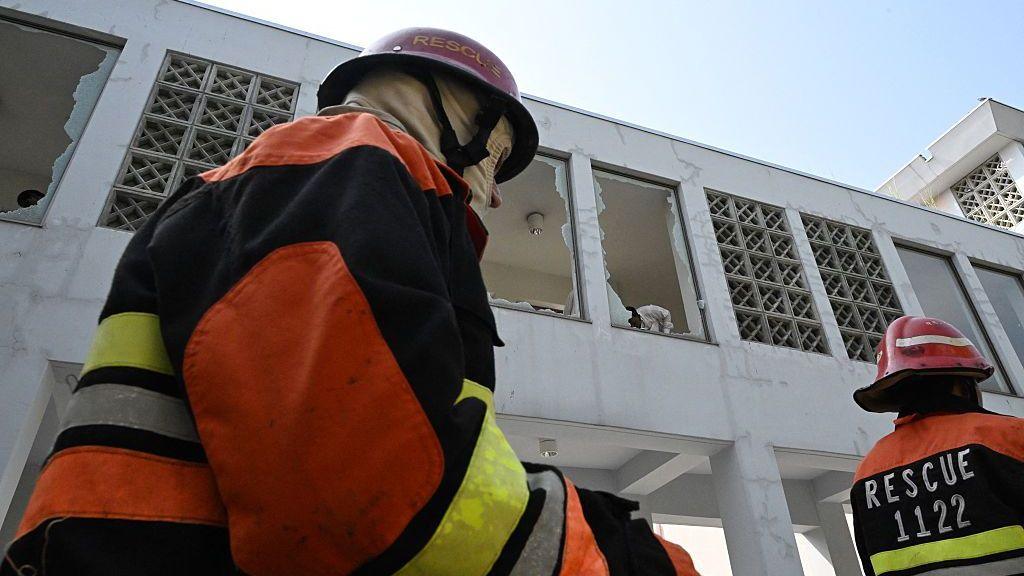
On Wednesday, a fire tore through that same nursery. Ali was one of 14 infants who did not survive it.
His body is now in the hospital morgue. Under Pakistani law, only a legal heir can claim it — the same requirement that kept him alive in a hospital ward instead of a home for the two months before he died there.
“The case was reported for medico-legal follow-up,” said a female doctor at the hospital who spoke to Dawn, the Pakistani newspaper that first reported the child’s story on Friday, two days after the fire.
A second doctor described what those two months actually looked like: a newborn housed in conditions with a high risk of infection, deprived of the routine care infants need for normal neurological development in their earliest weeks of life.
“Every child has a right to an identity, citizenship and a family in order to become a healthy member of society,” the doctor said. Hospital staff, the doctor said, had tried repeatedly to arrange his adoption. Police, in the meantime, did not follow up.
“Now, his dead body is in the mortuary,” the doctor said. “Only his legal heirs can receive the body.”
A fire that spread in under a minute
The blaze that killed Ali and 13 other infants began, according to a hospital statement, with a spark inside the nursery at 6:38 a.m. Wednesday. Within seconds, fire spread through the oxygen lines feeding each incubator. Two doctors and two nurses on duty tried to reach the babies, calling in security staff, who joined them for two attempts to pull children from the ward. At 6:39 a.m. — one minute after the first spark — a blast tore through the ceiling.
Pakistan’s health minister told reporters the fire had started with a spark in the ward’s air-conditioning unit. Families of the victims, several of them arriving at the hospital with their hands and faces blackened by smoke, gave Agence France-Presse a different account: that emergency crews took hours to respond, and that some had smashed through windows themselves after finding ward doors locked. The hospital and the government have disputed that version of events.
A government under pressure
The fallout was immediate. Prime Minister Shehbaz Sharif formed an inquiry committee and removed Muhammad Aslam Ghauri, the federal health secretary, from his post. Separately, the Islamabad district magistrate convened a seven-member fact-finding committee, led by the additional deputy commissioner general, to determine what happened inside the nursery.
The health minister, addressing reporters Wednesday, said he would submit himself to review by his superiors. “Nothing will remain hidden, and all facts will be unearthed,” he said, adding that the fire was under investigation by “experts, different institutions including us.”
The disaster has drawn condemnation from across Pakistan’s political spectrum. But for one of its 14 youngest victims, the reckoning stretches back further than Wednesday morning — to a system that could keep a newborn in a hospital ward for two months without ever resolving who he was, or who would take him home.
Copyright © 2021 Independent Pakistan | All rights reserved