By Staff Reporter
ISLAMABAD: Prime Minister Shehbaz Sharif of Pakistan on Wednesday praised Saudi Arabia for showing restraint amid Iranian retaliatory strikes and called for urgent de-escalation and Muslim unity during a telephone conversation with Crown Prince Mohammed bin Salman, as Islamabad stepped up its role as an intermediary in the four-week-old Middle East war.
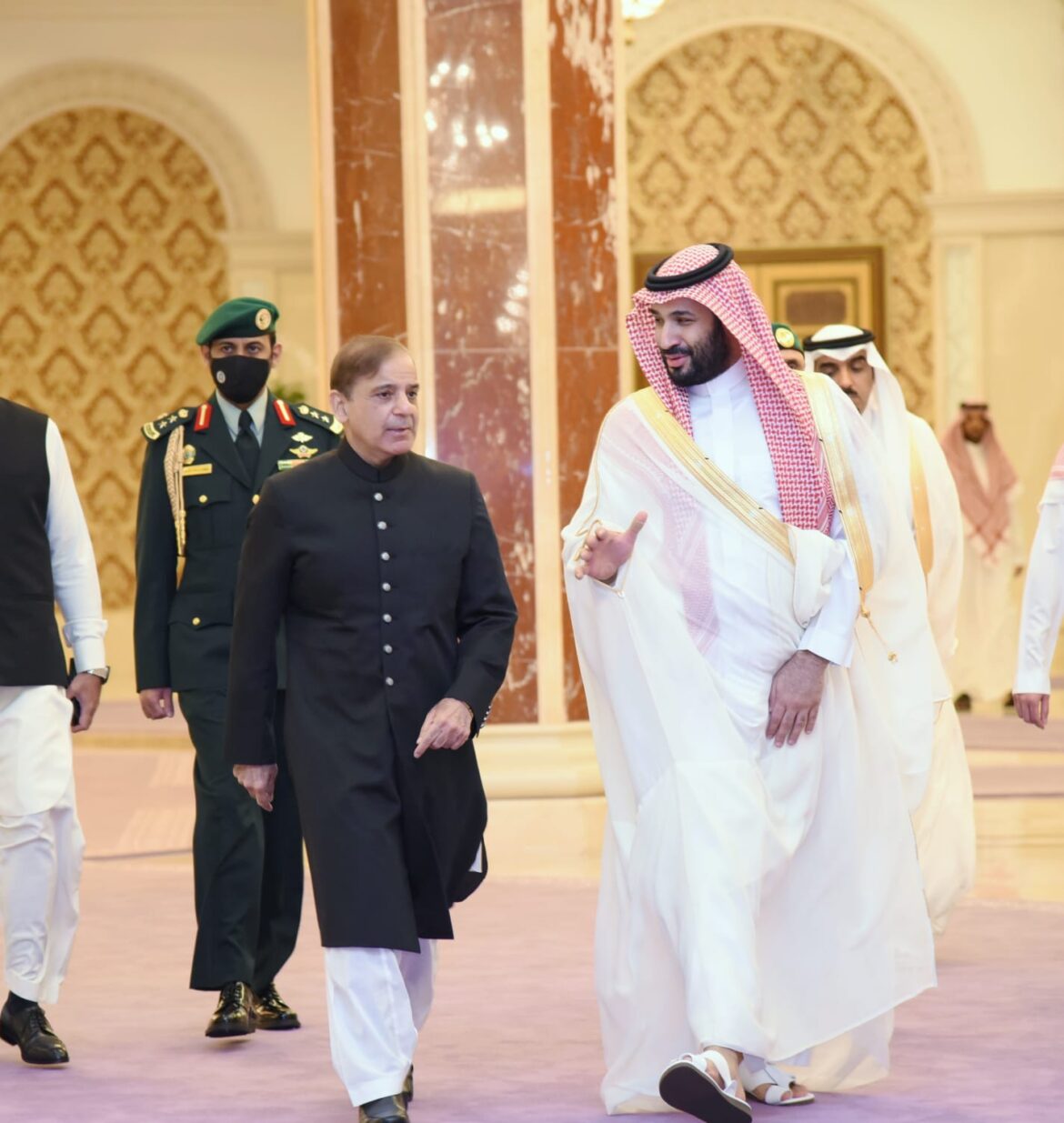
Sharif conveyed Eid al-Fitr greetings to King Salman bin Abdulaziz Al Saud, the royal family and the Saudi people in a post on X. He reiterated Pakistan’s condemnation of the attacks on the kingdom and its “unwavering solidarity and unequivocal support” for Riyadh. “Appreciating the Kingdom’s restraint,” he wrote, “I stressed the urgent need for de-escalation, an end to hostilities, and unity in the ranks of the Ummah.” He also briefed the crown prince on Pakistan’s diplomatic outreach for regional peace and said the two leaders agreed to remain in close coordination.
The call came against the backdrop of a burst of Pakistani diplomacy aimed at cooling the conflict that began Feb. 28 with U.S. and Israeli strikes on Iran, including the assassination of then-Supreme Leader Ayatollah Ali Khamenei. Iran responded by targeting countries hosting U.S. military bases, striking Gulf energy sites and closing the Strait of Hormuz — a choke point for roughly one-fifth of global oil and liquefied natural gas shipments.
On Tuesday, Sharif publicly offered Islamabad as a neutral venue for direct negotiations between the United States and Iran. In a post on X that tagged President Donald Trump, Iranian Foreign Minister Abbas Araghchi and U.S. Special Envoy Steve Witkoff, he wrote that Pakistan “welcomes and fully supports ongoing efforts to pursue dialogue to end the war in the Middle East, in the interest of peace and stability in the region and beyond.” Subject to agreement by both sides, he added, Pakistan “stands ready and honoured to be the host to facilitate meaningful and conclusive talks for a comprehensive settlement of the ongoing conflict.”
Trump reposted Sharif’s statement on Truth Social, an unusual public signal of at least tentative American interest. The overture followed a day of mixed signals from Pakistan’s Foreign Office. Spokesman Tahir Andrabi had told reporters that “diplomacy and negotiations often require that certain matters be advanced with discretion” and urged journalists to stop speculating about reports — carried by Reuters, Axios, CNN, the Financial Times and others — that Islamabad might host talks. The day before, however, Andrabi had said more openly that “if the parties desire, Islamabad is always willing to host talks,” noting Pakistan’s long-standing advocacy for dialogue.
The proposal capped a week of intensive back-channel efforts. According to reporting by the Financial Times and Axios, senior officials from Pakistan, Turkey and Egypt separately engaged with Witkoff and Araghchi, relaying messages in indirect exchanges with no direct contact between Washington and Tehran. The conversations addressed not only an immediate pause in hostilities but also the reopening of the Strait of Hormuz and broader parameters for ending the war. On Monday, Trump announced a conditional five-day pause in U.S. plans to strike Iranian energy and power infrastructure, describing “very good and productive conversations” with Tehran over the preceding two days that could lead to a “complete and total resolution.” Fighting continues on other fronts.
A Pakistani source familiar with the exchanges said three Muslim-majority nations were demonstrating “through active back-channel diplomacy involving Steve Witkoff and Abbas Araghchi” that “quiet communication is often the most direct path to global peace.” Iranian Foreign Ministry spokesman Esmail Baghaei confirmed that messages had been conveyed through several “friendly countries” but insisted Iran had not engaged in direct or indirect negotiations with the Trump administration. He described the American announcement as an attempt to influence oil markets and said any lasting settlement must include guarantees against future U.S. or Israeli attacks, reparations, recognition of Iran’s rights, a regional security arrangement and secure navigation through the strait.
Sharif’s diplomatic push has included a Monday telephone call with Iranian President Masoud Pezeshkian, framed publicly as an exchange of Eid and Nowruz greetings. Sharif expressed concern over the “dangerous ongoing hostilities” and stressed the need for collective de-escalation, dialogue and “unity in the ranks of the ummah,” according to a statement from his office. A restricted meeting with Crown Prince Mohammed bin Salman on March 9 had already produced expressions of Pakistani solidarity and agreement to work together for regional stability. Pakistan’s army chief, Field Marshal Syed Asim Munir, also held a telephone conversation with Trump on Sunday, the Financial Times reported.
- Pakistan’s Sharif urges Saudi restraint and de-escalation as Islamabad offers to host U.S.-Iran talks
- As Middle East war enters fifth week, Pakistan positions itself as mediator between Washington and Tehran
- amid Pakistan’s push to broker pause in Iran strikes
- Pakistan steps into diplomatic breach, offering neutral ground for U.S.-Iran negotiations and highlighting role at Capitol Hill forum
Copyright © 2021 Independent Pakistan | All rights reserved