By Staff Reporter
ISLAMABAD: Iran told the United States on Monday that it had formally responded to the latest American proposal for ending the war that began Feb. 28, with diplomatic exchanges continuing through a Pakistani intermediary even as Iranian officials rejected key U.S. demands as one-sided and excessive.
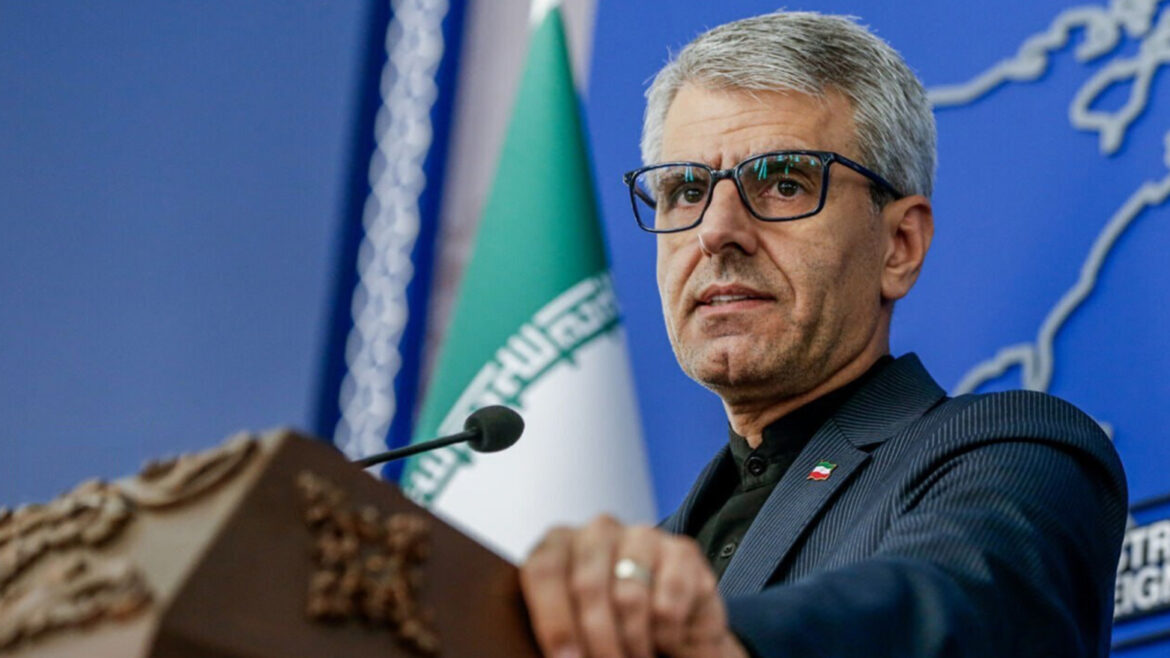
The response came amid a fragile ceasefire that has held since April 8 and after a single round of direct talks between the longtime adversaries. Iranian Foreign Ministry spokesman Esmaeil Baqaei, speaking at a news briefing in Tehran, said Iran had conveyed its “concerns” to Washington the previous day. “Exchanges were continuing through the Pakistani mediator,” he added, offering no further details on the substance of the latest back-and-forth.
Baqaei defended Iran’s core conditions, which include the release of Iranian assets frozen abroad, the lifting of long-standing U.S. sanctions and the payment of war reparations. “The points raised are Iranian demands that have been firmly defended by the Iranian negotiating team in every round of negotiations,” he said. He described the conflict as “illegal and baseless” and said Tehran was “fully prepared for any eventuality” should hostilities resume.
State media offered a harsher assessment of the American position. Iran’s Fars news agency reported on Sunday that the U.S. proposal included a five-point list demanding that Iran operate only one nuclear site and transfer its stockpile of highly enriched uranium to American control. Washington also refused to release even 25 percent of Iran’s frozen assets or pay any reparations for war damage, Fars said, and made clear that it would lift hostilities only if Tehran entered formal peace negotiations.
Mehr news agency said the United States “offering no tangible concessions, wants to obtain concessions that it failed to obtain during the war, which will lead to an impasse in the negotiations.” It called the U.S. conditions “excessive.” The latest exchange follows an Iranian counterproposal sent last week that called for an end to fighting on all fronts — including Israel’s campaign in Lebanon — and the immediate lifting of the U.S. naval blockade imposed on Iranian ports on April 13. Iran also demanded the full removal of U.S. sanctions and the unfreezing of its overseas assets. Tehran made clear it intended to keep managing the Strait of Hormuz, the narrow waterway through which roughly one-fifth of the world’s oil and liquefied natural gas passes in peacetime.
On Monday, Iran’s Supreme National Security Council announced the creation of a new body, the Persian Gulf Strait Authority, to oversee operations in the strait, which Tehran has effectively closed to most commercial traffic since the war began. The council’s official X account described the authority as providing “real-time updates on the Hormuz Strait operations and latest developments.” The Revolutionary Guard navy shared the same post.
It remained unclear precisely what powers the new authority would exercise, though Iranian officials have signaled plans to impose tolls and regulations on vessels. Earlier this month, the English-language broadcaster Press TV described the body as a “system to exercise sovereignty over the Strait of Hormuz” and said ships were already receiving formal “regulations” via email from [email protected].
On Saturday, Ebrahim Azizi, chairman of the Iranian parliament’s national security commission, said Tehran had prepared “a professional mechanism to manage traffic” through the waterway that would be unveiled soon. Iran has repeatedly stated that maritime traffic would “not return to its pre-war status” and claimed last month to have received its first revenue from tolls.
The diplomatic maneuvering coincided with a hardening tone from the White House. President Donald Trump, frustrated by Iran’s latest response, told Axios in a phone interview that “the clock is ticking” and warned that Tehran would be “hit much harder” if it did not revise its position. “We want to make a deal,” Trump said. “They are not where we want them to be. They will have to get there, or they will be hit badly.”
Trump is scheduled to convene a Situation Room meeting Tuesday with Vice President JD Vance, Secretary of State Marco Rubio, CIA Director John Ratcliffe and special envoy Steve Witkoff to review military contingencies should diplomacy fail. He is also believed to have consulted some of those advisers over the weekend. The president has continued parallel discussions with Israeli Prime Minister Benjamin Netanyahu, whose government retains considerable influence on U.S. thinking toward Iran.
The tougher posture reflects competing pressures on the administration: the need to project strength abroad while managing mounting skepticism at home. Congressional Democrats have mounted a sustained campaign to limit Trump’s war-making authority, pressing repeated War Powers Resolution votes, holding contentious hearings and tying the conflict to broader economic anxieties ahead of the next election cycle.
Senate Democratic leader Chuck Schumer cast the war as a strategic boon for America’s adversaries. “The American people may not be benefiting from Trump’s war, but our adversaries certainly are,” Schumer said in a statement. “Trump is allowing China to present itself as a source of stability and reason on the world stage, and Russia is raking in record profits from its energy exports.”
Financial markets registered the impasse. Brent crude futures rose $2.01, or 1.84 percent, to $111.27 a barrel early Monday, while U.S. West Texas Intermediate climbed $2.33, or 2.21 percent, to $107.75. Both benchmarks had gained more than 7 percent last week as hopes for a swift peace deal faded. The latest increases followed drone attacks on a nuclear power plant in the United Arab Emirates and on Saudi Arabia, as well as the Trump administration’s decision Saturday to let lapse a sanctions waiver that had allowed countries including India to continue buying Russian seaborne oil.
“Fears of renewed strikes on Iran have worsened supply fears … the United States letting the Russia sanctions waiver lapse didn’t help,” said Vandana Hari, founder of the oil-market analysis firm Vanda Insights. IG market analyst Tony Sycamore warned that “renewed U.S. or Israeli strikes on Iran could trigger more proxy attacks on Gulf energy and critical infrastructure by Iran or its regional proxies.”
Emirati officials said they were investigating the strike on the Barakah nuclear facility and asserted the UAE’s “full right to respond to such terrorist attacks.” Saudi Arabia intercepted three drones that entered its airspace from Iraq and warned it would take “necessary operational measures” to protect its sovereignty. The war that began with U.S.-Israeli strikes on Iran has already disrupted global energy flows, prompted Iranian attacks on shipping in the Persian Gulf and left both sides searching for an exit that has so far proved elusive.
Copyright © 2021 Independent Pakistan | All rights reserved